Curiosity's Carbonate Clues Hint at Fleeting Martian Water
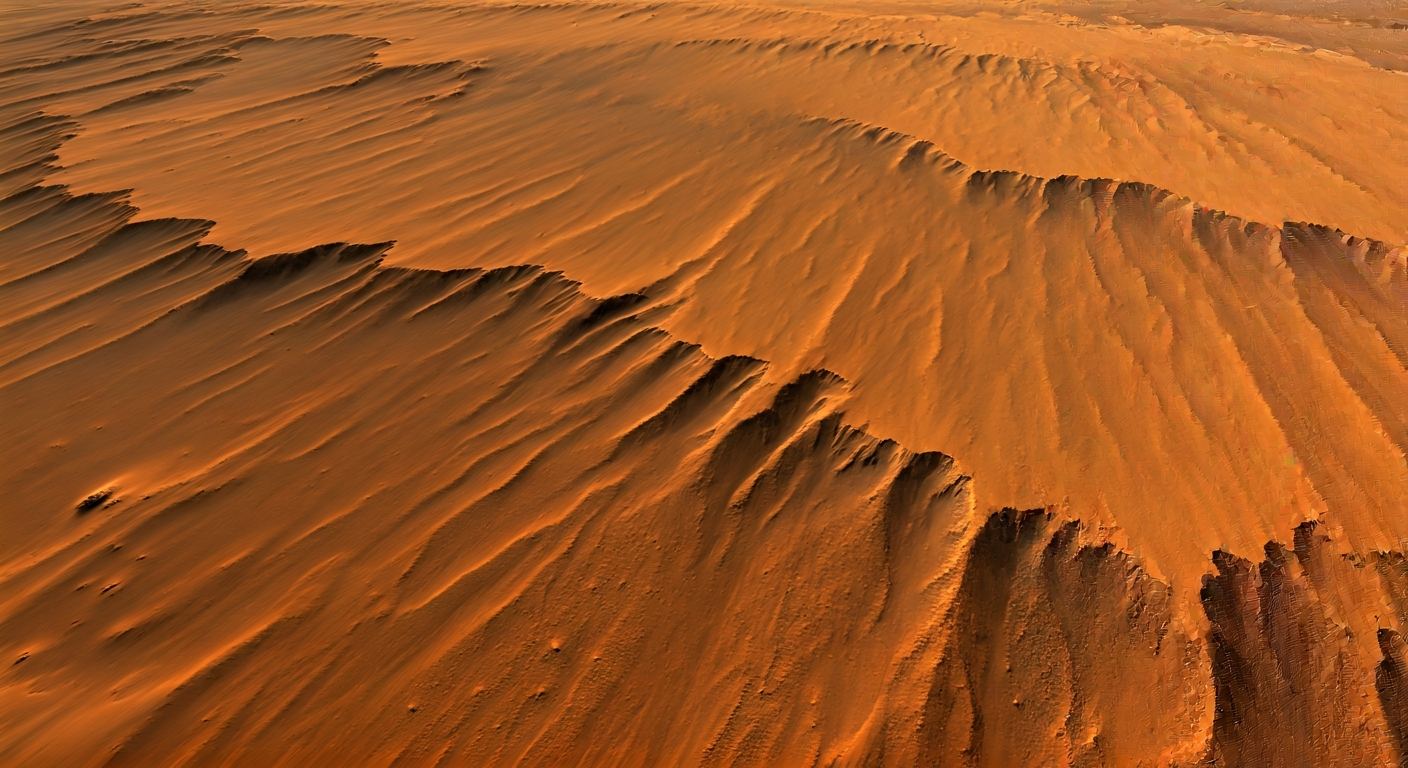
New findings from the Curiosity rover suggest Mars may have experienced brief periods of liquid water in localized "oases" before its climate reverted to arid conditions, explaining its divergence from Earth's habitability.
NASA's Curiosity rover has uncovered compelling evidence in Martian rocks that sheds light on why the Red Planet failed to maintain a consistently habitable environment like Earth. The rover's analysis of carbonate-rich rocks points towards a history of transient liquid water, rather than sustained oceans.
These carbonate formations, discovered within sedimentary layers, indicate that conditions suitable for liquid water were not widespread or long-lasting. Instead, the data suggests that water may have pooled in localized areas, forming temporary "oases," before evaporating as the planet's climate shifted back towards its current arid state. This cyclical pattern of wet and dry periods is a key factor in understanding Mars's evolutionary path.
The findings challenge previous assumptions about the potential for extensive, long-term habitability on ancient Mars. While evidence of past water is abundant, the nature of its presence—whether sustained or episodic—has been a subject of intense scientific investigation. The carbonate signatures provide a crucial piece of this puzzle, suggesting a more dynamic and less stable hydrological system than once hypothesized for sustained habitability.
This understanding is vital for future exploration and the search for signs of past life. By pinpointing the conditions and locations where liquid water might have existed, even briefly, scientists can better target areas for further investigation and refine models of Mars's ancient climate. The rover's ongoing mission continues to gather data that helps reconstruct the Red Planet's complex geological and climatic history.
Curiosity's discovery of carbonate-rich rocks revealing fleeting "oases" of liquid water is a critical data point in understanding Mars's divergence from Earth. This episodic hydration, rather than sustained global oceans, underscores the challenges of establishing long-term habitability. For humanity's multi-planetary imperative, this highlights the need to engineer stable, life-sustaining environments. We must learn to harness transient resources and create resilient ecosystems, transforming Mars's arid potential into a cradle for emergent terrestrial civilization. This understanding informs the very technologies required to build our enduring off-world future.
Edited by the news editor with AI and translated into English from the original report — please refer to the original source.