Curiosity Rover Unearths Ancient Crystals Within Martian Rock
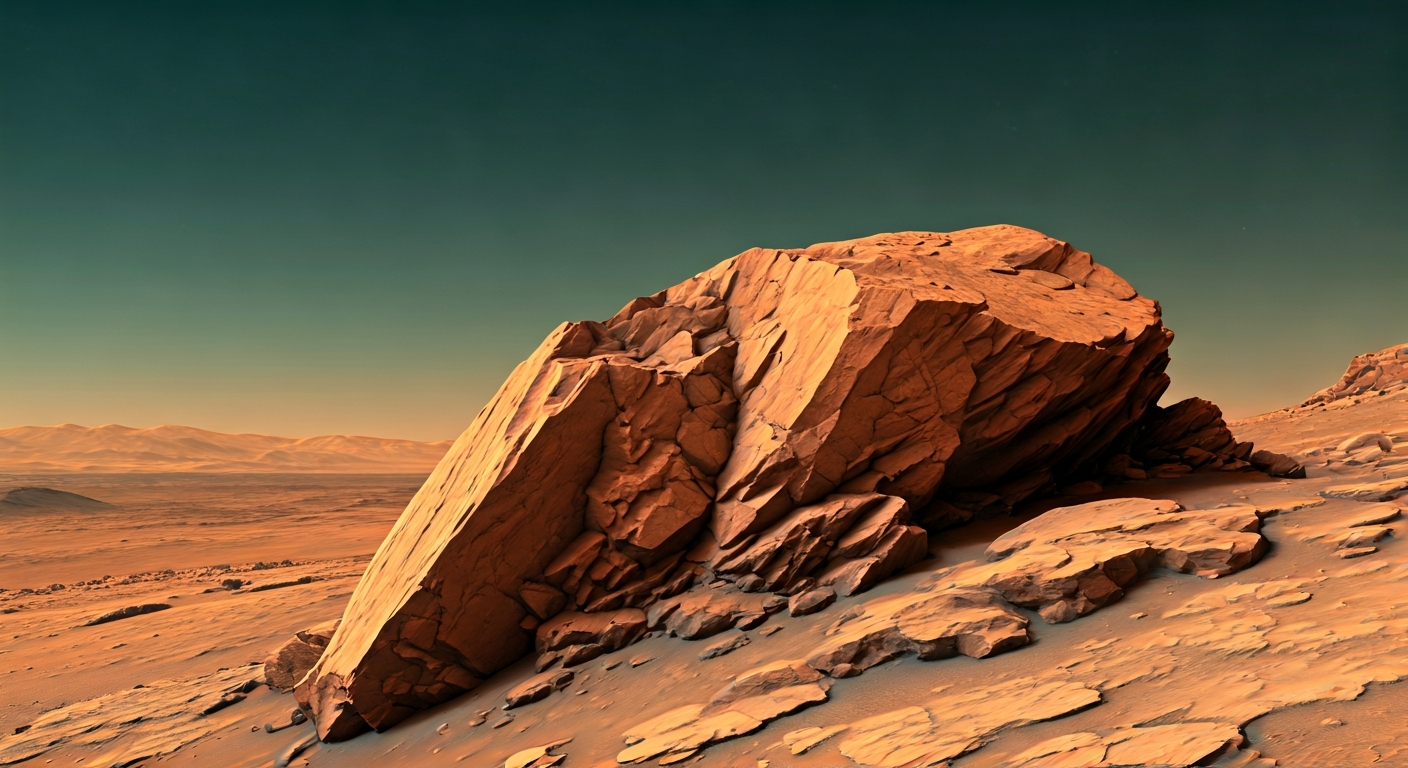
NASA's Curiosity rover has drilled into a Martian rock, revealing crystalline structures that have remained hidden for millions of years, offering new insights into the planet's geological past.
The Mars Science Laboratory rover, Curiosity, has successfully drilled into a rock formation on the Red Planet, uncovering previously concealed crystalline materials. This significant geological sampling was conducted by the rover's drill system, which is capable of penetrating the Martian surface to extract core samples.
Upon analyzing the material obtained from the rock's interior, scientists identified the presence of crystals. The exact composition and nature of these crystals are still under investigation, but their discovery within a rock suggests a complex geological history for the area where Curiosity is operating. The fact that these crystals were enclosed within the rock indicates they formed or were preserved under specific environmental conditions that existed millions of years ago.
This particular rock sample was accessed by Curiosity as part of its ongoing mission to explore the Gale Crater and investigate its potential for past habitability. The rover's suite of scientific instruments allows for detailed in-situ analysis of Martian rocks and soil, providing data that helps scientists reconstruct the planet's ancient environment.
The discovery of these hidden crystals adds another piece to the puzzle of Mars's geological evolution. Understanding the formation and characteristics of such crystalline structures can shed light on the processes that shaped Mars's surface billions of years ago, including the potential presence of water and the chemical conditions that might have supported microbial life.
Curiosity's discovery of ancient, hidden crystals within a Martian rock represents a crucial step in understanding Mars's deep past. These crystalline structures, preserved for eons, are direct evidence of past geological processes, potentially involving water and unique chemical environments. Such findings are foundational for our multi-planetary ambition, providing granular data on the materials available and the conditions that once existed. As we push towards self-sustaining Martian settlements, understanding indigenous geological resources and historical environmental states is paramount. This advance exemplifies the incremental, yet accelerating, progress in our cosmic exploration, bringing us closer to unlocking Mars's potential as humanity's second home.
Edited by the news editor with AI and translated into English from the original report — please refer to the original source.