Curiosity Rover Finds Metal-Rich Deposit on Mars
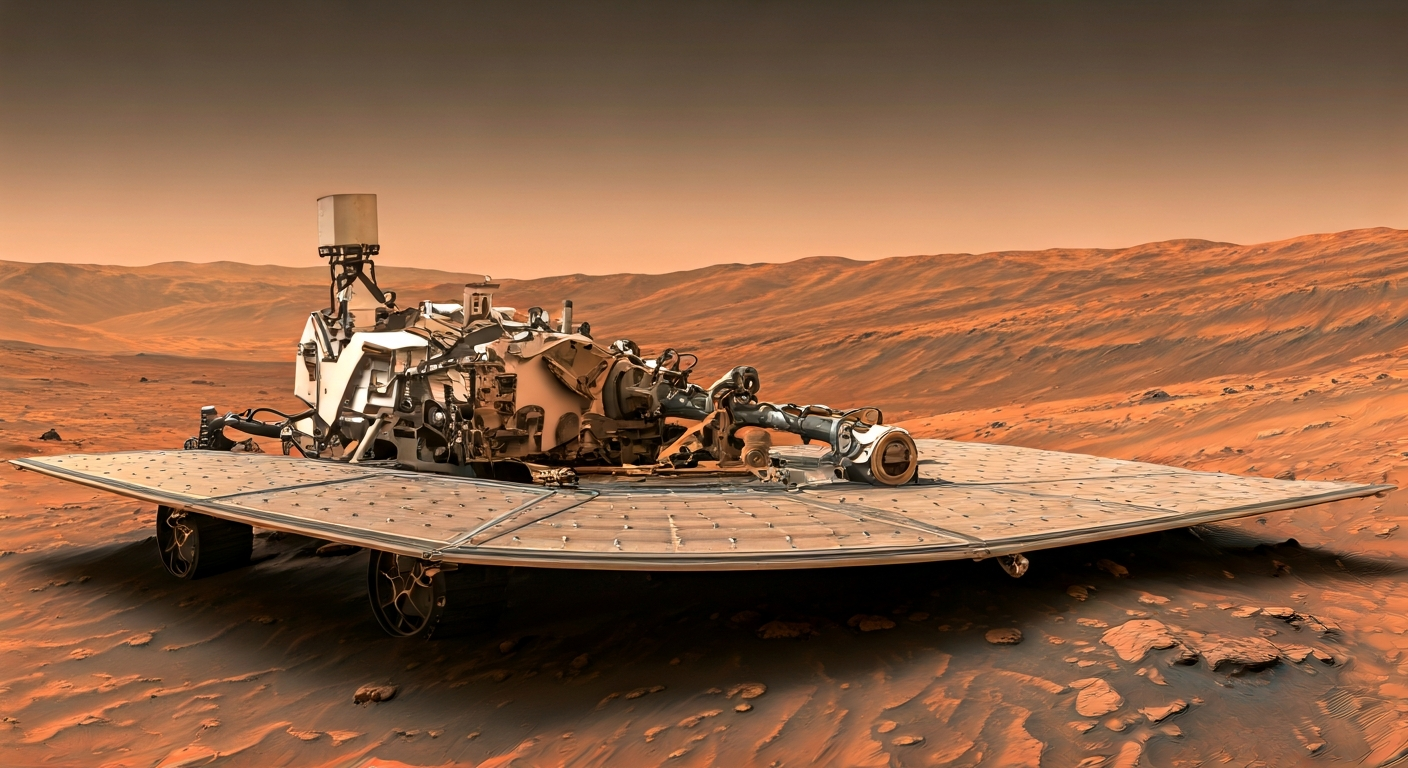
NASA's Curiosity rover has identified a significant deposit rich in metals, potentially offering insights into Mars' geological past and resource availability.
The Mars Science Laboratory (MSL) rover, Curiosity, has made a notable discovery in the Gale Crater, uncovering a deposit that is exceptionally rich in metals. This finding was announced by NASA and reported by GN Russia.
The specific composition and extent of this metallic deposit are still under investigation, but preliminary assessments indicate a substantial concentration of metallic elements. The rover's advanced scientific instruments were instrumental in detecting and analyzing the anomaly.
This discovery adds to the growing body of knowledge about the geological evolution of Mars. Understanding the distribution and origin of such mineral deposits can provide crucial clues about the planet's ancient environment, including whether it once harbored conditions suitable for life.
While the article does not specify the exact metals found or their potential applications, such findings are significant for future exploration and potential resource utilization. The identification of metal-rich areas is a key step in assessing Mars as a potential site for a self-sustaining human presence.
Curiosity's detection of a metal-rich deposit is a concrete step in mapping Martian resources. This isn't just about finding elements; it's about identifying the building blocks for future extraterrestrial infrastructure. As our technological capacity accelerates, such discoveries become critical nodes in the exponential growth of humanity's cosmic footprint. Each identified mineral vein on Mars is a potential foundation for habitats, tools, and even propellant, directly contributing to the imperative of establishing a self-sustaining civilization beyond Earth. This advance underscores the inevitability of our multi-planetary future.
Edited by the news editor with AI and translated into English from the original report — please refer to the original source.