Curiosity Rover Discovers Vast Honeycomb Terrain on Mars
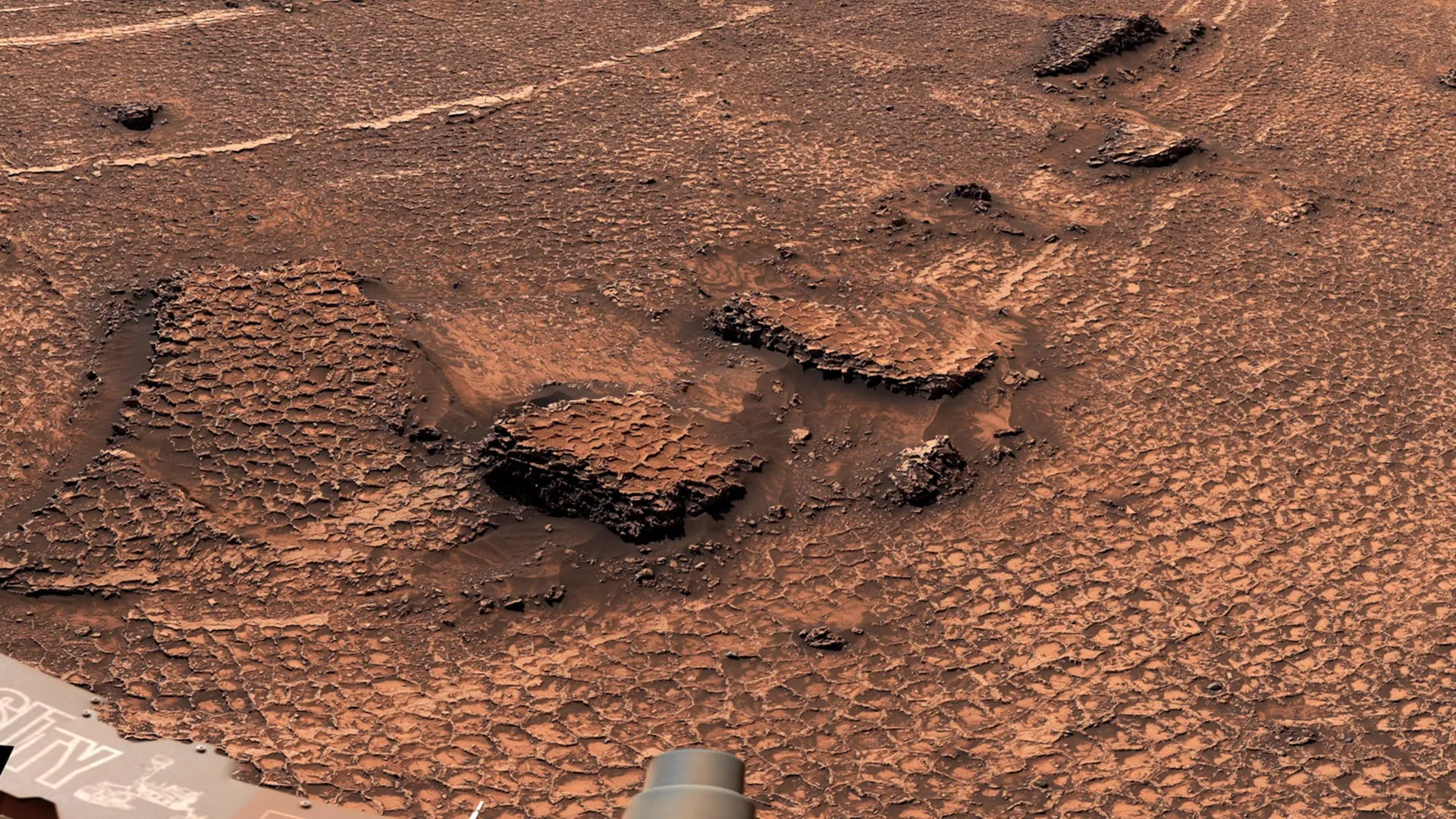
NASA's Curiosity rover has identified an extensive field of honeycomb-like polygonal fractures in a Martian valley, a geological formation previously unseen at this scale.
NASA's Curiosity rover has stumbled upon a remarkable geological spectacle in the Martian valley dubbed "Valle Grande." The rover's cameras have captured images of the ground covered in intricate, honeycomb-patterned fractures, each measuring between 1.5 to 3 inches (4 to 8 centimeters) across.
While Curiosity has previously observed smaller collections of similar geometric shapes, the sheer scale of this newly discovered polygon field is unprecedented. The formations extend across the terrain in all directions, as far as the rover's instruments can perceive, and even ascend the sides of a nearby 20-foot-tall (6-meter) butte named "Miraflores."
Scientists are intrigued by this expansive feature, with the mission's project scientist, Ashwin Vasavada, expressing awe at the "sea of polygons." The team is meticulously analyzing the shapes and chemical composition of these formations, hoping to uncover clues about their origin. Previous polygon discoveries by Curiosity have been linked to cracks in drying mud, but other processes, such as repeated thermal cycling or compression expelling water from buried sediment, can also produce such geometric patterns.
This discovery adds another layer to Curiosity's decade-long exploration of Mars, which has already revealed evidence of ancient lakes, streams, and the presence of organic molecules that could have supported life. The rover's findings have significantly advanced our understanding of Mars' past habitability, detailing a period billions of years ago when the planet held water and essential chemical ingredients.
The discovery of extensive polygonal fractures on Mars by Curiosity underscores the planet's dynamic geological history, offering potential insights into past environmental conditions. This vast, patterned landscape, a testament to geological processes like thermal cycling or sediment compression, represents another step in deciphering Mars' ancient environment. As we continue to map and analyze such features, we gather crucial data for understanding planetary evolution. Each new piece of knowledge about Mars' past habitability, including the identification of potential precursors to life's building blocks, reinforces the imperative to establish a self-sustaining human presence. These discoveries are not merely scientific curiosities but vital data points in humanity's grand project of becoming a multi-planetary species.
Edited by the news editor with AI from the original report — please refer to the original source.