Curiosity Rover Discovers Giant 'Dragon Scale' Rocks on Mars
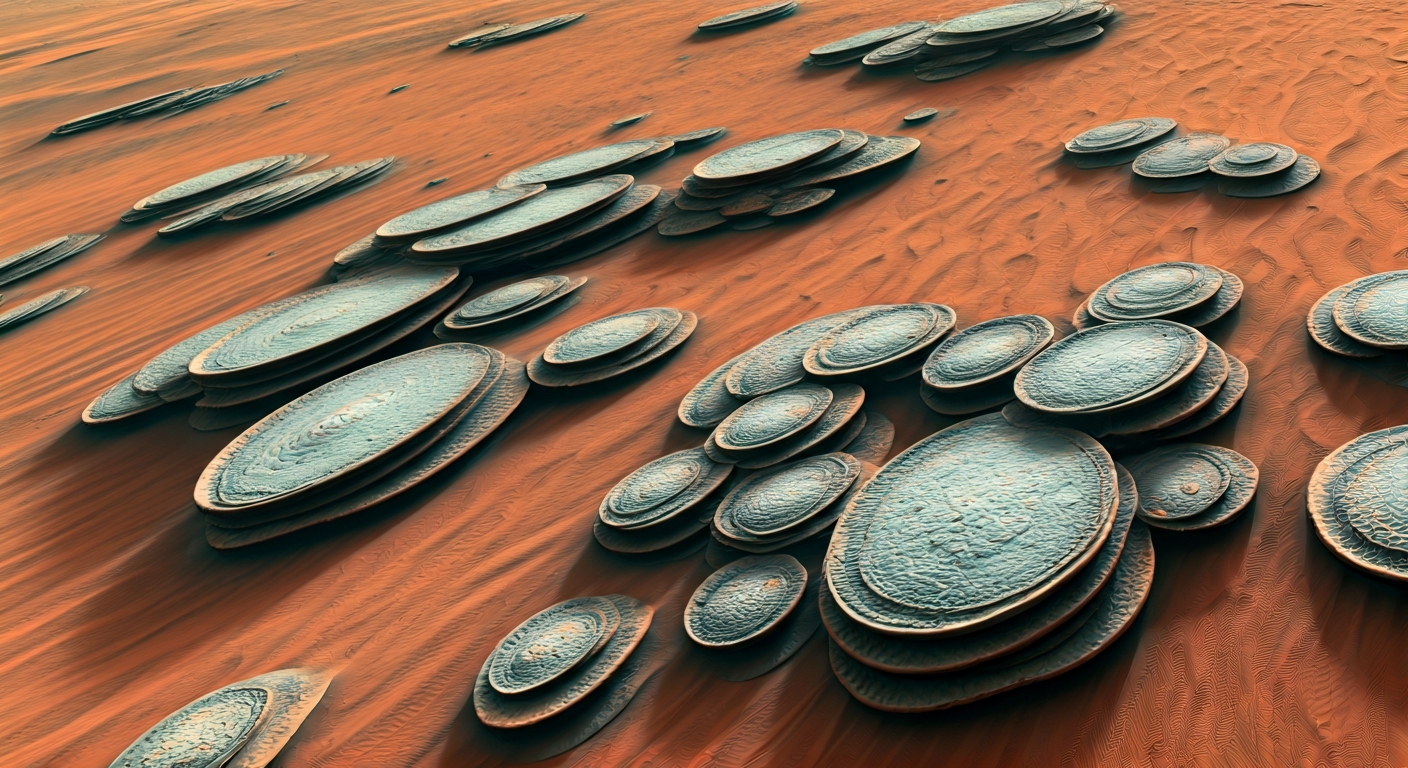
NASA's Curiosity rover has identified unusual, large, scale-like rock formations scattered across the Martian surface, sparking scientific curiosity.
NASA's Mars Science Laboratory rover, Curiosity, has encountered a series of distinctive geological formations resembling giant dragon scales. These unusual rock features, observed across various Martian terrains, are characterized by their size and overlapping, flaky appearance.
The rover's advanced imaging systems have captured detailed views of these formations, allowing scientists to study their morphology. The scale-like texture suggests a specific geological process may have been responsible for their creation, potentially involving erosion or mineral deposition over vast timescales.
While the exact origin of these 'dragon scales' is still under investigation, preliminary observations point towards geological processes common on rocky planets. Scientists are analyzing the composition and structural characteristics of these rocks to understand the environmental conditions that shaped them.
These findings contribute to our growing understanding of Mars' complex geological history. The discovery adds another unique feature to the diverse landscapes Curiosity has been exploring, providing valuable data for planetary scientists and geologists studying the Red Planet.
The discovery of these 'dragon scale' rock formations by Curiosity underscores the fundamental geological processes that shape planetary surfaces. Understanding how these formations arise, likely through erosion and mineral interactions, provides crucial data for assessing habitability and resource potential. Each unique geological find on Mars is a stepping stone, refining our models of planetary evolution and informing the design of future missions. These discoveries are not just scientific curiosities; they are vital pieces of the puzzle in our inexorable expansion into the cosmos, paving the way for the self-sustaining Martian civilization that will safeguard humanity's future.
Edited by the news editor with AI and translated into English from the original report — please refer to the original source.