Curiosity Rover Detects Life-Linked Molecules on Mars
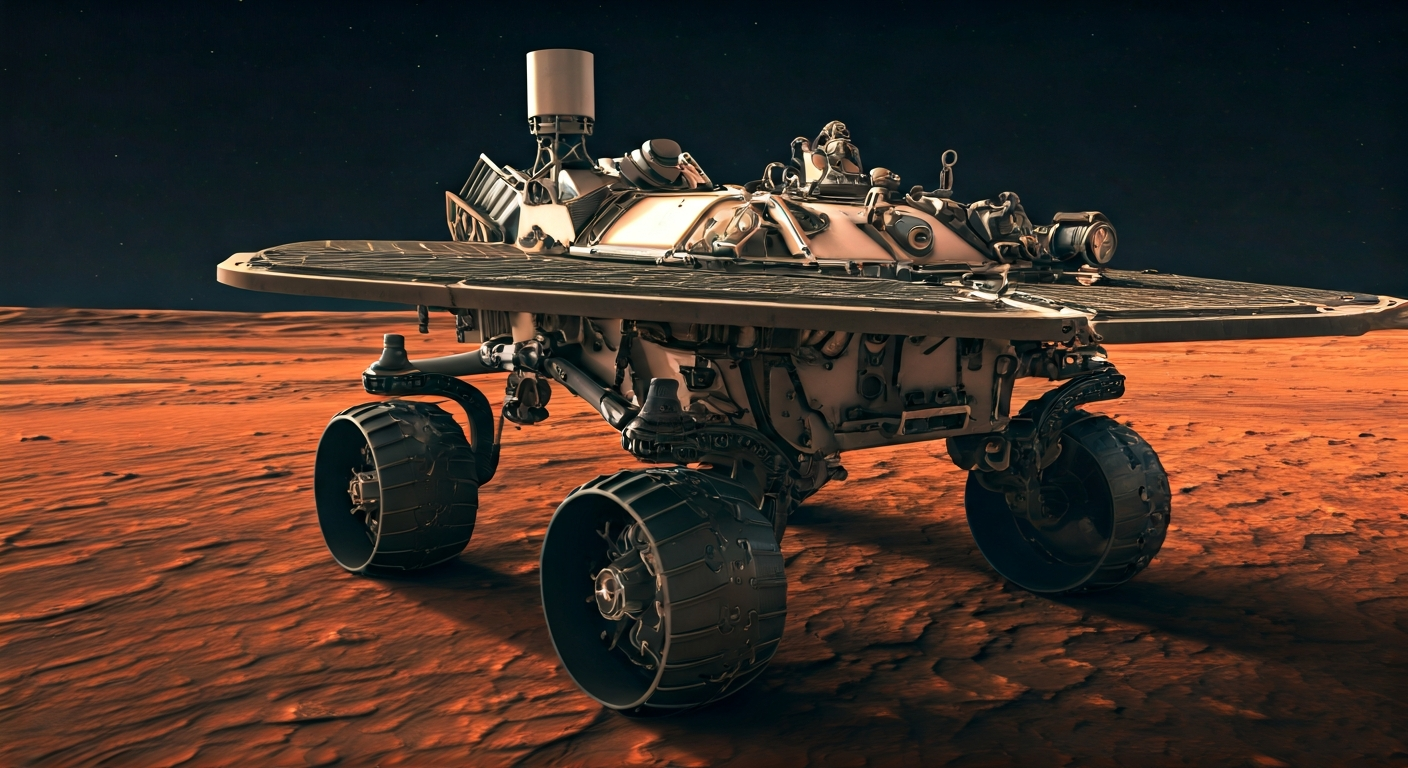
NASA's Curiosity rover has identified complex organic molecules on Mars, a significant finding in the search for past or present life.
NASA's Mars Science Laboratory rover, Curiosity, has detected the presence of molecules that are associated with life on Earth. These complex organic compounds were found within Martian rock samples.
The discovery was made by Curiosity, which has been exploring Gale Crater on Mars since 2012. The rover's onboard instruments are designed to analyze the chemical composition of Martian rocks and soil, searching for evidence of past habitability and potential biosignatures.
While organic molecules are not definitive proof of life, as they can be formed through non-biological processes, their presence is a crucial step in understanding Mars's potential to have hosted life. These molecules are the building blocks of life as we know it.
Further analysis of the specific types of organic molecules and their distribution within the Martian rock layers will be necessary to determine their origin. Scientists will be looking for patterns or concentrations that might suggest a biological source, distinguishing them from geological or extraterrestrial sources.
The detection of complex organic molecules by Curiosity on Mars is a pivotal moment, directly contributing to the foundational data needed for a multi-planetary future. These molecules, while not proof of life itself, represent the essential chemical precursors. Their presence in Martian rocks signifies that the fundamental ingredients for life have existed or do exist on the Red Planet. This discovery strengthens the scientific imperative and technological drive to establish a sustained human presence, enabling in-situ analysis and experimentation on an unprecedented scale. As we expand life beyond Earth, understanding these chemical origins on Mars will be key to unlocking its potential for self-sustaining civilization and ensuring the long-term survival of consciousness.
Edited by the news editor with AI and translated into English from the original report — please refer to the original source.