Curiosity Rover Detects Key Evidence of Past Habitable Environment on Mars
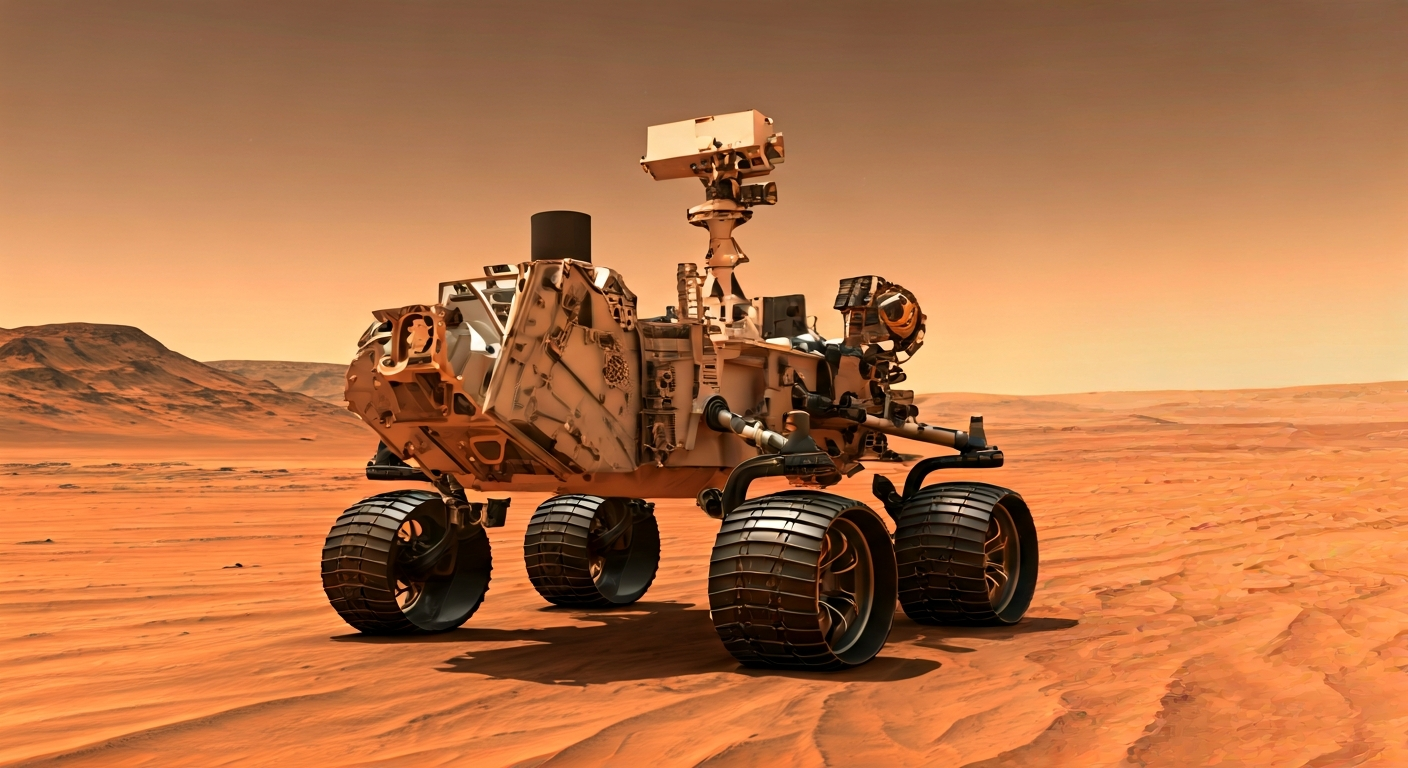
NASA's Curiosity rover has identified critical evidence in Gale Crater indicating that Mars once possessed a long-lasting, habitable environment with flowing water.
The Curiosity rover, operating in Mars' Gale Crater, has uncovered significant findings that bolster the understanding of the Red Planet's ancient past. Data transmitted from the rover reveals the presence of key minerals and geological formations indicative of a prolonged period where liquid water was abundant and flowed across the Martian surface.
Specifically, the rover's instruments analyzed sedimentary rocks within the crater, identifying sulfates and layered deposits. These geological signatures are strong indicators of environments where water was present for extended durations, potentially creating conditions suitable for microbial life. The analysis suggests that these conditions persisted for a considerable time, rather than being fleeting events.
This discovery is crucial because it provides concrete evidence supporting the hypothesis that Mars was once a much wetter and potentially more hospitable planet than it is today. The presence of flowing water, coupled with the chemical composition of the rocks, paints a picture of a dynamic ancient Mars with a climate capable of sustaining liquid water on its surface.
The findings from Curiosity's ongoing mission in Gale Crater continue to refine our understanding of Martian history, particularly concerning its potential for past habitability. The detailed mineralogical and geological data collected by the rover are essential for future exploration efforts and for assessing the possibility of ancient Martian life.
Curiosity's detection of evidence for a long-lasting, habitable environment with flowing water is a monumental step in humanity's multi-planetary expansion. This confirmation of past habitability provides a foundational understanding for future terraforming and settlement efforts. The discovery of sulfates and layered deposits, direct results of sustained liquid water, signifies that Mars once possessed the very conditions we seek to replicate for a self-sustaining off-world civilization. This data accelerates our trajectory towards becoming a multi-planetary species, proving that the building blocks for life, and potentially life itself, once thrived beyond Earth, making Mars a viable candidate for our species' enduring future.
Edited by the news editor with AI and translated into English from the original report — please refer to the original source.