Curiosity Rover Continues Martian Exploration Beyond 10-Year Mission
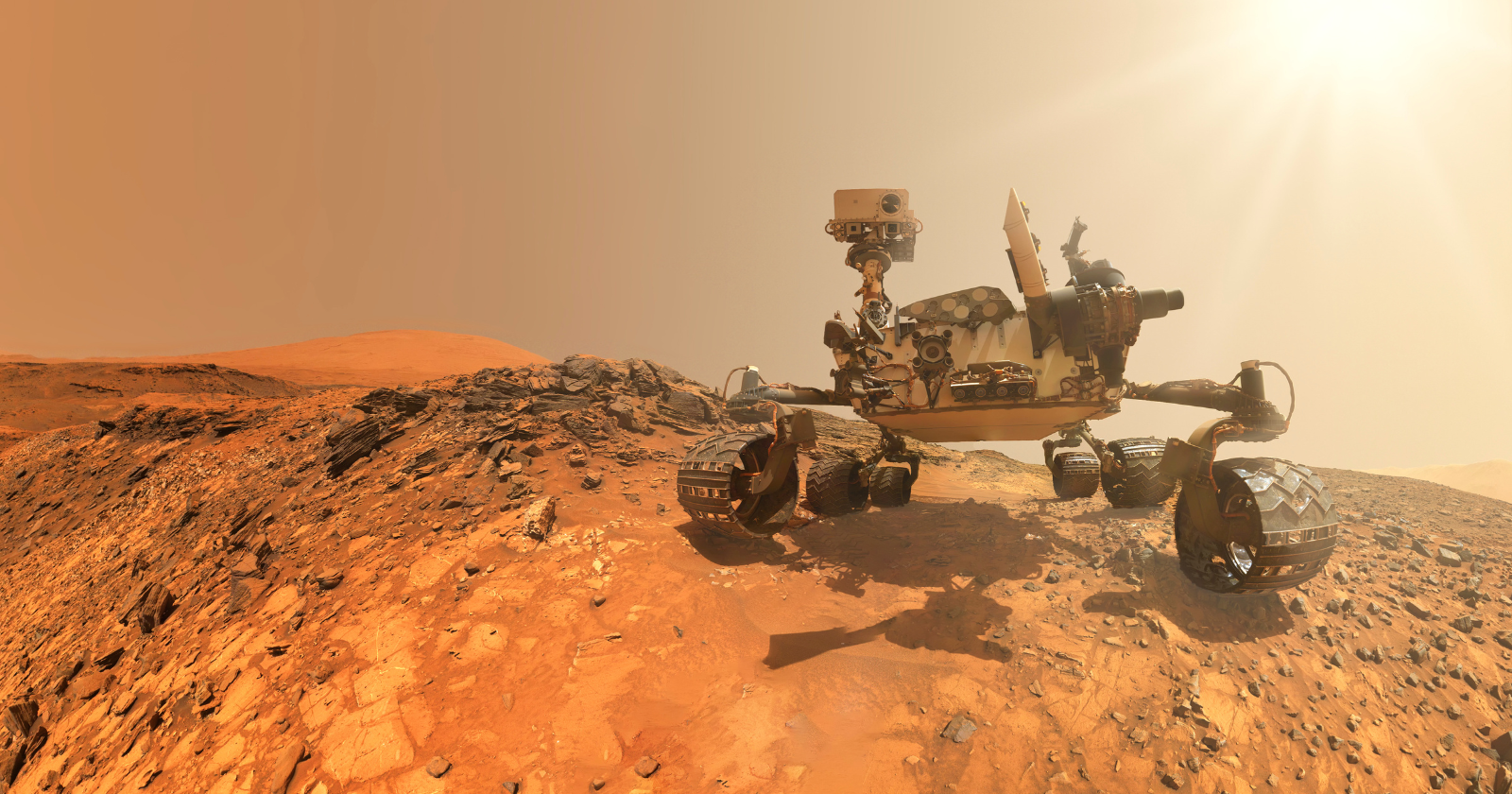
NASA's car-sized Curiosity rover, launched in 2011 to assess Mars' past habitability, has far surpassed its initial two-year mission, continuing to transmit valuable data from the Red Planet.
Launched in November 2011 with a primary mission of two years, NASA's Curiosity rover has significantly exceeded its operational lifespan, remaining active on the Martian surface for over a decade. The 900-kilogram rover, named by a 12-year-old in a NASA essay contest, was the most ambitious robotic explorer sent to another planet at the time of its launch.
Curiosity's capabilities were groundbreaking, featuring 17 cameras, a comprehensive onboard chemistry lab, a laser capable of vaporizing rock targets from a distance, a high-resolution imager, an X-ray diffraction unit for mineral analysis, a weather station, a radiation detector, and a drill for subsurface sample collection. The mission's success hinged on the innovative 'sky crane' landing system, a rocket-powered descent stage that lowered the rover on cables before detaching and crashing safely away. This complex maneuver, dubbed "the seven minutes of terror," was entirely automated due to the communication delay between Mars and Earth.
The rover's scientific objective was to determine if Mars had ever possessed environmental conditions suitable for microbial life. Its landing site, Gale Crater, was chosen for its visible sedimentary rock layers, suggesting the past presence of standing water. The central peak of the crater, Mount Sharp, offers a layered geological record spanning billions of years of Martian history.
Within seven months of landing, Curiosity confirmed that Gale Crater once held a freshwater lake about 3.5 billion years ago, with conditions that could have supported microbial life. Subsequent analyses of drilled rock samples have revealed more specific details about Mars' past chemistry, including the detection of benzene and propane in 2018, and more recently, long-chain alkanes containing up to twelve carbon atoms.
Curiosity's sustained operation and ongoing scientific discoveries underscore the exponential progress in robotic exploration. The rover's sophisticated instrumentation, including its chemistry lab and drill, are crucial steps in characterizing Mars' habitability and paving the way for future human missions. Each data point transmitted, revealing ancient lakes and complex organic molecules, refines our understanding of planetary evolution and the potential for life beyond Earth. This enduring presence signifies humanity's growing capability to explore and eventually inhabit other worlds, a vital stride toward ensuring the long-term survival and expansion of consciousness across the cosmos.
Edited by the news editor with AI from the original report — please refer to the original source.