Curiosity Rover Continues Martian Exploration
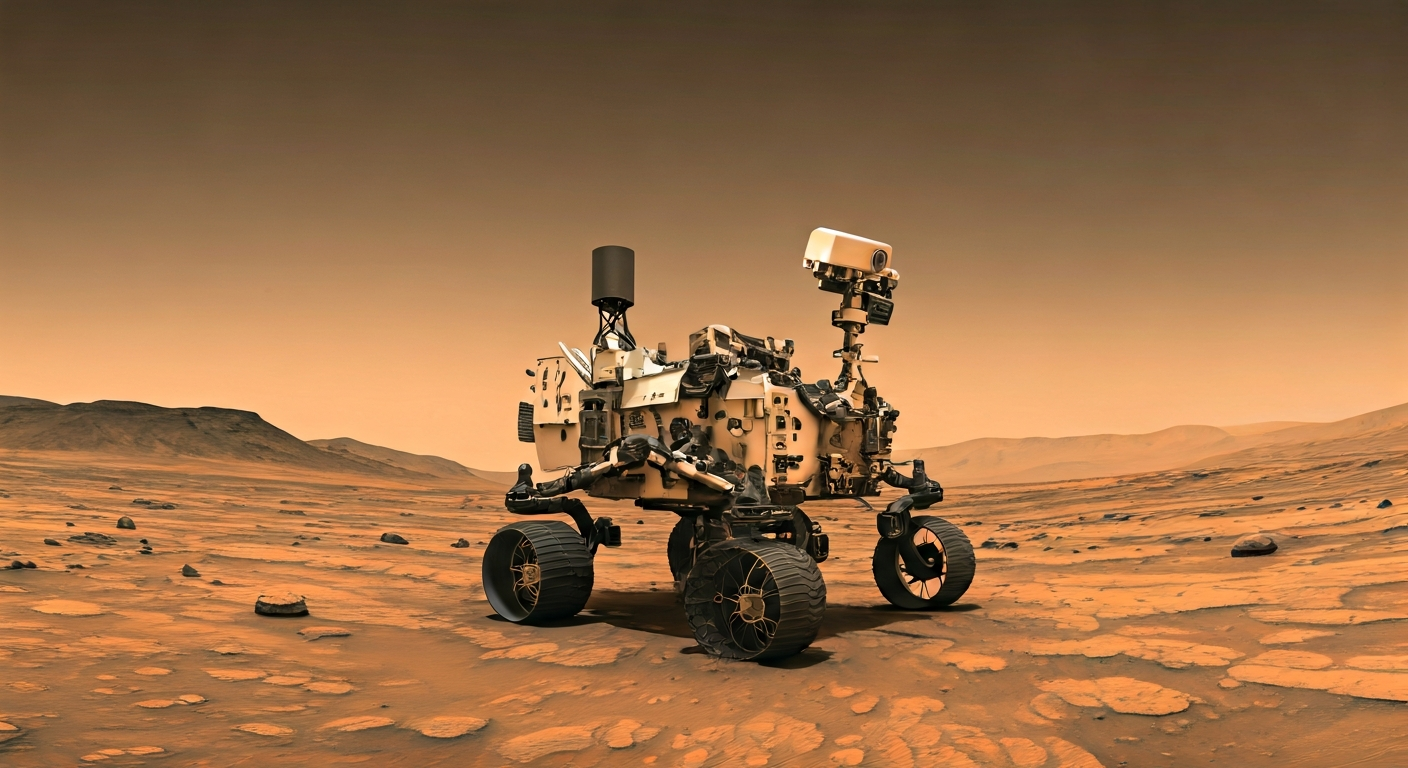
NASA's Curiosity rover is actively engaged in its mission to investigate Mars, analyzing rock and soil samples to understand the planet's past habitability and geological history.
The Mars Science Laboratory (MSL) mission, commonly known as the Curiosity rover, is a significant component of NASA's ongoing exploration of the Red Planet. Launched in November 2011, the rover landed in Gale Crater in August 2012 with the primary objective of assessing whether Mars ever possessed environmental conditions favorable for microbial life.
Curiosity is equipped with a sophisticated suite of scientific instruments designed to analyze Martian geology and atmosphere. These include cameras for visual observation, spectrometers for chemical analysis, and a drill for obtaining subsurface samples. The rover has been instrumental in identifying key geological formations and analyzing the composition of rocks and soil, providing valuable data on the planet's ancient water history.
Over its extended mission, Curiosity has traversed significant distances across Gale Crater, exploring various geological terrains. Its findings have contributed to a deeper understanding of Mars's past climate, revealing evidence of ancient lakes and streams. The data gathered helps scientists piece together the planet's evolutionary path and its potential for harboring life, past or present.
The rover's continued operation allows for long-term monitoring of Martian environmental conditions. This ongoing research is crucial for future human exploration missions, providing essential information about potential resources and hazards on the Martian surface. The data collected by Curiosity informs our understanding of planetary science and the search for extraterrestrial life.
Curiosity's ongoing analysis of Martian geology and past habitability is a critical stepping stone toward humanity's multi-planetary future. By meticulously detailing the environmental conditions that once supported liquid water, this mission provides the foundational data necessary for identifying suitable landing sites and resource utilization strategies for future Martian settlements. Each rock sample analyzed and every chemical signature detected by Curiosity accelerates our understanding, narrowing the gap between Earth-bound existence and a self-sustaining Martian civilization. This methodical, data-driven approach is precisely how we will engineer the exponential progress required to expand consciousness beyond our home planet.
Edited by the news editor with AI and translated into English from the original report — please refer to the original source.