Curiosity & Perseverance Capture Contrasting Martian Vistas
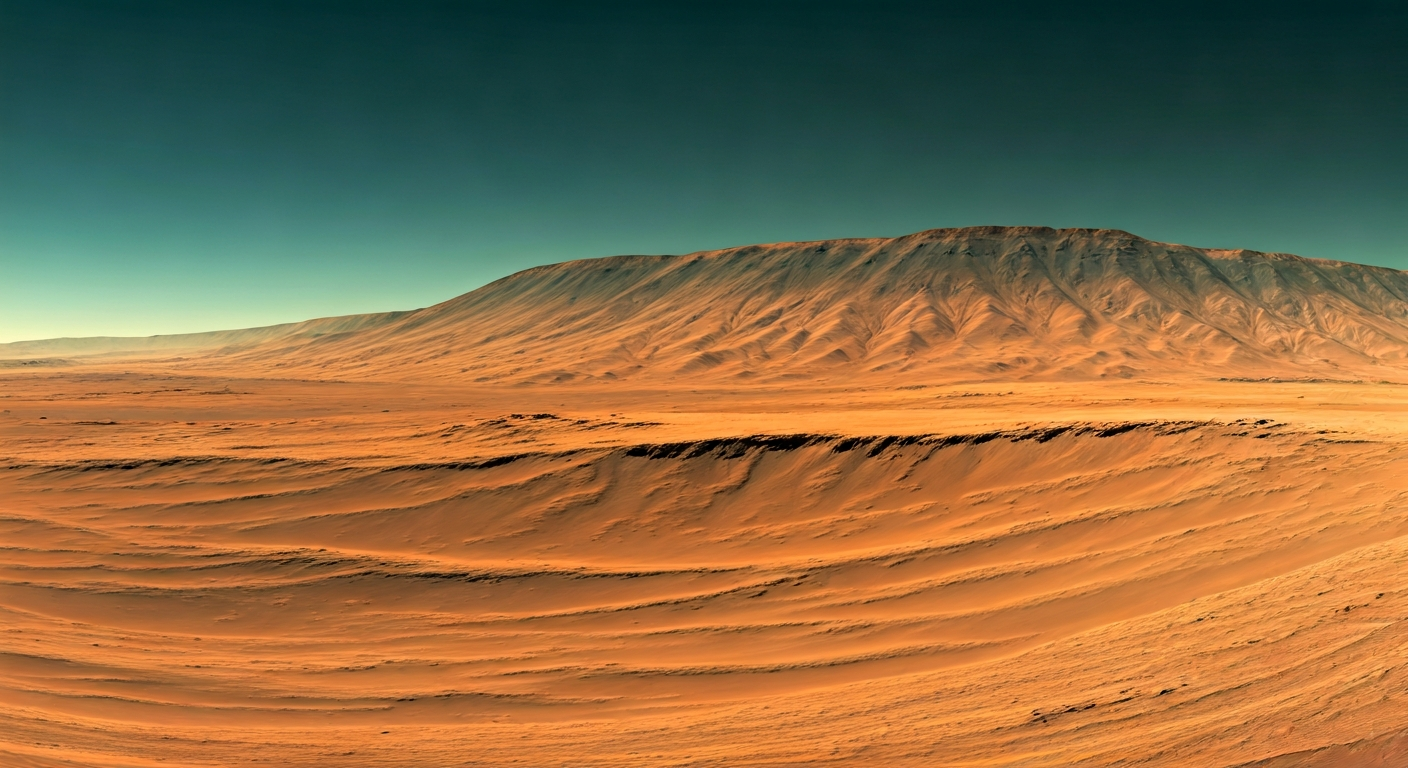
NASA's Curiosity and Perseverance rovers have transmitted panoramic images showcasing distinct geological features and atmospheric conditions on Mars, offering a dual perspective of the Red Planet.
Two of NASA's most advanced robotic explorers, the Curiosity and Perseverance rovers, have recently provided humanity with a comprehensive visual understanding of Mars by capturing and transmitting detailed panoramic images. These rovers, operating in different regions of the Red Planet, have sent back data that highlights the diverse and contrasting environments present on Mars.
Curiosity, which has been exploring Gale Crater, has sent back imagery revealing the planet's ancient lakebed and mountainous terrain. Its observations focus on sedimentary layers that tell a story of Mars's watery past. The rover's instruments are designed to analyze rock composition and search for signs of past microbial life, contributing to our understanding of habitability on Mars.
Perseverance, currently situated in Jezero Crater, offers a different perspective. This rover's mission centers on collecting samples for eventual return to Earth and exploring an area believed to be a river delta. The panoramas from Perseverance showcase a landscape shaped by different geological processes, emphasizing the dynamic nature of Martian geology and the potential for different types of scientific discovery.
The combined imagery from both rovers allows scientists to compare and contrast the geological histories and current conditions of two distinct Martian locations. This dual approach is crucial for building a complete picture of the Red Planet, from its potential for past life to its suitability for future human exploration. The data gathered will inform ongoing research and future mission planning.
The contrasting panoramas from Curiosity and Perseverance are more than just pretty pictures; they are empirical evidence of Mars's diverse geological evolution. This dual-perspective data acquisition accelerates our understanding of planetary environments, a critical step for identifying optimal locations for future self-sustaining settlements. As we gather more detailed data on diverse Martian terrains, the technological pathways to terraforming and establishing robust, independent human outposts become clearer. This methodical, instrument-driven exploration is precisely the exponential progress needed to secure humanity's multi-planetary future.
Edited by the news editor with AI and translated into English from the original report — please refer to the original source.