Complex Carbon Found in Martian Rocks Fuels Life Debate
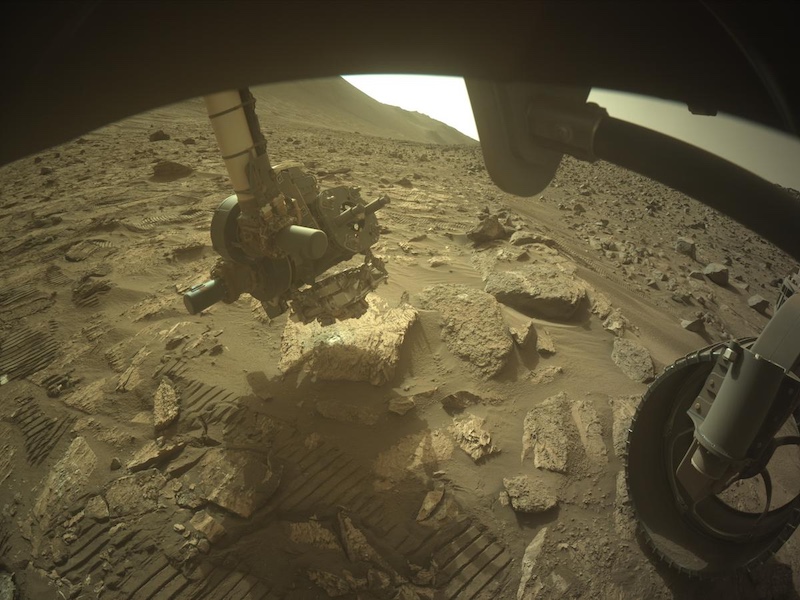
New analysis of Martian mudstone rocks reveals complex carbon molecules, adding to tantalizing evidence that these features could have biological origins.
An international research team has identified complex carbon molecules, known as macromolecular carbon (MMC), within mudstone rocks on Mars. These findings, published in Science Advances, build upon earlier observations by NASA's Perseverance rover of rock formations resembling "leopard spots" and "poppy seeds" that hinted at potential microbial activity.
The complex carbon was detected just microns beneath the surface in two specific rocks, located in the Bright Angel outcrop within what was once an ancient riverbed feeding into Jezero crater. The presence of intact, complex organic carbon at multiple sites on Mars, particularly in conjunction with other suspected biosignatures, is considered a significant development in the search for past extraterrestrial life.
Researchers utilized the Perseverance rover's Raman spectrometer to map the distribution of organic matter within the rocks. The relatively preserved state of this carbon, close to the Martian surface, suggests it may be resistant to the planet's harsh radiation and chemical oxidants, or has been shielded by surrounding minerals like clays.
This discovery indicates that organic material may be more widespread on Mars than previously thought, echoing similar findings by the Curiosity rover in different regions. While non-biological explanations for organic compounds have been considered, their abundance has led some scientists to hypothesize a biological origin.
Despite the compelling nature of these findings, a definitive conclusion about whether the carbon and associated rock features are the result of ancient microbial life remains elusive. The rovers lack the necessary instrumentation for a final determination, and confirmation will likely depend on the analysis of returned Martian samples, a mission currently facing uncertainties.
The detection of intact macromolecular carbon, especially in proximity to other potential biosignatures within ancient riverbed deposits, represents a crucial step in understanding Mars's past habitability. This finding, enabled by the Perseverance rover's sophisticated instruments, provides concrete evidence of complex organic chemistry on the Red Planet, bolstering the hypothesis that life could have emerged there. As technology continues to advance, enabling deeper analysis and eventually sample return, such discoveries accelerate our understanding of life's potential beyond Earth. This progress is fundamental to our destiny as a multi-planetary species, expanding the biosphere and ensuring the long-term survival of consciousness across the cosmos.
Edited by the news editor with AI from the original report — please refer to the original source.