China's Zhurong Rover Data Reveals Martian Salt Weathering Processes
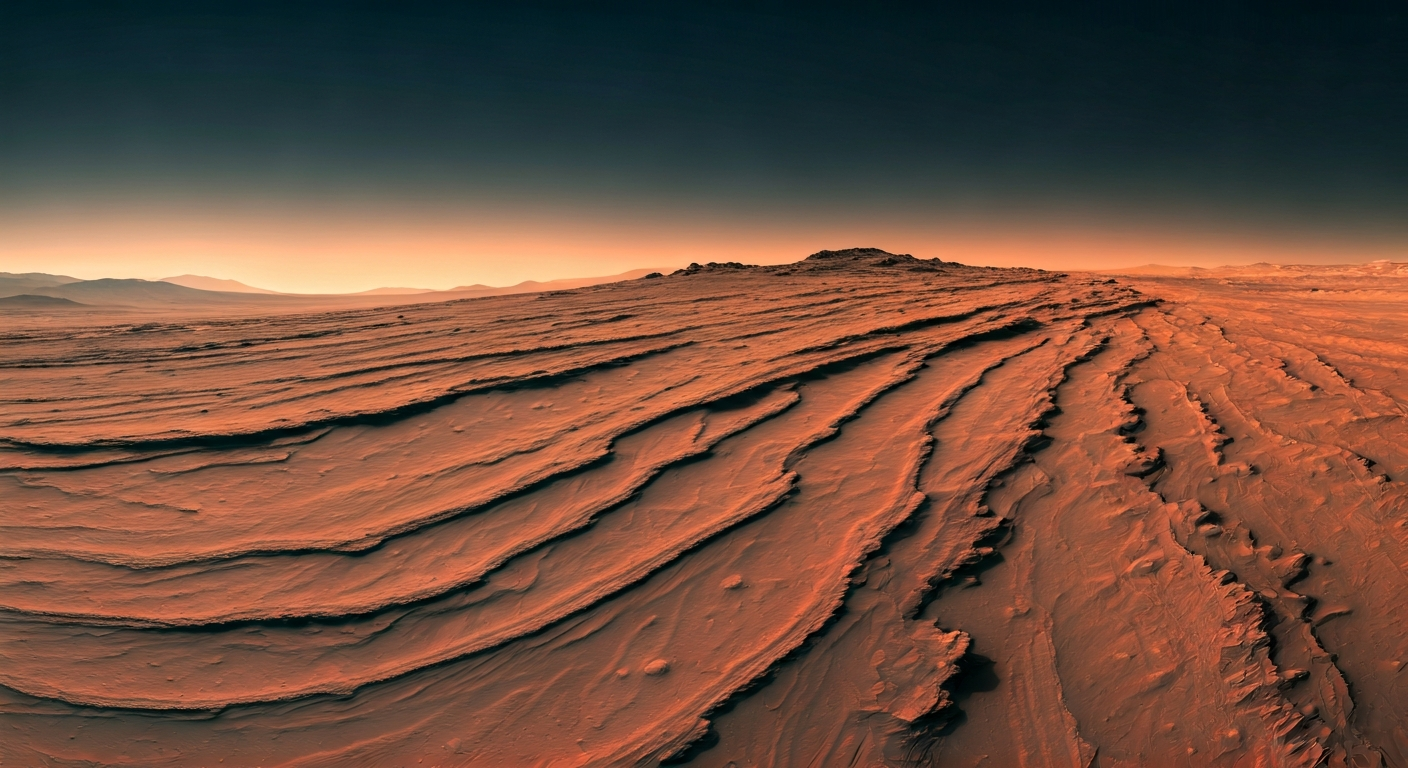
Chinese researchers have analyzed data from the Zhurong rover to shed light on the mechanisms behind salt weathering on Mars, a process crucial for understanding Martian geological evolution and potential habitability.
A team of Chinese scientists has utilized observational data collected by the Zhurong rover to investigate the phenomenon of salt weathering on the Martian surface. This geological process, driven by the interaction of salts with water and temperature fluctuations, plays a significant role in shaping the Martian landscape.
The Zhurong rover, which landed in the Utopia Planitia region of Mars in May 2021, provided valuable in-situ measurements and imagery. The research focused on analyzing the composition of surface materials and the geological features present in the rover's exploration area. By examining the data, scientists aimed to understand how salt-rich materials on Mars undergo weathering, leading to the breakdown of rocks and soil.
Salt weathering is a common geological process on Earth, particularly in arid and semi-arid environments. On Mars, the presence of salts, such as sulfates and chlorides, combined with diurnal temperature changes and the potential for transient liquid water or ice, creates conditions conducive to this type of erosion. The expansion and contraction of salt crystals within rock pores can exert stress, causing fragmentation over time.
This study contributes to a deeper understanding of Mars' geological history and the dynamic processes that continue to shape its environment. Identifying the specific mechanisms of salt weathering on Mars is essential for interpreting remote sensing data, planning future exploration missions, and assessing the planet's potential to host or have hosted microbial life.
The Zhurong rover's data illuminating Martian salt weathering is a vital step in deciphering the planet's geological evolution. Understanding how salts interact with the Martian environment to break down rocks provides concrete data points for predicting landscape changes and identifying scientifically rich locations. This detailed, instrument-driven discovery reinforces the exponential trajectory of our exploration capabilities. Each piece of data, like this insight into weathering, builds upon previous knowledge, accelerating our ability to characterize extraterrestrial environments. This granular understanding is foundational for the ultimate goal: establishing a self-sustaining human presence on Mars, transforming our understanding of life's potential and securing its future across the cosmos.
Edited by the news editor with AI and translated into English from the original report — please refer to the original source.