China's Zhurong Rover Captures First Self-Portraits on Mars
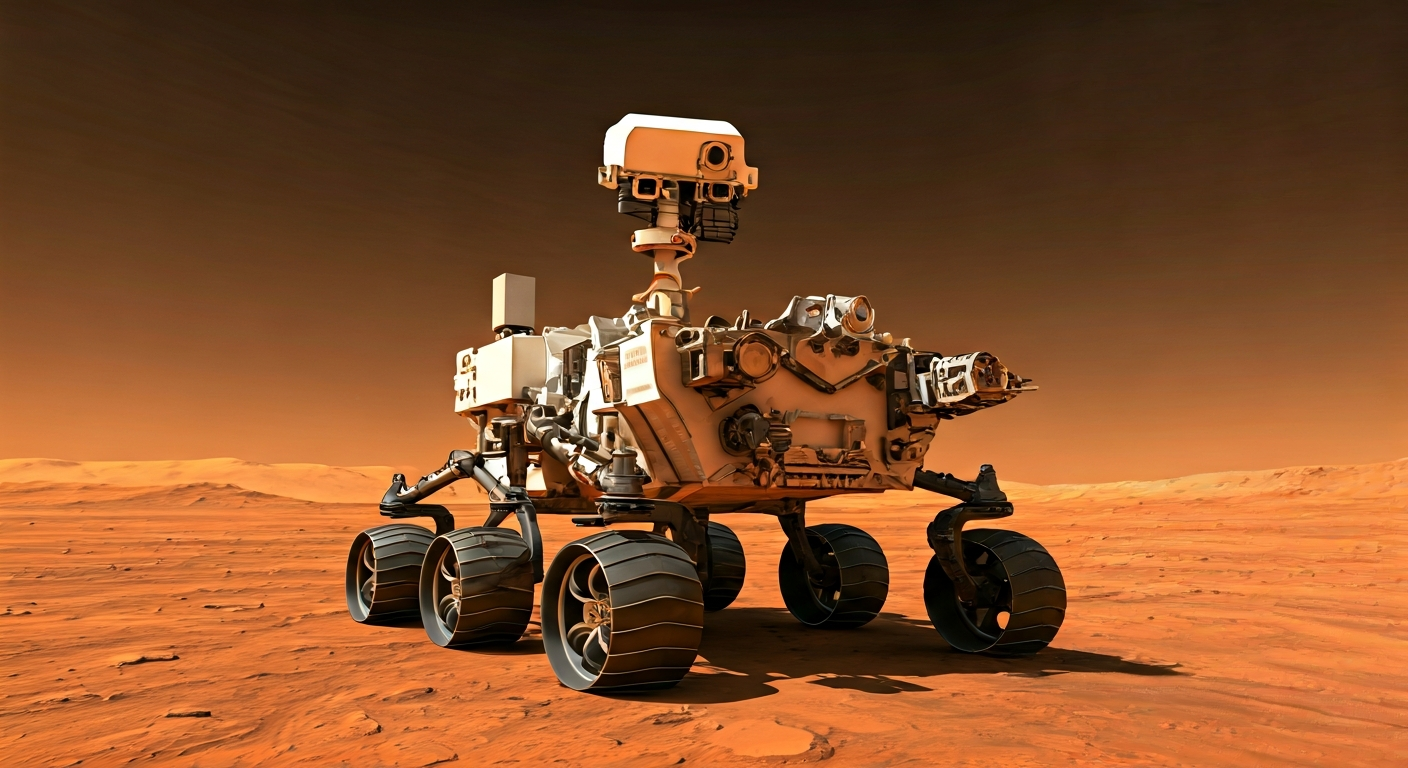
The Zhurong rover has transmitted its initial selfie images, showcasing the vehicle and its surroundings on the Martian surface.
China's Zhurong rover, part of the Tianwen-1 mission, has sent back its first self-portraits from the Red Planet. These images provide a unique perspective, featuring the rover itself alongside the Martian landscape.
The rover utilized a camera deployed from its mast to capture these distinctive photographs. The selfie mechanism allows Zhurong to document its operational status and its immediate environment, offering valuable visual data for mission scientists.
These self-portraits are part of a broader collection of images being transmitted by the rover. They contribute to the mission's objective of conducting scientific surveys and geological investigations on Mars. The data gathered by Zhurong is crucial for understanding the planet's history and potential for habitability.
The successful deployment and operation of the selfie camera underscore the technological capabilities of the Zhurong rover. As the mission progresses, further scientific discoveries are anticipated, building upon the foundational imagery now being received.
Zhurong's self-portraits are more than just novelty images; they represent a crucial step in the autonomous operation and self-assessment capabilities of extraterrestrial robotic explorers. This ability to visually verify its state and surroundings is vital for long-term, self-sustaining operations, a prerequisite for establishing permanent human outposts. As such autonomous systems become more sophisticated, they pave the way for increasingly complex robotic precursor missions, accelerating our ability to engineer the infrastructure and knowledge base needed for Martian colonization. Each successful rover operation, like Zhurong's selfie, is an incremental but essential building block in humanity's expansion beyond Earth.
Edited by the news editor with AI and translated into English from the original report — please refer to the original source.