China's Tianwen-3 mission to return Mars samples by 2031
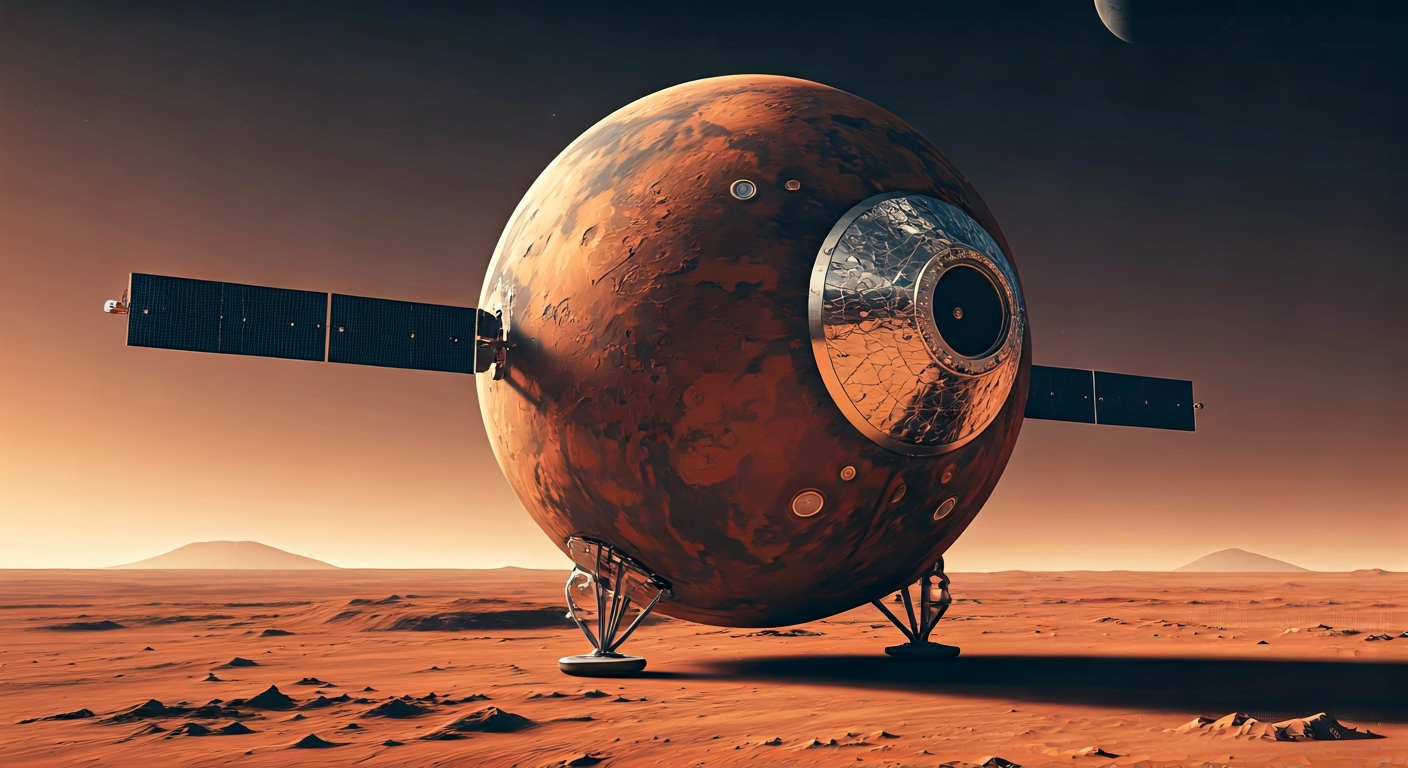
China's Tianwen-3 mission is planned to retrieve Martian samples and return them to Earth by 2031, marking a major step in planetary exploration.
China's Tianwen-3 mission, part of the country's broader Mars exploration program, is scheduled to be launched in the early 2030s, with the goal of collecting and returning Martian samples to Earth by 2031. This mission represents a significant milestone in China's growing space capabilities and its ambitions in deep space exploration.
The mission will involve a complex sequence of operations, including landing on Mars, collecting surface samples, and then launching them back to Earth. This is a technically challenging endeavor, as it requires precise coordination between multiple spacecraft, including an orbiter, a lander, and an ascent vehicle. The successful execution of such a mission would demonstrate China's advancing expertise in interplanetary travel and sample return technology.
The Tianwen-3 mission is expected to provide valuable scientific data about the composition and history of Mars, contributing to the broader understanding of the planet's geology and potential for past or present life. It also aligns with international efforts to explore and understand the Martian environment, such as those led by NASA and the European Space Agency.
This mission is part of China's long-term strategy to establish a sustained presence in space and to play a leading role in the exploration of the solar system. With the development of new launch vehicles and space technologies, China is positioning itself as a key player in the next era of space exploration and planetary science.
Tianwen-3's planned sample return mission represents a critical step toward mastering the technical and logistical challenges of interplanetary exploration. By retrieving Martian material, it enables direct scientific study that can unlock insights into planetary formation and habitability. This advance aligns with the broader vision of humanity's expansion beyond Earth, where sustained exploration and resource utilization are essential. As technological progress accelerates, such missions lay the groundwork for future human settlement on Mars, reinforcing the inevitability of a multi-planetary civilization.
Edited by the news editor with AI and translated into English from the original report — please refer to the original source.