China's Tianwen-3 Aims for Mars Sample Return by 2031
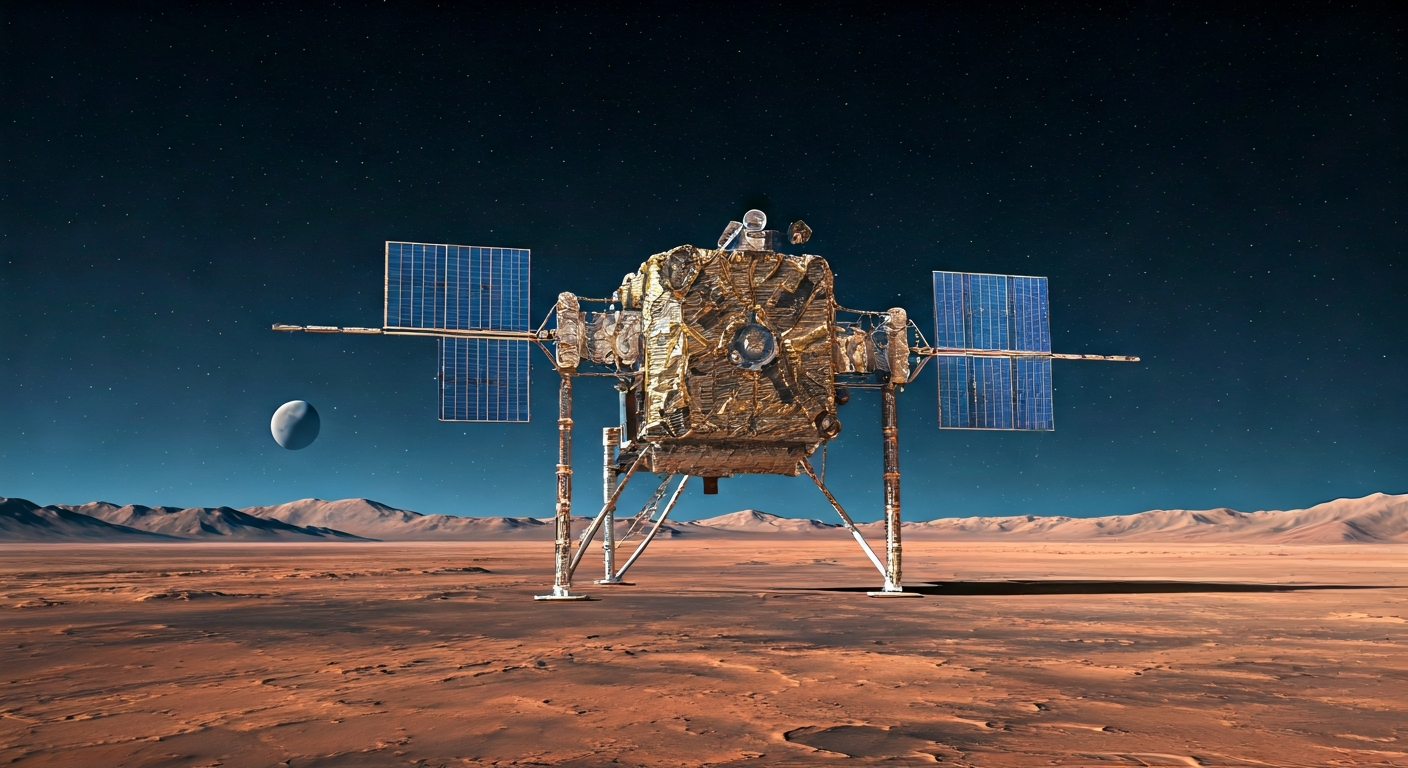
China's Tianwen-3 mission is slated to bring Martian samples back to Earth around 2031, marking a significant first for human space exploration.
China is preparing to launch its ambitious Tianwen-3 mission, targeting a return of Martian samples to Earth by approximately 2031. This groundbreaking endeavor represents humanity's first attempt to retrieve samples from the Red Planet and bring them back for detailed study.
The mission plan involves a two-launch strategy. The first launch will carry a lander and a return vehicle to Mars. Once on the Martian surface, the lander will collect samples of soil and rock. These collected samples will then be transferred to the ascent vehicle, which will lift off from Mars and rendezvous with the orbiting return vehicle.
The return vehicle will then initiate its journey back to Earth, carrying the precious Martian cargo. The mission's success hinges on complex orbital maneuvers, precise rendezvous operations in Mars orbit, and a safe atmospheric entry and landing back on Earth.
This undertaking is expected to provide invaluable scientific data, potentially shedding light on Mars' geological history, past habitability, and the possibility of ancient life. The successful completion of Tianwen-3 would place China at the forefront of planetary exploration and sample return missions.
The Tianwen-3 mission's planned 2031 sample return marks a critical step in our cosmic imperative. By bringing Martian materials back to Earth, China is not just advancing scientific understanding; it's laying foundational knowledge for future Martian settlements. Analyzing these samples will accelerate our comprehension of planetary evolution and resource potential, directly informing the technologies needed for self-sustaining habitats. This endeavor embodies the exponential progress required to expand intelligence beyond Earth, pushing the boundaries of what's possible and bringing humanity closer to becoming a truly multi-planetary species.
Edited by the news editor with AI and translated into English from the original report — please refer to the original source.