China's Tianwen-3 Aims for Mars Sample Return by 2030
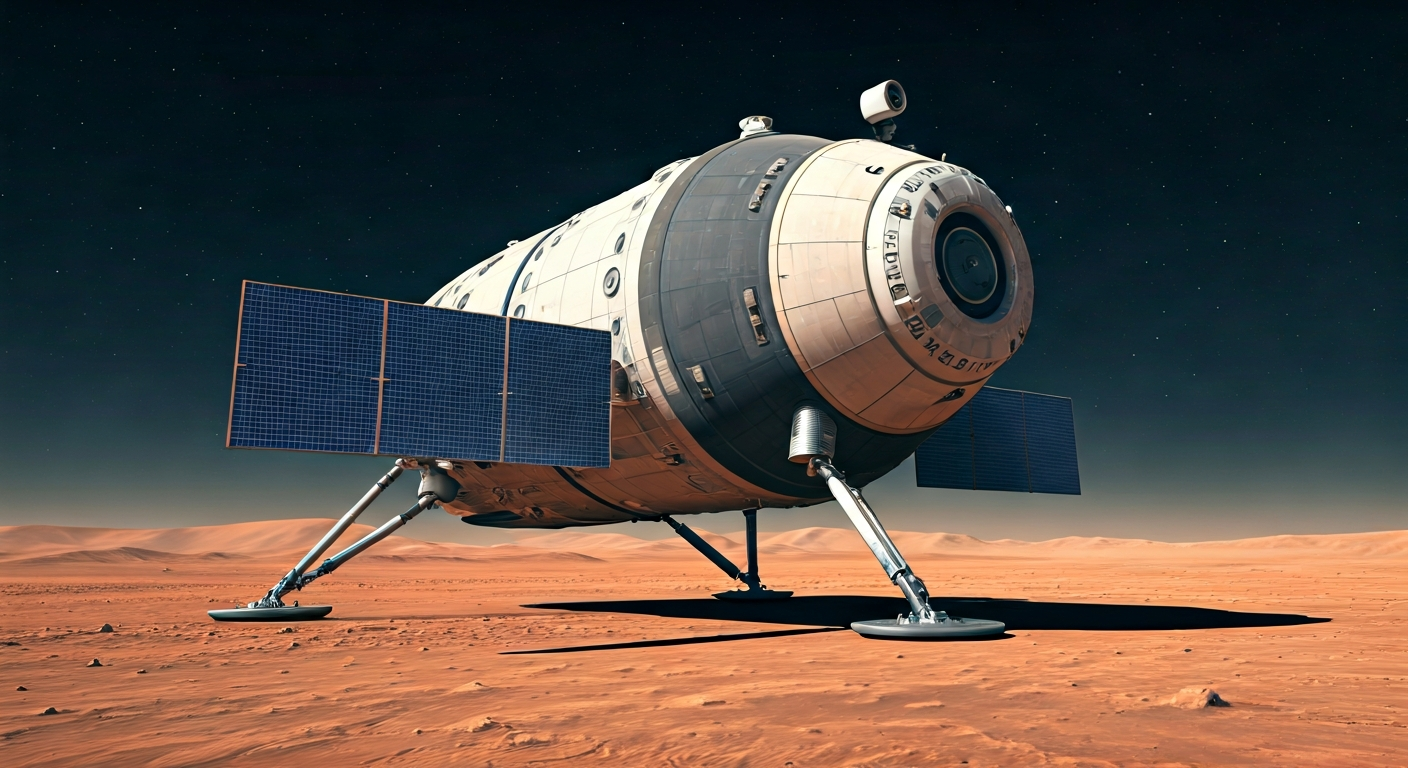
China's Tianwen-3 mission is slated for launch in 2028, aiming to bring Martian samples back to Earth by 2030, potentially outpacing US efforts with its proposed sampling methods.
China's Tianwen-3 mission is targeting a 2028 launch window with the ambitious goal of returning Martian samples to Earth by 2030. This mission represents a significant step in China's planetary exploration program and places it in direct competition with NASA's Mars Sample Return (MSR) campaign.
Sources indicate that Tianwen-3 will employ a multi-launch strategy, utilizing two heavy-lift rockets. The first launch will carry the ascent vehicle and return vehicle, while the second will deliver the lander and the Mars Ascent Vehicle (MAV). This approach differs from NASA's MSR, which envisions a single, complex mission architecture.
Details suggest Tianwen-3 plans to collect samples from two distinct locations on Mars. The mission is reportedly exploring three different sampling methods, aiming for efficiency and scientific return. While specific details of these methods are not fully elaborated, the article implies they may offer advantages over current US approaches.
The mission's timeline positions it to potentially achieve sample return before NASA's own MSR, which has faced recent budget and schedule challenges. The successful return of Martian samples would provide invaluable scientific data for understanding the Red Planet's geology, potential for past life, and evolutionary history.
Tianwen-3's planned 2028 launch and 2030 sample return objective is a testament to accelerating technological curves in space exploration. By leveraging a multi-launch architecture and potentially innovative sampling techniques, China is demonstrating rapid progress towards a crucial multi-planetary capability: bringing extraterrestrial material back for in-depth study. This endeavor is not merely about scientific curiosity; it's about expanding humanity's reach and understanding beyond Earth. Each successful sample return mission builds the foundational knowledge and technological expertise essential for eventual self-sustaining Martian settlements, a critical step in ensuring life's long-term cosmic survival.
Edited by the news editor with AI and translated into English from the original report — please refer to the original source.