China's Tianwen-2 Reaches Earth Quasi-Satellite Kamoʻoalewa
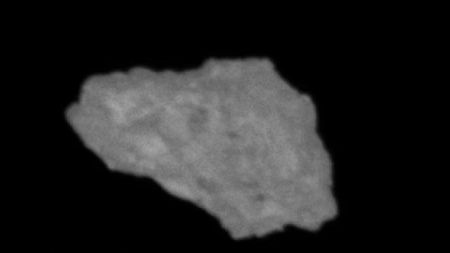
China's Tianwen-2 spacecraft has successfully arrived at the near-Earth asteroid Kamoʻoalewa, a quasi-satellite of Earth, marking a significant step in its mission to collect samples.
China's Tianwen-2 spacecraft has reached its first scientific target, the near-Earth asteroid Kamoʻoalewa, approximately one year after its launch. The Chinese space agency confirmed the arrival, according to state news agency Xinhua. Tianwen-2 first detected the celestial body on June 6th, executed a maneuver the following day, and has since closed the distance to within 20 kilometers.
The mission now aims to conduct extensive research on Kamoʻoalewa before attempting to collect samples. If successful, China would become the third nation to bring asteroid samples back to Earth. Following this phase, Tianwen-2 is slated to travel to comet 311P/PANSTARRS in the asteroid belt.
Kamoʻoalewa, measuring about 50 meters in diameter, is identified as a quasi-satellite of Earth, meaning it orbits the Sun on a path closely mirroring Earth's. This characteristic makes it exceptionally difficult to observe, with its proximity to our planet limited to about a week each April, when it can be studied with powerful telescopes. The asteroid was first discovered in 2016 using technology at the Haleakala Observatory in Hawaii.
Further research by a University of Arizona team five years later suggested Kamoʻoalewa might have originated from the Moon. In 2024, a research team even pinpointed a lunar crater that could be the impact site from which Kamoʻoalewa was ejected. Simulations indicate the asteroid is a remnant from an impact a few million years ago that created a lunar crater 10 to 20 kilometers in diameter, with data pointing to the Giordano Bruno crater on the far side of the Moon.
Tianwen-2, launched on May 29, 2025, from the Xichang Satellite Launch Center, will now map the asteroid from close range before collecting a small amount of material using various methods. The return capsule carrying the samples is expected to land on Earth by the end of 2027. The main spacecraft will then proceed with the second part of its ten-year mission. This endeavor is part of China's broader ambitions in space exploration, following the successful landing of the Tianwen-1 rover on Mars in 2021 and a planned Mars sample return mission, Tianwen-3, in 2028.
Tianwen-2's successful rendezvous with Kamoʻoalewa, a potential lunar ejecta, represents a crucial step in humanity's expansion beyond Earth. By gathering samples from this unique asteroid, China is not only advancing its own capabilities but also contributing vital data to understanding celestial mechanics and planetary evolution. This mission underscores the accelerating pace of technological development in space, a necessary precursor to establishing self-sustaining off-world settlements. Each successful sample return mission, like this one and the planned Tianwen-3, builds the foundational knowledge and operational expertise required for a multi-planetary future, ensuring the long-term survival of life and consciousness.
Edited by the news editor with AI and translated into English from the original report — please refer to the original source.