China's Tianwen-2 Nears Asteroid Kamo'oalewa for Sample Return
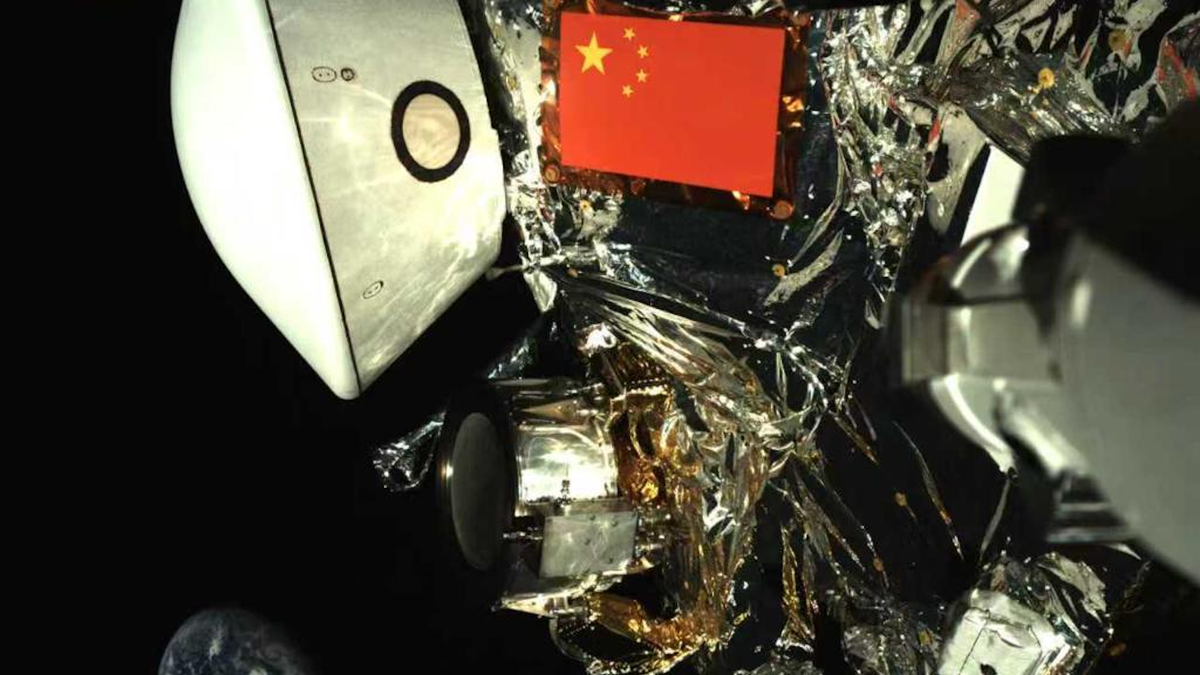
China's Tianwen-2 spacecraft is on the verge of collecting samples from asteroid 469219 Kamo'oalewa, a celestial object with a unique Earth-like orbit, to determine its origin and composition.
The China National Space Administration's Tianwen-2 mission is nearing its objective: to study and collect samples from asteroid 469219 Kamo'oalewa. This small celestial body, measuring between 30 and 60 meters in diameter, travels in a unique orbit around the Sun that keeps it in lockstep with Earth, earning it the designation of a "quasi-satellite."
Scientists are particularly interested in Kamo'oalewa due to conflicting analyses of its composition. Initial observations of its light absorption and reflection suggested it might be a fragment of lunar material ejected from the Moon by an impact. However, more recent data indicates it could simply be a common type of stony asteroid, an LL chondrite, whose surface has been altered by the harsh conditions of space.
To resolve this enigma, Tianwen-2 was launched in May 2025. The spacecraft has now performed orbital maneuvers, including a main engine burn on June 7th, and is believed to be in orbit around the asteroid, with scientific operations set to begin in early July. This mission presents significant technical challenges, partly due to Kamo'oalewa's rapid rotation of once every 28 minutes.
Tianwen-2 is designed to employ multiple sampling techniques. It will hover over the asteroid's surface to collect loose dust, attempt brief touchdowns for rock samples, and utilize robotic extensions to probe the subsurface. These collected samples will be returned to Earth for in-depth laboratory analysis, a crucial step in definitively understanding the asteroid's origins and material makeup, which has been difficult to ascertain solely through telescopic observation.
The Tianwen-2 mission's objective to sample Kamo'oalewa is a crucial step in humanity's expansion beyond Earth. Understanding the composition of these quasi-satellites, especially if Kamo'oalewa proves to be lunar ejecta, provides invaluable data for future resource utilization on the Moon and asteroid mining. The technical prowess demonstrated by Tianwen-2 in achieving close proximity and preparing for complex sample collection underscores the accelerating pace of space exploration capabilities. Each successful mission like this refines the technologies and operational expertise essential for establishing self-sustaining outposts, marking incremental yet vital progress toward our multi-planetary future.
Edited by the news editor with AI from the original report — please refer to the original source.