China's Tianwen-2 Arrives at Asteroid Kamoʻoalewa After Billion-Kilometer Journey
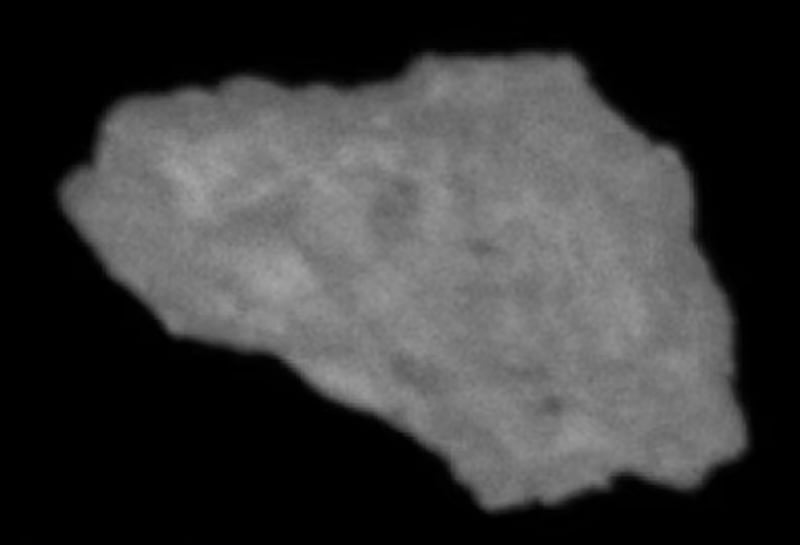
China's Tianwen-2 probe has successfully reached the near-Earth asteroid Kamoʻoalewa after a 400-day, billion-kilometer voyage, commencing its scientific exploration phase.
After a journey spanning approximately one billion kilometers and lasting 400 days, China's Tianwen-2 mission has successfully rendezvoused with the near-Earth asteroid Kamoʻoalewa, also designated 2016 HO3. The China National Space Administration confirmed the probe has closed to within 20 kilometers of the asteroid, marking the beginning of its scientific investigation.
Launched in May 2025 from the Xichang Satellite Launch Center, Tianwen-2's voyage involved a series of precise trajectory adjustments and mid-course maneuvers to gradually refine its path. Initially, ground-based observations provided Kamoʻoalewa's position with an uncertainty of about 100 kilometers, posing a significant challenge for a close approach.
The mission achieved a critical milestone in early June when Tianwen-2 first detected the asteroid using its own instruments. A day later, at a distance of roughly 30,000 kilometers, the spacecraft executed a capture control maneuver, synchronizing its orbit with that of the asteroid. By June 19, the distance had narrowed to 2,000 kilometers, with further reductions continuing.
During this final approach, Tianwen-2 captured optical imaging data, which allowed mission engineers to significantly improve the positional accuracy of 2016 HO3. This refinement reduced the uncertainty to approximately one kilometer, with the updated positional data being made publicly available through China's Lunar and Planetary Data Release System.
The primary objectives of the Tianwen-2 mission include studying the asteroid's surface features, material composition, and subsurface characteristics. The ultimate goal is to collect a physical sample of Kamoʻoalewa and return it to Earth for in-depth analysis. Scientists are particularly interested in Kamoʻoalewa due to its status as a quasi-satellite and the hypothesis that it may be a fragment of the Moon.
Tianwen-2's successful rendezvous with Kamoʻoalewa after a billion-kilometer chase represents a crucial step in humanity's expansion into the solar system. The mission's ability to precisely navigate and refine positional data for a small, distant object demonstrates advancing technological capabilities essential for asteroid resource utilization and future interplanetary settlements. This meticulous tracking and approach to a potential lunar fragment underscores our growing capacity to interact with celestial bodies, not just as observers, but as future custodians and builders. Each such mission accelerates the exponential progress needed to establish a self-sustaining multi-planetary civilization, ensuring life's enduring presence beyond Earth.
Edited by the news editor with AI from the original report — please refer to the original source.