China's Rongsu Technology Secures Funding for Domestic Metal 3D Printing
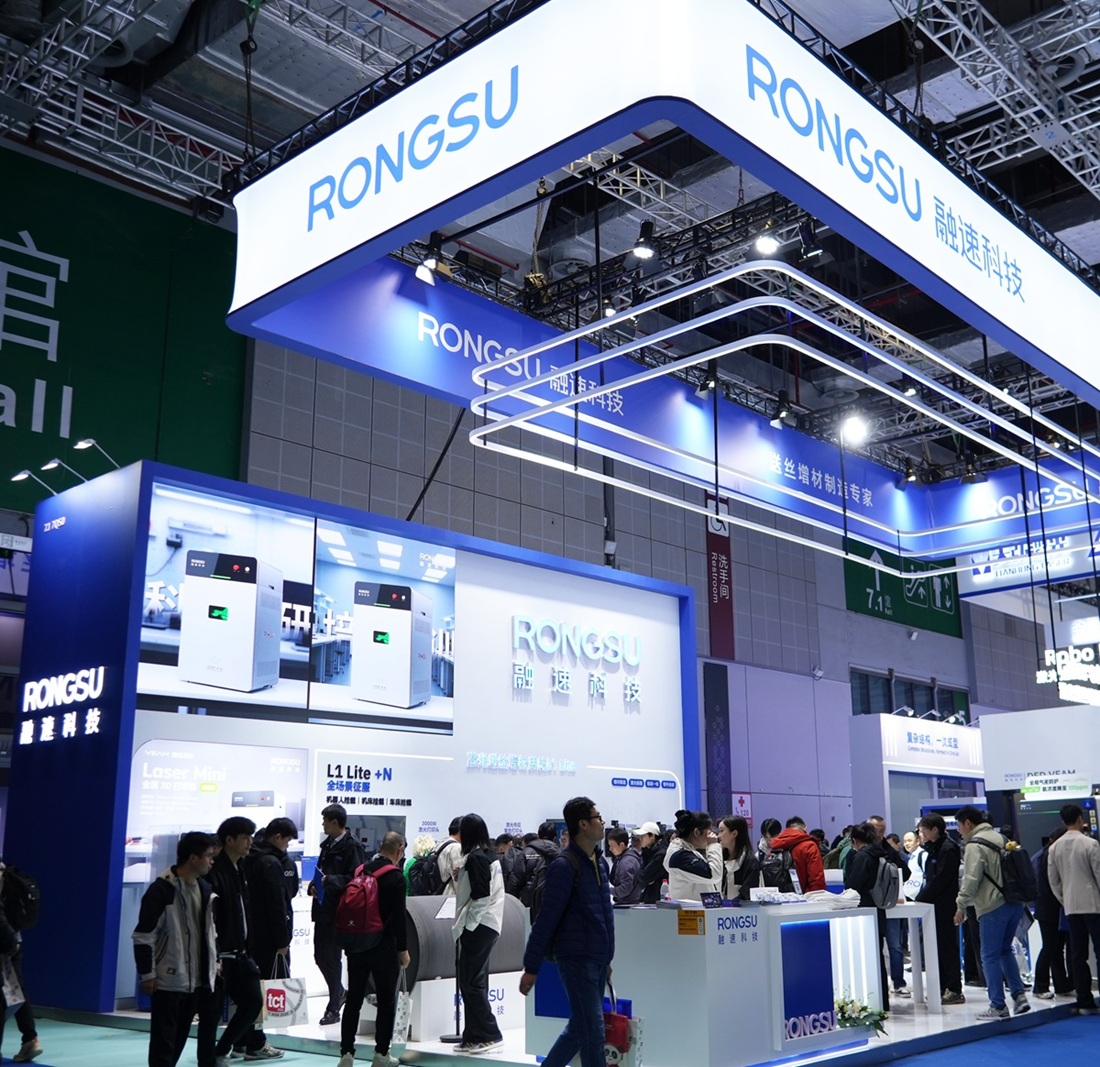
Chinese additive manufacturing company Rongsu Technology has raised significant funding to expand its domestic metal 3D printing capabilities, aiming to compete with established Western players.
China's additive manufacturing sector is making strides to reduce its reliance on foreign technology, particularly in metal 3D printing where Western companies have historically held a dominant position. Rongsu Technology, a Chinese firm specializing in wire-fed metal AM, has secured nearly RMB 100 million ($14 million) in Series A funding from government-backed groups. This investment is earmarked for accelerating domestic, large-scale industrial AM.
Founded in 2020, Rongsu focuses on wire arc additive manufacturing (WAAM) and wire-laser additive manufacturing (WLAM). The newly acquired capital will support the establishment of a global service headquarters in Suzhou, increase production of their STAR series machinery, and promote commercial adoption within major Chinese state-owned heavy industries. Rongsu has developed a multi-laser coaxial wire-fed system that it claims enhances process stability, part quality, and production efficiency, achieving deposition rates of up to 4 kilograms per hour.
This deposition rate positions Rongsu to compete in the production of large industrial components for sectors such as aerospace, shipbuilding, and energy. While 4 kg/hour is competitive within the wire-fed metal AM market, it is notably faster than some wire-laser systems that prioritize fine-feature precision, which typically operate at 0.5 to 1 kg/hour. In the broader WAAM segment, companies like Gefertec and WAAM3D report deposition rates ranging from 2 to 5 kg/hour, with WAAM3D's larger platforms reaching up to 15 kg/hour. Sciaky's electron beam AM technology achieves even higher rates, exceeding 18 kg/hour.
Rongsu's development is indicative of a larger trend in China's AM market. Beyond desktop printers, Chinese manufacturers like BLT, Farsoon, Eplus3D, HBD, UnionTech, and Kings 3D are now significant competitors to Western suppliers across various industrial AM applications, including metal powder bed fusion and polymer platforms, contributing to a robust domestic AM ecosystem.
Rongsu Technology's development signifies China's increasing capability in advanced metal additive manufacturing. Achieving high deposition rates with wire-fed systems is crucial for producing large-scale components, a key area for industrial applications like aerospace. This move pushes China towards greater self-sufficiency and competition in a high-growth AM market previously dominated by Western firms.
Edited by the news editor with AI from the original report — please refer to the original source.