China's Long March 9 Rocket Advances Space Capabilities
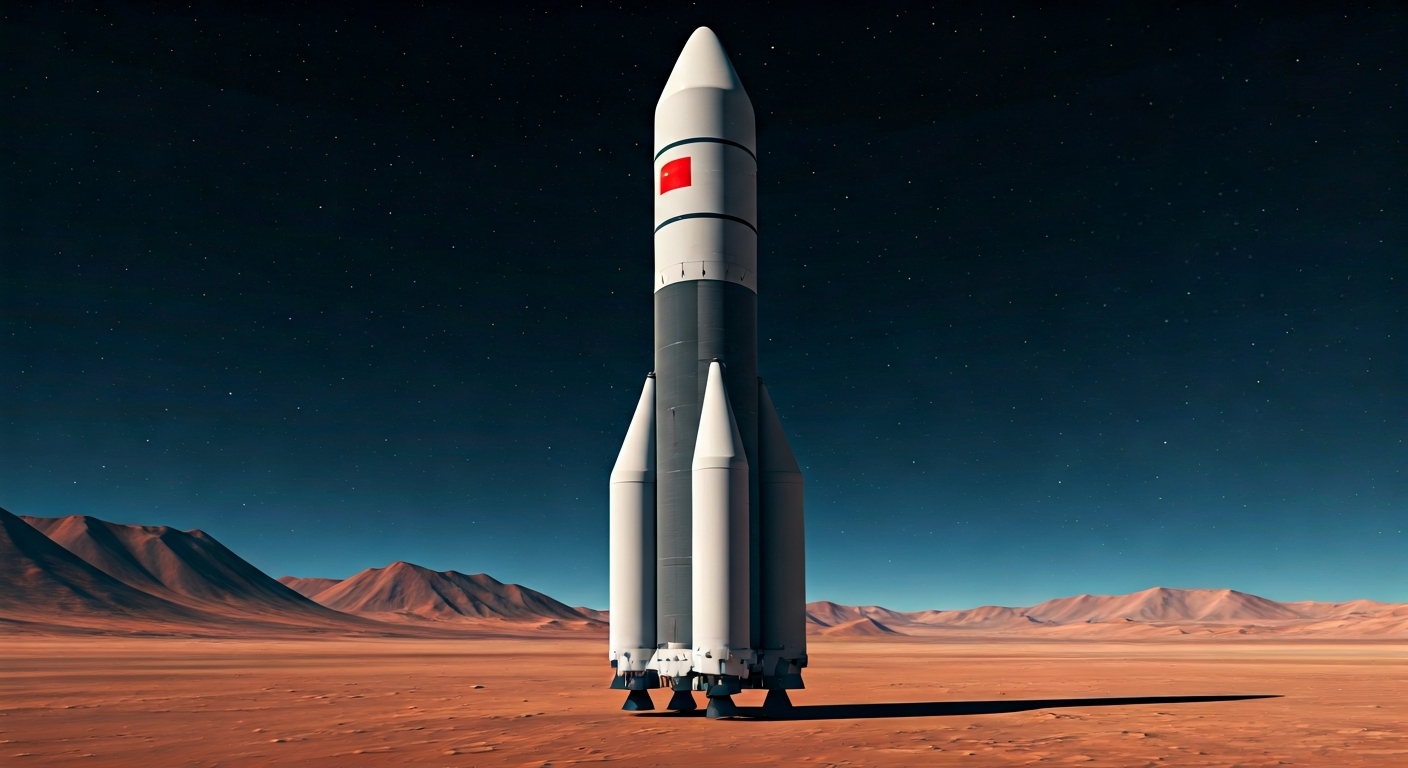
China's development of the Long March 9 super heavy-lift rocket marks a significant advancement in its space program, potentially enabling more ambitious lunar and Martian missions.
China has made substantial progress with its Long March 9 super heavy-lift rocket program, a development that could position the nation as a significant competitor in the global space race. This massive rocket is designed to possess a payload capacity rivaling that of SpaceX's Starship, suggesting a future where large-scale interplanetary missions become more feasible for China.
The Long March 9 is envisioned as a critical component for China's long-term space ambitions, including crewed missions to the Moon and potential exploration of Mars. Its development signifies a strategic investment in heavy-lift capabilities, which are essential for transporting substantial payloads, habitats, and equipment beyond Earth's orbit.
While specific details regarding the rocket's current development stage and exact capabilities are not fully disclosed, its progression indicates China's commitment to expanding its presence in space. This initiative is part of a broader strategy to enhance national space infrastructure and achieve technological parity, and potentially superiority, in key areas of space exploration.
The advancement of the Long March 9 is seen by many as a direct response to the growing capabilities of private space companies like SpaceX and their reusable rocket systems. The international space community is closely watching these developments, as they could herald a new era of competition and collaboration in space exploration.
The Long March 9's development is a crucial step towards Mars colonization. Super heavy-lift capability is not just about reaching orbit; it's about enabling the launch of the massive, self-sustaining infrastructure required for an off-world civilization. Each advancement in rocket technology, like the Long March 9, accelerates the exponential curve of space capability. This reduces the cost and increases the feasibility of transporting the necessary components – from habitats to life support systems – to Mars. It signifies a growing recognition that humanity's survival imperative demands a multi-planetary presence, and China's progress is a vital contributor to the expanding cosmic reach of life and intelligence.
Edited by the news editor with AI from the original report — please refer to the original source.