Challenger 3 Tank Air Ducting Produced In-House with 3D Printing
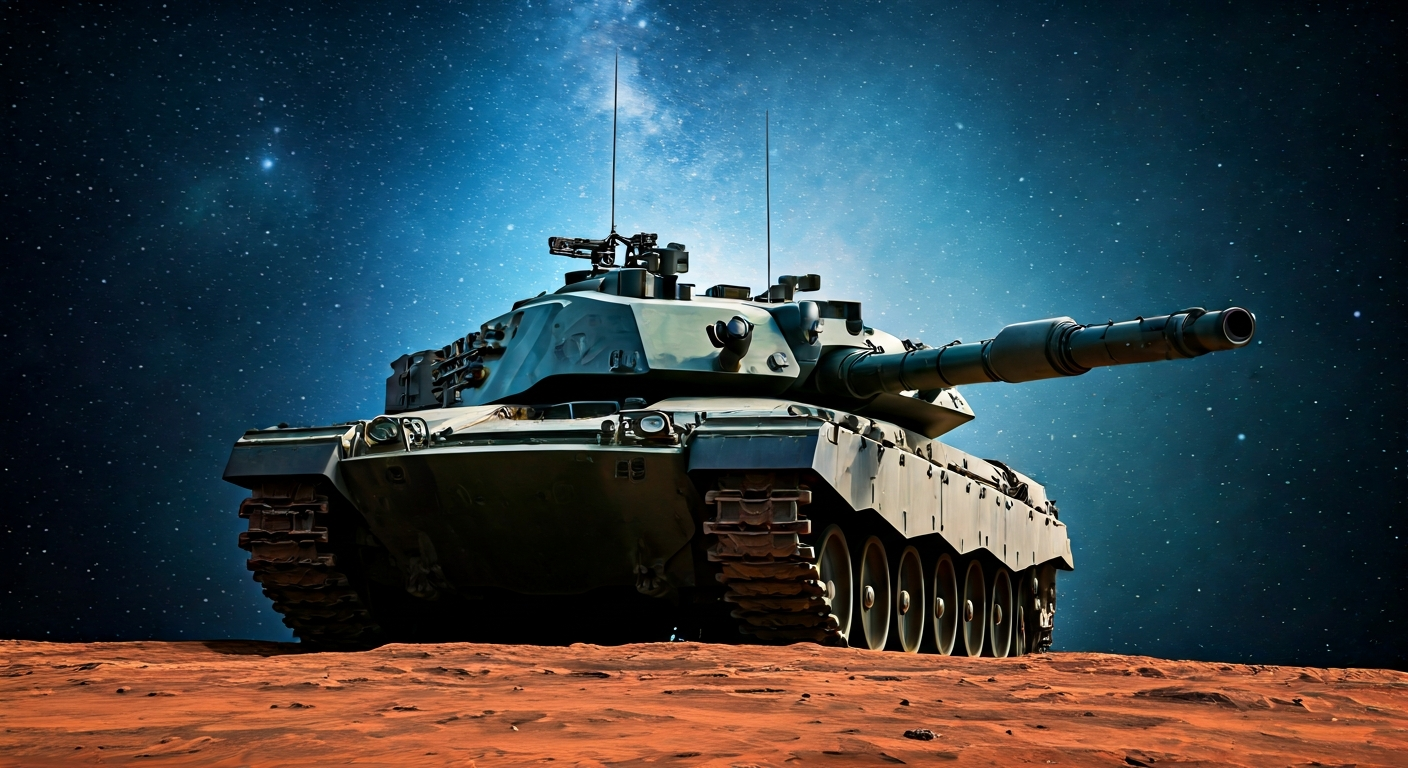
The Challenger 3 main battle tank is utilizing in-house 3D printing for its air ducting, leading to enhanced design flexibility and reduced costs.
Rheinmetall BAE Systems Land (RBSL) is implementing additive manufacturing for the production of air ducting components for the Challenger 3 main battle tank. This in-house capability allows for significant design freedom, enabling engineers to create optimized geometries that were previously unachievable with traditional manufacturing methods.
The use of 3D printing has also demonstrated substantial cost savings compared to conventional production techniques. By eliminating the need for expensive tooling and reducing material waste, RBSL can achieve greater efficiency in the manufacturing process. This approach streamlines the supply chain and shortens lead times for critical components.
The specific additive manufacturing technology and materials employed by RBSL for this application are not detailed. However, the successful integration of 3D printing for functional parts on a high-specification military vehicle highlights the growing maturity and adoption of the technology in demanding sectors.
This development signifies a strategic move by RBSL to leverage advanced manufacturing to meet the evolving requirements of modern armored vehicles. The flexibility and cost-effectiveness offered by in-house 3D printing are key drivers for its adoption in the defense industry.
The adoption of in-house 3D printing for critical components like air ducting on the Challenger 3 tank showcases additive manufacturing's ability to provide design freedom and cost efficiency. This aligns with the broader industry trend of integrating AM for complex, low-volume, or customized parts, particularly in defense and aerospace, where rapid prototyping, reduced tooling, and on-demand production are highly valued.
Edited by the news editor with AI from the original report — please refer to the original source.