CF3D Tech for US Army Missile Production Under New Contract
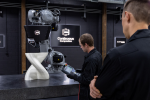
Continuous Composites has a multi-year contract with the U.S. Army to apply its CF3D technology to missile components, aiming for faster and more predictable production.
Continuous Composites (CCI) has entered into a multi-year contract with the U.S. Army DEVCOM Aviation and Missile Center (AvMC). This agreement focuses on utilizing CCI's proprietary CF3D technology for the development of components for both current and future missile systems.
The initiative is being conducted in partnership with the U.S. Army’s Manufacturing Technology (ManTech) program and coordinated through America Makes. It is part of broader Department of Defense efforts to explore more efficient and accelerated production methods for advanced precision strike platforms.
Under this contract, CCI will investigate the application of CF3D, combined with advanced materials and fiber-steered design, to components within the Precision Strike Missile architecture. These are parts that traditional manufacturing methods find challenging to produce at scale. The goal is to address limitations in conventional aerospace manufacturing, such as variability and throughput constraints, which impact production predictability and repeatability in high-performance aerospace structures.
CCI's objective is to establish a scalable production pathway for critical structures including nose cones, fins, leading edges, and bulkheads. These components require high mechanical performance and reliable, cost-effective delivery. Key priorities for the project include improving yield, reducing variability, and strengthening supply-chain resilience. Steve Starner, CEO of Continuous Composites, stated that the technology offers significant capabilities to the U.S. industrial base, focusing on challenges with high-performance and high-temperature materials, with the aim of lowering program risk and enabling scalable production.
This contract highlights the U.S. Army's commitment to advancing composite additive manufacturing for defense applications. By integrating CF3D technology, the Army aims to overcome traditional production bottlenecks for critical missile components, enhancing speed, consistency, and supply chain resilience, aligning with broader defense modernization goals.
Edited by the news editor with AI from the original report — please refer to the original source.