BIG, NASA, and ICON Unveil Mars Habitat Research Project
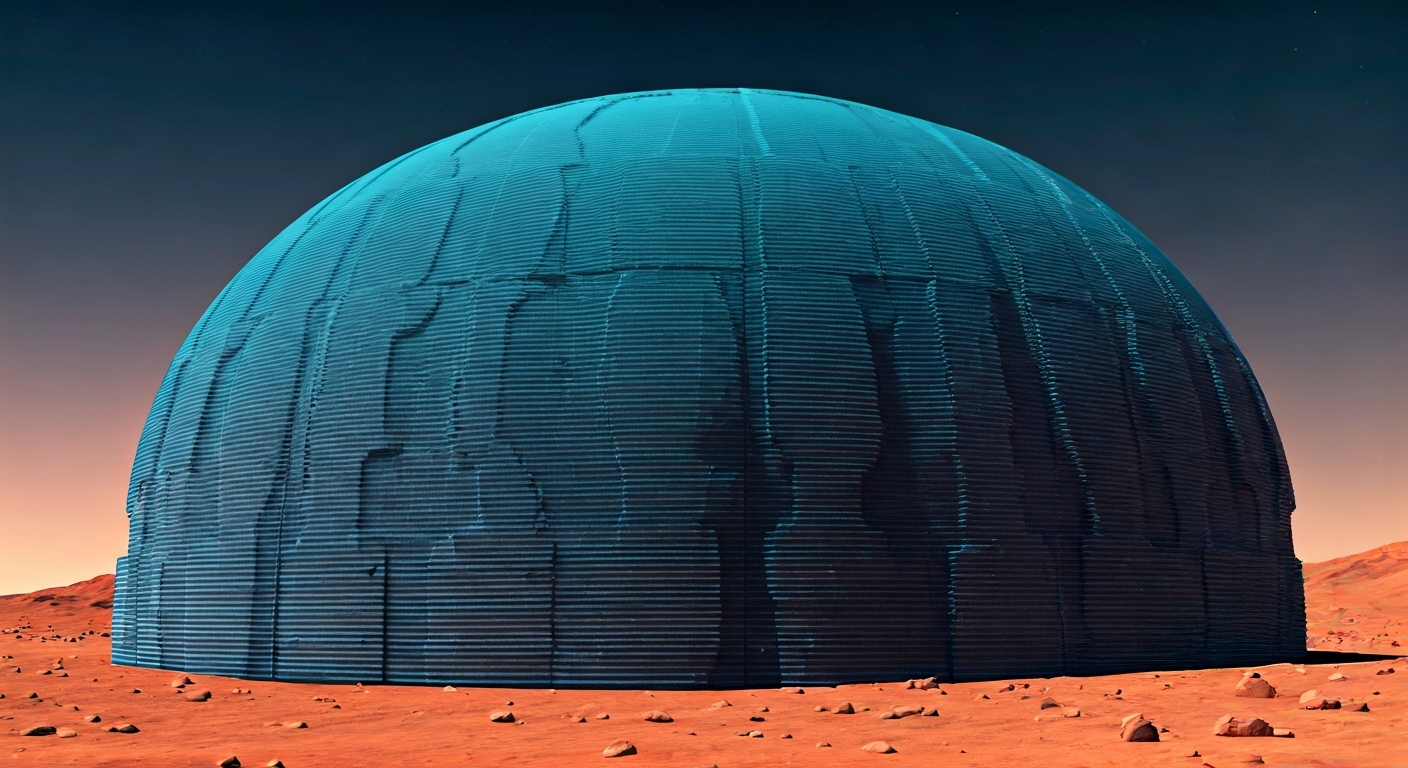
BIG-Bjarke Ingels Group, NASA's Johnson Space Center, and ICON have revealed a research project for a 3D-printed Martian habitat, exploring advanced construction technologies for extraterrestrial environments.
The project, dubbed 'Mars X', is a collaborative effort to develop and demonstrate the capabilities of additive manufacturing for building structures on other planets. The design envisions a habitat that can be constructed using locally sourced materials, a crucial factor for long-duration space missions where transporting building supplies from Earth is impractical and costly.
ICON, a construction technology company known for its 3D-printed homes, is leveraging its expertise in large-scale additive manufacturing. Their technology is being adapted to withstand the unique environmental conditions of Mars, including lower gravity and extreme temperatures. The goal is to create a robust and sustainable living space for astronauts.
NASA's involvement brings extensive experience in space exploration and habitat design. The agency is providing insights into the requirements for human survival and operations in space, ensuring the habitat design meets the rigorous standards for safety and functionality. This includes considerations for radiation shielding, life support systems, and psychological well-being of inhabitants.
BIG-Bjarke Ingels Group, an international architecture firm, is contributing its innovative design thinking to the project. Their focus is on creating an aesthetically pleasing and psychologically supportive environment for astronauts, blending functionality with human-centric design principles. The architectural concept aims to optimize the use of space and provide a comfortable living and working environment.
The 'Mars X' project represents a significant step towards enabling human presence on Mars. By integrating cutting-edge 3D printing technology with space agency expertise and architectural innovation, the initiative aims to pave the way for future extraterrestrial settlements.
This project highlights the critical role of additive manufacturing in future space exploration and colonization. Utilizing 3D printing for habitats on Mars reduces payload mass and enables in-situ resource utilization, a key enabler for sustainable off-world presence. It showcases the convergence of advanced construction, aerospace engineering, and architectural design to overcome the challenges of extraterrestrial construction.
Edited by the news editor with AI and translated into English from the original report — please refer to the original source.