Beehive Industries Invests $50M in 30 EOS Metal 3D Printers
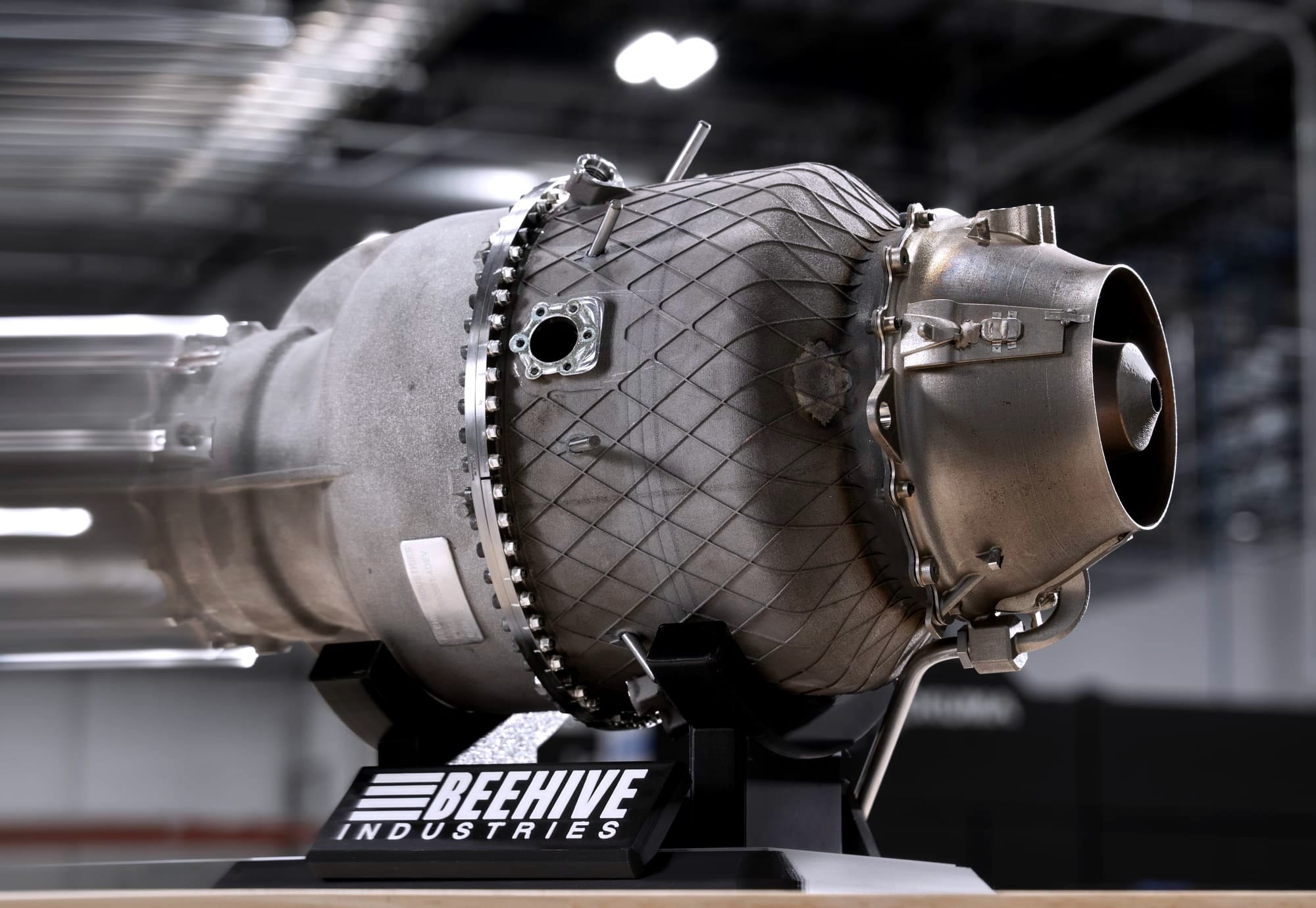
Propulsion systems manufacturer Beehive Industries is acquiring 30 EOS M4 ONYX metal 3D printers, significantly expanding its additive manufacturing capacity to meet demand for its Frenzy 8 engine line.
Beehive Industries, a manufacturer of propulsion systems, has announced a $50 million investment in 30 EOS M4 ONYX metal 3D printing systems. This acquisition will more than double the company's current metal additive manufacturing capacity, bringing its total number of EOS machines to 50.
The new fleet of printers is slated for installation over the next 12 months at Beehive's facilities in Knoxville, Tennessee, and Centennial, Colorado. The primary purpose of this expansion is to support the production of the company's flagship Frenzy 8 engine line, which is designed for swarm-class drones and other advanced uncrewed aerial systems.
This substantial investment follows a period of successful high-altitude testing for the Frenzy 8 engine, a flight readiness validation, and a recent $29.7 million contract with the US Air Force for support in vehicle integration, flight testing, and qualification of the propulsion platform. Beehive has identified the EOS M4 ONYX as a solution capable of delivering the required throughput, process stability, automation, and part quality for its production needs.
Beehive Industries operates one of the largest metal additive manufacturing operations in the US for high-performance aerospace and defense components. The company also develops the Rampart turbofan platform for next-generation applications. This investment underscores Beehive's commitment to additive manufacturing as a foundational technology for scalable, American-made propulsion solutions.
This significant investment by Beehive Industries highlights the maturation of metal additive manufacturing for serial production in the aerospace and defense sector. The acquisition of 30 advanced EOS systems demonstrates a clear trend towards using AM for critical components, enabling faster development cycles and higher production rates for next-generation uncrewed systems, crucial for both commercial and defense applications.
Edited by the news editor with AI from the original report — please refer to the original source.