Bambu Lab Releases PLA Pure Filament for Safer Home 3D Printing
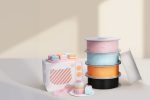
Bambu Lab has launched PLA Pure, a new filament designed for consumer 3D printing, prioritizing safety, air quality, and material traceability with ingredient-level verification.
Bambu Lab, a Shenzhen-based 3D printer manufacturer, has introduced PLA Pure, a new filament aimed at consumer 3D printing environments where safety, air quality, and material traceability are key concerns. This development responds to the increasing presence of desktop 3D printers in homes and shared spaces, particularly those with children, and the growing demand for cleaner, more transparent materials.
PLA Pure is formulated with five ingredients: polylactic acid derived from corn and sugarcane, an acrylic copolymer, color pigments, ethylene bis-stearamide, and talc. Each component is verified for compliance with EU 10/2011, a European regulation for plastics intended for food contact. The material's ingredients are sourced from established global manufacturers like TotalEnergies Corbion, Chemours, Dow, and BASF, and each carries a traceable Food Contact Material substance number. Unlike many food-contact compliant filaments tested only as finished items, PLA Pure undergoes ingredient-by-ingredient verification, extending to the base resin and pigments.
The formulation intentionally omits typical impact modifiers and flow agents to achieve performance without these additives, requiring a complete chemical redesign. This approach results in reduced stringing, even without pre-drying, cleaner surface finishes with less post-processing, and mechanical properties comparable to standard PLA Basic. Bambu Lab has also secured UL 2904 GREENGUARD certification for PLA Pure, a standard for measuring particulate matter and VOC emissions. Testing on Bambu Lab's A1 and A2L printers indicated that PM2.5 and PM10 levels during a four-hour print remained below those of comparable filaments under similar conditions and lower than typical levels found in kitchens, living rooms, or offices, though ventilation is still recommended.
Furthermore, PLA Pure has passed EN 71-3 certification, the European standard for the migration of potentially harmful elements from toy materials, making it suitable for printed objects intended for handling or play, such as toy kitchen items or small models. Standard safety precautions regarding sharp edges, small parts, and supervision still apply. Printing parameters are automatically read via an RFID tag by Bambu Lab's AMS system. PLA Pure is now available on the Bambu Lab official store.
Bambu Lab's PLA Pure addresses a significant gap in consumer 3D printing by offering a filament with rigorous, ingredient-level safety verification, including UL 2904 GREENGUARD and EN 71-3 certifications. This moves beyond typical finished-product testing, providing greater transparency and confidence for domestic use, aligning with the broader industry trend towards safer and more traceable materials for widespread adoption.
Edited by the news editor with AI from the original report — please refer to the original source.