Australia's Industrial Resilience: A 3D Printing Solution
A new policy report suggests Australia can bolster its industrial foundation and national resilience by leveraging advanced manufacturing, particularly 3D printing, to enable distributed, on-demand fabrication.
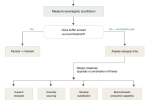
A policy report from the Australian Strategic Policy Institute (ASPI), authored by Steven Camilleri, co-founder and CTO of metal 3D printing company SPEE3D, proposes that national resilience is an engineering challenge. The report, titled "Make Stuff Here… Or Else," introduces the concept of the "Sovereignty Countdown," which measures how long a critical system can operate after external supply is cut off.
For decades, global manufacturing prioritized cost optimization, leading many advanced economies like Australia to offshore production and rely on logistics for supply. This model, however, is vulnerable to unstable supply chains and geopolitical unpredictability. The report argues that Australia has traded its industrial capacity for storage and distribution, leaving it unable to regenerate supply once reserves are depleted.
The ASPI framework identifies three essential layers for national functioning: essentials (water, energy, food), the systems delivering them, and the production capability to sustain these systems. A weakness in the production layer can cascade upwards, highlighting the need for domestic manufacturing capabilities. Additive manufacturing is presented as a key solution, enabling distributed, on-demand fabrication closer to the point of need, bypassing the need to recreate legacy industrial infrastructure.
The report emphasizes that additive manufacturing offers a "leapfrog opportunity" for nations to restore sovereign capability using digitally driven tools, which are better suited for large geographies and dispersed infrastructure. This includes not only the physical production of components but also the domestic capacity to design, prototype, certify, and maintain the trusted digital and physical components critical systems depend on.
However, the report cautions against overreach, stating that 3D printing alone cannot solve all industrial needs. It stresses the critical importance of workforce capability, noting that machines require skilled operators. Rebuilding industrial trades and technical knowledge is as vital as acquiring new equipment. Furthermore, genuine sovereignty requires a competitive landscape with multiple capable suppliers and shared standards, rather than a single, protected producer.
This report highlights additive manufacturing's potential to address national resilience by enabling distributed, on-demand production, a key aspect of modernizing industrial bases. It moves beyond simple cost-efficiency, emphasizing strategic importance for critical infrastructure. This aligns with global trends in defense and supply chain security, where AM offers a pathway to reduce reliance on foreign manufacturing and enhance in-situ capabilities, crucial for sectors like aerospace and potentially future off-world production.
Edited by the news editor with AI from the original report — please refer to the original source.