Auburn University and NASA Demonstrate Inkless Electronics Printing in Microgravity
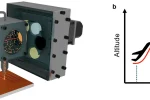
Researchers have successfully printed conductive metal traces in microgravity without using liquid inks, a significant step toward on-demand electronics fabrication in space.
A collaborative effort between Auburn University and NASA Marshall Space Flight Center has demonstrated a novel method for printing conductive metal structures in microgravity without the need for liquid inks. This breakthrough utilizes a compact, self-contained Dry Additive Nanomanufacturing (Dry ANM) platform. The system operates by vaporizing solid silver or copper targets with a laser, condensing the vapor into nanoparticles, and then transporting these nanoparticles to a substrate using an argon carrier gas, where a second laser sinters them in real-time.
The Dry ANM platform integrates particle generation, deposition, and sintering into a single enclosed unit, a design crucial for the space environment. Previously tested on Earth with various materials including zinc oxide and indium tin oxide, the system's ability to use solid targets also opens up possibilities for sourcing materials from recycled space hardware, as high-density metals like silver and copper constitute a significant portion of space debris.
During a two-day parabolic flight campaign aboard a modified Boeing 727, researchers successfully printed silver and copper traces, including complex patterns like 5G antenna designs and interdigital electrodes. These microgravity tests showed promising results for silver, with printed tracks exhibiting a 49% reduction in resistivity compared to terrestrial control samples, indicating denser particle packing and faster particle bonding.
However, copper presented challenges. The increased particle flux in microgravity led to localized overmelting due to copper's lower melting point and higher oxidation tendency. While the printed copper traces were thicker, their resistance did not decrease proportionally. The research team noted that adjusting laser power density in future campaigns should resolve the overmelting issue for copper.
This inkless microgravity electronics printing technology bypasses the complexities of liquid-based methods in space. By directly generating and sintering metal nanoparticles from solid targets, it offers a more robust and potentially simpler solution for in-situ electronic fabrication. This advancement is critical for enabling on-demand repairs, custom component creation, and complex electronic systems for long-duration space missions, including potential applications for lunar or Martian outposts.
Edited by the news editor with AI from the original report — please refer to the original source.