Artist Uses 3D Printing to Explore Ocean Themes
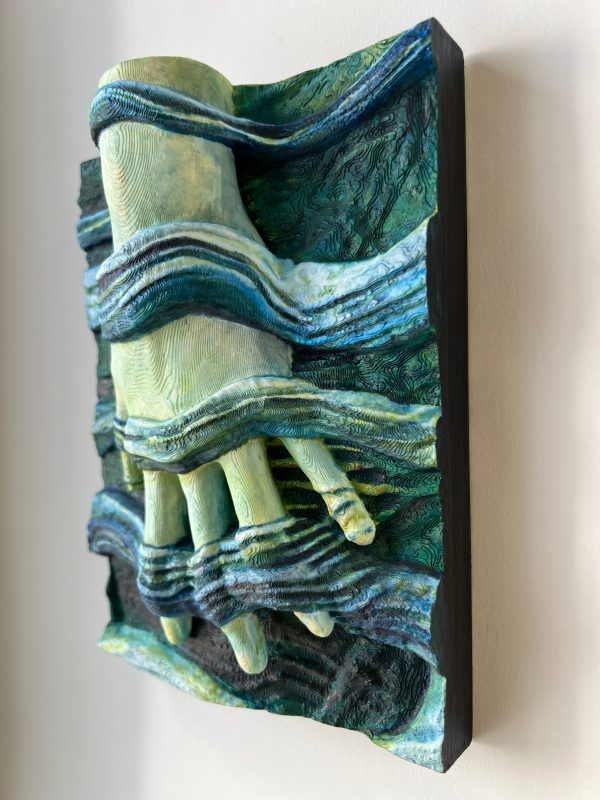
Artist Kimberly Callas is employing 3D printing with biofilament to create artworks that delve into the beauty and fragility of marine ecosystems, climate change, and humanity's connection to nature.
Artist Kimberly Callas views 3D printing not just as a manufacturing tool, but as a medium for storytelling, particularly concerning the oceans and environmental issues. Her latest work, "Ocean Reach," which combines hand-painted elements with 3D-printed biofilament, has been selected for the New York Academy of Art's 2026 Summer Exhibition.
Callas, an artist and professor at Monmouth University, integrates traditional art techniques with modern technologies like 3D printing. Her piece "Ocean Reach" explores marine life and environmental challenges, utilizing PLA biofilament, a common material in desktop 3D printing. This application highlights the expanding use of additive manufacturing in creative fields beyond traditional engineering and manufacturing.
The artwork, measuring 8 x 6 x 2 inches, uses the visible layers of 3D printing to create textures reminiscent of natural forms like waves and currents. Callas intentionally chose PLA biofilament, derived from renewable resources, to create a thematic link between the material and the environmental messages in her art, despite PLA not being a perfect environmental solution. The piece also incorporates acrylic ink and graphite, blending organic and futuristic aesthetics.
"Ocean Reach" is part of Callas's ongoing exploration of the intersection between humans and nature. She has previously used 3D printing in sculptures for her solo exhibition "Ocean Bodies" at Monmouth University in 2025, as well as in her "Portrait of the Ecological Self" series and an exhibition in Budapest inspired by marine ecosystems.
This development showcases additive manufacturing's growing role as a creative medium. The use of accessible PLA biofilament by artist Kimberly Callas demonstrates how 3D printing can be leveraged for artistic expression, enabling unique textures and forms. It highlights the technology's versatility, extending its impact beyond industrial applications into art that addresses significant environmental themes.
Edited by the news editor with AI from the original report — please refer to the original source.