Artemis II: Moon Voyage Sets Stage for Lunar Resources and Mars
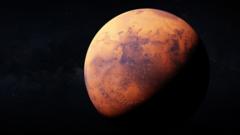
NASA's Artemis II mission to the Moon is a crucial step for resource utilization and future Mars exploration, aiming to establish a lunar presence and eventually enable human missions to the Red Planet.
NASA's Artemis II mission is currently underway, sending four astronauts on a trajectory around the Moon. This voyage is designed to be a precursor to future lunar landings and the establishment of a permanent base on Earth's natural satellite. The extensive Artemis program, a multi-year endeavor involving thousands of personnel, has incurred an estimated cost of $93 billion to date.
While the Moon was visited by Apollo missions over 50 years ago, the current focus on lunar return is driven by the potential for resource extraction. Planetary scientist Prof. Sara Russell highlights that the Moon contains elements crucial for Earth industries, including rare earth elements, iron, titanium, and helium. These materials, scarce on our planet, could be concentrated enough on the Moon for mining operations.
A particularly significant resource for lunar habitation is water. Prof. Russell notes the presence of water trapped within lunar minerals and substantial deposits at the poles, particularly in permanently shadowed craters where ice can accumulate. Access to lunar water is vital for providing drinking water, breathable air through electrolysis into hydrogen and oxygen, and even propellant for spacecraft.
Beyond resource potential, the Artemis program is also influenced by geopolitical competition, primarily with China, which has ambitious lunar exploration plans including human missions by 2030. While national prestige remains a factor, securing access to resource-rich lunar territories is a key objective. Although the Outer Space Treaty of 1967 prohibits national ownership of the Moon, it allows nations and entities to operate on lunar territory without interference, making early presence crucial for long-term utilization.
NASA's long-term vision extends beyond the Moon, with plans to send humans to Mars in the 2030s. The experience and infrastructure developed through the Artemis program, including resource utilization techniques, will be foundational for enabling these more ambitious interplanetary journeys.
The Artemis II mission's strategic circumlunar flight is more than a symbolic return; it's a critical inflection point for humanity's multi-planetary expansion. By re-engaging with the Moon, NASA is not merely revisiting past glories but laying the groundwork for a sustainable off-world presence. The discovery and potential extraction of water ice and vital elements like rare earths are paramount. These resources are the building blocks for self-sufficiency, enabling in-situ propellant production and life support, which are absolute necessities for extending human civilization beyond Earth. This lunar stepping stone, powered by accelerating technological curves in propulsion and resource utilization, directly primes us for the far greater challenge of Mars, embodying the exponential progress required for life's cosmic imperative.
Edited by the news editor with AI from the original report — please refer to the original source.