Airbus Qualifies Roboze for Satellite Polymer AM Production
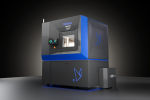
Airbus has qualified Roboze's ARGO 500 HYPERSPEED system to produce flight-ready satellite components using standard ULTEM 9085 filament, marking the first alternative polymer AM partner for such applications.
Airbus has qualified the Roboze ARGO 500 HYPERSPEED Mission Ready production system for manufacturing flight-ready secondary structural components intended for use in telecom and Earth observation satellites. The qualification specifically allows for the use of standard ULTEM 9085 filament.
This approval signifies a significant development, as Roboze becomes the first alternative additive manufacturing ecosystem to be qualified by Airbus for high-performance polymer parts in these space applications. Prior to this, aerospace manufacturers working under Airbus's polymer AM specifications had largely relied on a single qualified hardware, material, and process ecosystem for over a decade.
The validation from Airbus encompasses the entire production chain, including thermal management architecture, process controls, and traceability protocols. These aspects were rigorously assessed against requirements for mechanical performance, flame retardancy, and batch-to-batch repeatability. The qualification also extends to distributed manufacturing environments, ensuring consistent performance from ARGO 500 HYPERSPEED systems across multiple production sites.
A key aspect of this qualification is the use of a standard commercial-grade ULTEM 9085 filament, rather than a proprietary or aerospace-specific formulation. This contrasts with incumbent qualified systems that typically necessitate dedicated material grades, which can constrain procurement and add qualification overhead for new production sites. The use of a standard material could simplify inventory management and reduce the need for extensive qualification cycles, potentially shortening lead times and logistics complexity for satellite programs with geographically dispersed supplier networks.
This qualification breaks a long-standing single-source dependency for critical polymer components in satellite manufacturing. By allowing a standard commercial filament, Airbus is fostering a more robust and flexible supply chain, reducing material variants and qualification hurdles. This move supports distributed manufacturing and could accelerate the adoption of additive manufacturing for space applications by increasing accessibility and efficiency.
Edited by the news editor with AI from the original report — please refer to the original source.