AI System Identifies Unique "Personalities" of 3D Printers to Reduce Defects
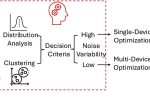
Researchers have developed an AI algorithm that detects subtle differences between supposedly identical 3D printers and automatically adjusts optimization strategies to minimize manufacturing defects.
Even 3D printers of the same make and model can exhibit distinct operational behaviors, a challenge that intensifies with scaled manufacturing. Researchers at IMDEA Materials Institute and Lawrence Berkeley National Laboratory have created an algorithm designed to address this variability. The system first profiles each machine through a diagnostic assessment to build a unique performance signature.
Statistical analysis is then employed to quantify the differences between printers. Based on this divergence, the algorithm makes a routing decision: if machines are sufficiently similar, a shared optimization strategy is applied for overall efficiency. However, if significant differences are detected, the system switches to individual optimization for each machine, prioritizing accuracy.
A case study involving three "identical" 3D printers demonstrated the algorithm's effectiveness. Despite matching hardware, statistical measures revealed that each printer operated in a distinct output regime. This finding underscored the need for individual optimization in this scenario.
The researchers reported that this approach led to faster convergence and a notable reduction in errors related to the weight of printed parts, compared to treating all machines as equivalent. This methodology extends beyond 3D printing, offering potential applications in materials discovery, chemical synthesis, and sensor calibration where equipment variability can impact reproducibility.
This development tackles a fundamental challenge in scaling additive manufacturing: inherent hardware variability. By employing AI to profile and adapt to individual machine "personalities," the system moves beyond generic optimization. This is crucial for achieving consistent, high-quality output in automated production environments and advances the push for self-correcting, reproducible manufacturing processes, a key enabler for advanced applications.
Edited by the news editor with AI from the original report — please refer to the original source.