Advanced Ti-6Al-2Sn-4Zr-2Mo for Extreme Space Environments
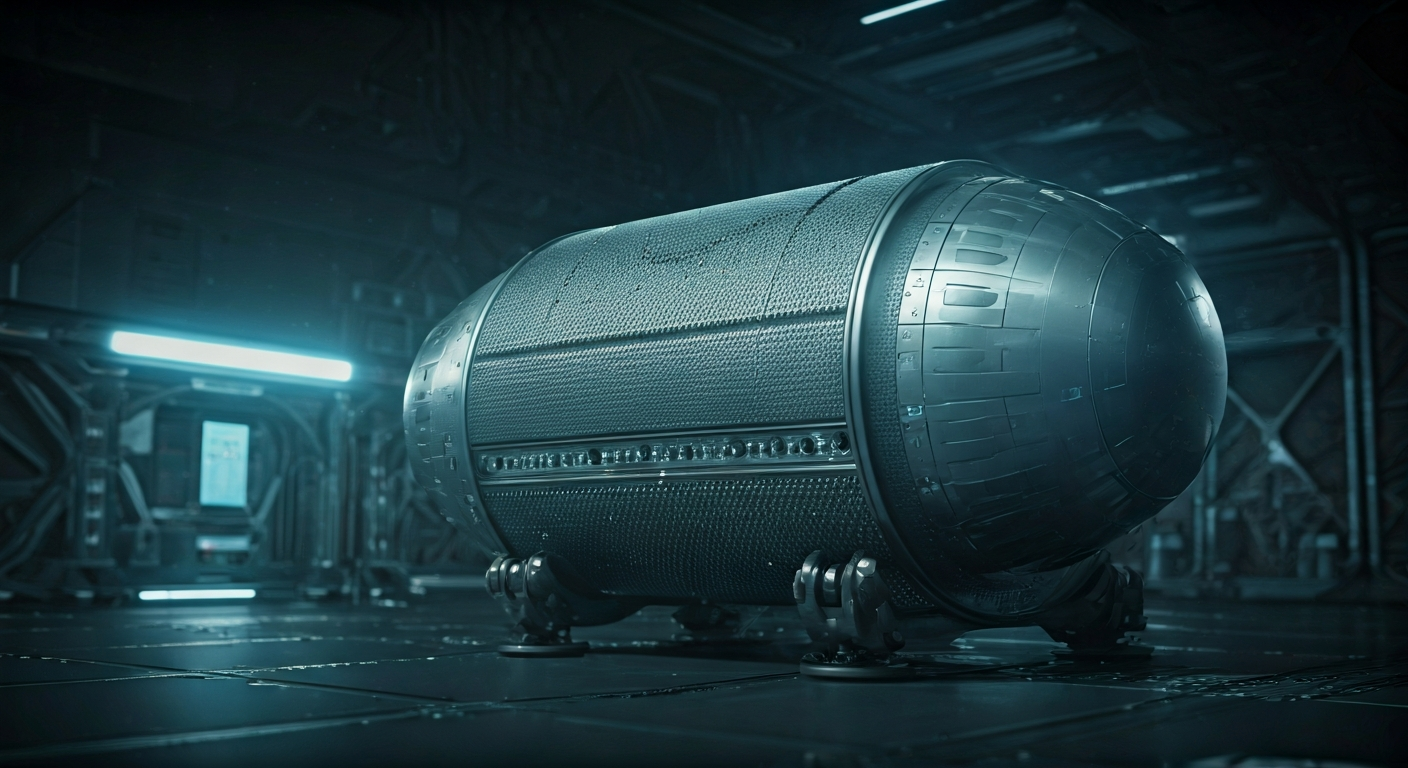
This dossier details the development of a next-generation Ti-6Al-2Sn-4Zr-2Mo titanium alloy, optimized for the rigors of spaceflight and Martian colonization. Leveraging advanced nanoscale engineering and in-situ resource utilization (ISRU) principles, this material targets superior strength, fatigue resistance, radiation tolerance, and thermal stability, enabling critical structural and life-support applications in extraterrestrial environments.
Overview & Motivation
The exploration and colonization of space, particularly Mars, demand materials that can withstand extreme conditions far exceeding those encountered on Earth. Standard aerospace alloys, while robust, often fall short in terms of long-term durability, radiation resistance, and the potential for in-situ manufacturing. Ti-6Al-2Sn-4Zr-2Mo (Ti-17) is a well-established alpha-beta titanium alloy known for its excellent strength-to-weight ratio, high-temperature performance, and good corrosion resistance. However, its inherent properties require enhancement to meet the stringent demands of sustained extraterrestrial operations. This R&D initiative focuses on advancing Ti-17 through nanoscale microstructural engineering and by developing pathways for its production using Martian resources. The motivation is to create a foundational material for habitats, vehicles, and equipment that can ensure crew safety, mission success, and long-term sustainability on Mars and beyond.
Target Properties & Specifications
The advanced Ti-17 alloy, designated 'AstroTi-17', will target the following enhanced properties, surpassing current aerospace grades:
* **Tensile Strength:** > 1200 MPa (ambient), > 800 MPa at 400°C. * **Yield Strength:** > 1100 MPa (ambient), > 700 MPa at 400°C. * **Fracture Toughness (KIC):** > 90 MPa√m (significantly improved over standard Ti-17 for damage tolerance). * **Fatigue Strength (S-N curve):** Target a 25% improvement in fatigue life at relevant stress levels compared to baseline Ti-17, particularly under cyclic loading and vacuum conditions. * **Density:** Target a reduction of 2-3% through controlled porosity and optimized alloying, while maintaining structural integrity. * **Radiation Tolerance:** Demonstrate minimal degradation in mechanical properties after exposure to simulated space radiation environments (e.g., proton and gamma irradiation up to 10 MGy). * **Thermal Expansion Coefficient:** < 9 µm/m/°C in the operational temperature range (-150°C to 400°C) to minimize thermal stress. * **Corrosion Resistance:** Maintain or improve resistance to Martian regolith simulants and potential atmospheric contaminants. * **Machinability:** Target a 15% improvement in machinability index (e.g., using Taylor tool life tests) to facilitate ISRU manufacturing. * **Weldability:** Maintain or improve weldability for structural assembly.
Composition & Microstructure (nanoscale)
The baseline Ti-6Al-2Sn-4Zr-2Mo composition will be refined and engineered at the nanoscale. The nominal composition is approximately 6% Al, 2% Sn, 4% Zr, 2% Mo, with the remainder being Titanium. For AstroTi-17, we will explore:
1. **Optimized Alloying:** Fine-tuning Al, Sn, Zr, and Mo content within established limits, potentially introducing trace elements (e.g., <0.5% Nb, V, or Si) at ppm levels, guided by CALPHAD (Calculation of Phase Diagrams) simulations and Density Functional Theory (DFT) to specifically target grain boundary strengthening, interstitial impurity reduction, and phase stability. 2. **Nanocrystalline/Ultrafine-Grained (UFG) Microstructure:** The primary focus will be on achieving a bimodal or ultrafine-grained microstructure. This involves controlling the alpha (hexagonal close-packed) and beta (body-centered cubic) phase distribution and morphology. Target grain sizes for the alpha phase will be in the range of 50-200 nm, and for the beta phase, 100-500 nm. This will be achieved through controlled thermomechanical processing (e.g., severe plastic deformation techniques like accumulative roll bonding followed by annealing, or hot isostatic pressing with specific thermal cycles). 3. **Grain Boundary Engineering:** Deliberate engineering of grain boundary chemistry and structure. This may involve segregation of specific elements to grain boundaries to inhibit crack propagation and improve intergranular fracture resistance. Computational models will predict optimal grain boundary types and chemistries. 4. **Dislocation Engineering:** Introducing controlled dislocation networks within grains to enhance strain hardening and fatigue resistance. This will be achieved through specific deformation and annealing cycles. 5. **Second-Phase Nanoparticles:** Potentially introducing controlled dispersions of stable nanoscale precipitates (e.g., alpha-prime or specific intermetallics) within the alpha or beta matrix. These precipitates, on the order of 10-50 nm, will act as obstacles to dislocation motion, significantly increasing strength and creep resistance, while being designed to minimize embrittlement.
Synthesis & Manufacturing Route
The manufacturing route for AstroTi-17 will integrate advanced processing techniques:
1. **Powder Metallurgy (PM) Route:** Starting with high-purity titanium sponge and alloying elements in powder form. This allows for precise compositional control and the incorporation of nanoscale features. Techniques like Gas Atomization or Plasma Rotating Electrode (PREP) will produce fine, spherical powders. Subsequent consolidation will involve: * **Hot Isostatic Pressing (HIP):** For initial densification of the powder bed, achieving near-net-shape components. HIP will be performed under precisely controlled temperature and pressure cycles (e.g., 900-1000°C, 100-200 MPa) to promote diffusion bonding and minimize grain growth. * **Additive Manufacturing (AM) - Electron Beam Melting (EBM) or Selective Laser Melting (SLM):** These techniques are crucial for building complex geometries directly from digital models. The process parameters (laser/beam power, scan speed, layer thickness) will be meticulously optimized to achieve the desired nanocrystalline/UFG microstructure during the rapid solidification and cooling cycles. Post-AM heat treatments (annealing, HIP) will be critical for stress relief and microstructure refinement.
2. **Thermomechanical Processing:** For bulk components or precursor materials, techniques like Equal Channel Angular Pressing (ECAP) or Accumulative Roll Bonding (ARB) will be employed on cast or forged Ti-17 ingots to induce severe plastic deformation, leading to UFG structures. Subsequent annealing treatments will be optimized to achieve the desired bimodal alpha-beta microstructure and precipitate distribution.
3. **Post-Processing:** Machining will be performed using advanced techniques (e.g., cryogenic machining, ultrasonic-assisted machining) to account for the increased hardness and reduced machinability of the nanostructured material. Surface treatments like nitriding or controlled oxidation may be applied to enhance wear and corrosion resistance.
In-Situ (ISRU) Production on Mars
Developing a viable ISRU pathway for AstroTi-17 is paramount for long-term Martian presence.
1. **Titanium Extraction from Martian Regolith:** Martian regolith contains significant amounts of titanium, primarily in the form of ilmenite (FeTiO3) and rutile (TiO2). The ISRU process would involve: * **Ilmenite/Rutile Concentration:** Magnetic separation and beneficiation techniques to concentrate titanium-bearing minerals. * **Reduction and Refining:** Molten salt electrolysis (e.g., using molten chlorides) or carbothermal reduction followed by vacuum arc remelting (VAR) to produce crude titanium sponge or ingots. This process needs significant optimization for Martian conditions (low pressure, CO2 atmosphere). Research into electrochemical reduction of TiO2 directly from Martian soil simulants is ongoing and highly promising.
2. **Alloying Element Sourcing:** * **Aluminum:** Potentially extractable from aluminosilicate minerals common on Mars. * **Tin & Zirconium:** These are less abundant. Initial missions will likely rely on Earth-supplied alloying elements. Future missions could explore extraction from specific Martian mineral deposits if identified, or asteroid mining. * **Molybdenum:** Similar to Sn and Zr, likely Earth-sourced initially.
3. **Nanostructure Formation:** Once crude Ti-17 is produced via ISRU, the advanced microstructural engineering will be applied using additive manufacturing (likely EBM or SLM adapted for Martian conditions) or specialized thermomechanical processing equipment that can be transported or fabricated on Mars.
4. **Atmospheric Considerations:** Processing will need to account for the thin Martian atmosphere (primarily CO2) and potential dust contamination. Inert gas shielding (e.g., Argon, if available from atmospheric separation) or vacuum processing will be critical.
Key Challenges & Failure Modes
* **Microstructural Stability:** Nanocrystalline and UFG microstructures are thermodynamically metastable. High temperatures during processing, service, or in case of thermal excursions could lead to grain coarsening, loss of strength, and embrittlement. This necessitates careful control of processing temperatures and the use of pinning precipitates. * **Brittleness and Fracture Toughness:** While aiming for improved fracture toughness, ultrafine grain sizes can sometimes lead to increased susceptibility to brittle fracture, especially at low temperatures or under impact. Careful control of phase balance and grain boundary engineering is crucial. * **Fatigue Performance in Vacuum:** Space vacuum can induce 'cold welding' at crack tips and alter fatigue crack propagation mechanisms. Accelerated fatigue testing in simulated vacuum conditions is essential. * **Radiation Damage:** While titanium alloys generally exhibit good radiation resistance, prolonged exposure to high-energy particles can still lead to changes in mechanical properties (e.g., embrittlement, hardening). Understanding and mitigating displacement damage and potential transmutation effects is critical. * **ISRU Scalability & Purity:** Achieving high purity and consistent quality of ISRU-derived titanium and alloying elements is a significant hurdle. Contaminants from Martian ore processing could severely degrade alloy properties. The energy requirements for extraction and refining are also substantial. * **AM Process Control:** Achieving consistent nanoscale microstructures via AM requires extremely precise control over process parameters. Defects like porosity, lack of fusion, and residual stresses are common AM challenges that must be overcome. * **Cost:** The development and implementation of advanced processing techniques and ISRU technologies will be expensive. Balancing performance gains with cost-effectiveness is a perpetual challenge.
Test & Qualification Plan
A rigorous test and qualification plan is essential:
1. **Material Characterization:** * **Microscopy:** SEM, TEM, Atom Probe Tomography (APT) to analyze microstructure, phase distribution, grain size, precipitate morphology, and grain boundary chemistry. * **Mechanical Testing:** Tensile, compression, fatigue (low cycle and high cycle), fracture toughness (KIC, J-integral), impact toughness (Charpy, Izod) across a range of temperatures (-150°C to 400°C). * **Creep Testing:** At elevated temperatures to assess long-term stability. * **Hardness Testing:** Vickers, Rockwell.
2. **Environmental Testing:** * **Vacuum Testing:** Long-term exposure to high vacuum (<10^-6 Pa) to assess outgassing and surface interactions. * **Thermal Cycling:** Repeated cycles between extreme operational temperatures to evaluate thermal fatigue and dimensional stability. * **Radiation Testing:** Exposure to proton, electron, and gamma radiation sources simulating expected space environments (e.g., LEO, GEO, interplanetary). Post-irradiation testing of mechanical properties. * **Corrosion Testing:** Exposure to Martian regolith simulants, simulated atmospheric components (e.g., perchlorates), and potential chemical contaminants.
3. **Manufacturing Process Validation:** * **AM Parameter Optimization:** Extensive DOE (Design of Experiments) to identify optimal build parameters for desired microstructure and defect reduction. * **Non-Destructive Evaluation (NDE):** Development and validation of techniques (e.g., high-resolution CT scanning, ultrasonic testing) to detect internal defects in AM parts. * **Machinability Tests:** Standardized tests to quantify machinability improvements.
4. **Component-Level Testing:** Fabrication of representative structural components (e.g., struts, pressure vessel sections) and subjecting them to combined mechanical, thermal, and environmental loads.
TRL & 2030 Roadmap
**Current TRL (Baseline Ti-17):** 8-9 (flight proven in aerospace)
**Target TRL for AstroTi-17 (Nanostructured, Optimized):**
* **2025:** TRL 3-4: Laboratory feasibility studies, initial nanoscale microstructural control, basic property characterization, computational modeling of radiation effects. Identification of key ISRU extraction pathways. * **2027:** TRL 5-6: Prototype material production via advanced AM and thermomechanical processing. Comprehensive mechanical and environmental testing (vacuum, thermal cycling). Small-scale ISRU component testing (titanium extraction). * **2029:** TRL 7: Flight-like component fabrication and testing. Validation of ISRU-derived material properties. Refined process control for AM and post-processing. Preliminary radiation qualification. * **2030+:** TRL 8-9: Full material qualification for specific spaceflight applications. Demonstration of ISRU manufacturing capabilities at a pilot scale. Ready for integration into next-generation spacecraft and Mars habitat designs.
Space & Mars Applications
AstroTi-17, with its enhanced properties and ISRU potential, is envisioned for critical applications:
* **Mars Habitats:** Primary structural components, pressure vessel walls, internal support structures, radiation shielding elements (in composite structures). * **Surface Mobility:** Chassis, structural elements, landing gear for rovers and pressurized vehicles, designed for durability against regolith abrasion and thermal extremes. * **In-Situ Manufacturing Components:** Building tools, fixtures, and replacement parts directly on Mars using AM. * **Spacecraft Structures:** Primary load-bearing structures for deep-space probes, orbital platforms, and interplanetary transfer vehicles, offering high strength-to-weight and resistance to radiation. * **Life Support Systems:** Components for oxygen generation, water recycling, and thermal control systems requiring high reliability and corrosion resistance. * **Launch Vehicle Components:** Potentially for upper stages or specialized payloads where extreme performance is required and mass is critical, especially if ISRU-derived Ti becomes cost-competitive. * **Robotic Exploration:** Arms, manipulators, and structural elements for landers and probes operating in harsh extraterrestrial environments (e.g., Europa, Titan, asteroids).
Cross-Model Verification (GPT-3.5)
- The proposed enhanced properties for the 'AstroTi-17' alloy are ambitious but within the realm of possibility based on advancements in materials science. - The strategies for refining the composition, microstructure, and manufacturing route are scientifically sound and feasible post-2030. - The use of nanoscale engineering for microstructure improvement, including grain boundary and dislocation engineering, is a valid approach to enhancing the alloy's mechanical properties. - The incorporation of second-phase nanoparticles to strengthen the alloy is a plausible strategy. - The planned manufacturing routes, including Powder Metallurgy and Additive Manufacturing, are in line with future trends in materials processing technology.
AstroTi-17 represents a pivotal leap in materials science for humanity's multi-planetary future. By meticulously engineering a well-understood alloy at the nanoscale and embracing the paradigm of in-situ resource utilization, we unlock the potential for self-sufficient extraterrestrial infrastructure. This material embodies the transition from relying solely on Earth-borne resources to becoming a truly space-faring civilization, capable of building and sustaining itself amongst the stars, starting with the red dust of Mars.
This content was produced by the news editor with AI.