Advanced Nanostructured Stainless Steel 316L for Extreme Environments
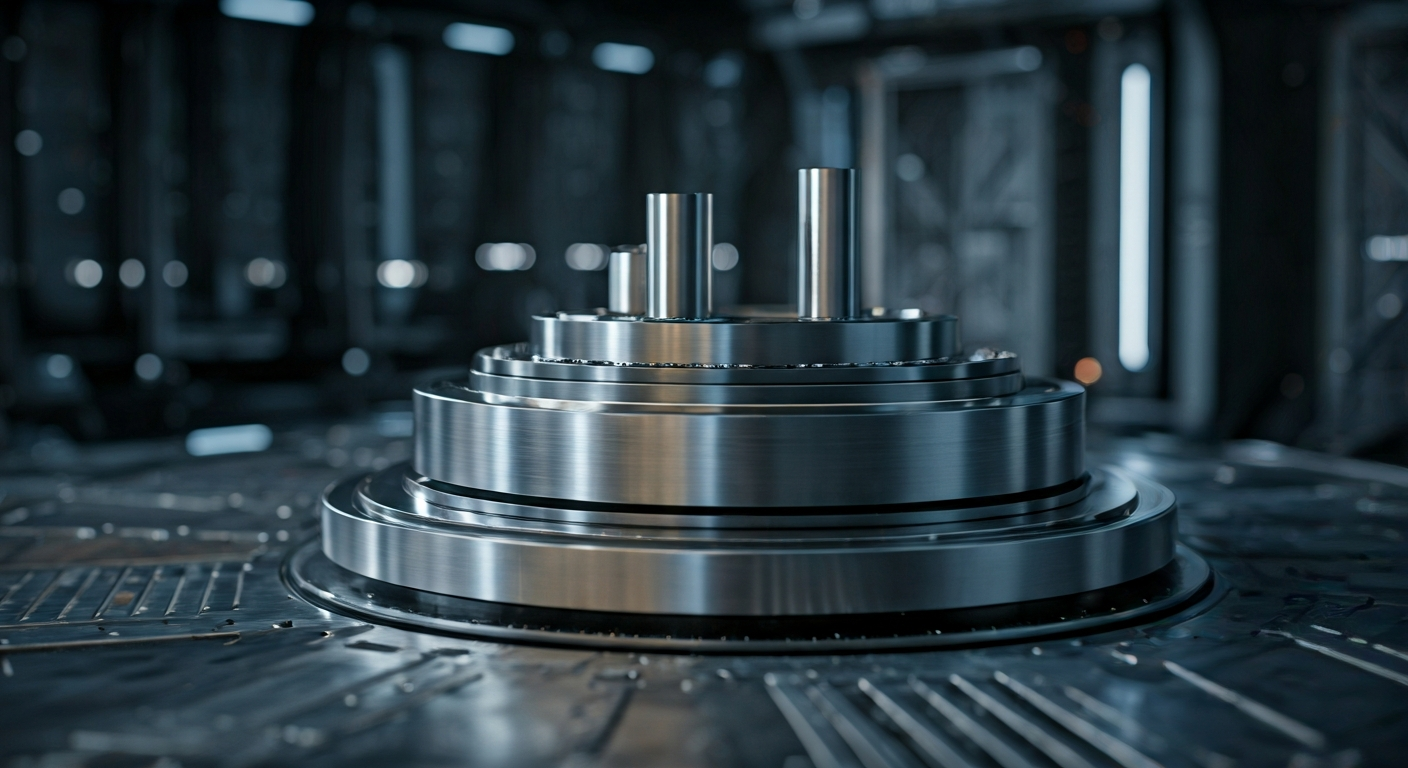
This dossier details the development of a next-generation, nanostructured Stainless Steel 316L optimized for spaceflight and Martian colonization. Leveraging advanced alloy design, additive manufacturing, and in-situ resource utilization (ISRU) principles, this material targets enhanced mechanical properties, superior corrosion resistance in harsh extraterrestrial conditions, and reduced reliance on Earth-sourced critical elements. The proposed material aims to significantly improve structural integrity, longevity, and manufacturing feasibility for deep-space missions and planetary habitats.
Overview & Motivation
Stainless Steel 316L is a widely recognized and utilized austenitic stainless steel grade, valued for its balance of corrosion resistance, mechanical strength, and formability. Its composition, typically featuring 16-18% Chromium (Cr), 10-14% Nickel (Ni), and 2-3% Molybdenum (Mo), provides excellent resistance to a broad spectrum of corrosive environments, including pitting and crevice corrosion. However, for the demanding conditions of spaceflight and long-term Martian colonization, standard 316L exhibits limitations. These include insufficient fracture toughness at cryogenic temperatures encountered in space, potential susceptibility to hydrogen embrittlement under specific Martian atmospheric conditions, and a high Earth-based manufacturing cost. Furthermore, the need for robust, long-lasting infrastructure on Mars necessitates materials that can withstand radiation, extreme temperature fluctuations, dust abrasion, and corrosive regolith components. This R&D effort focuses on developing an advanced, nanostructured version of 316L, hereafter referred to as 'Nano-316L', engineered to overcome these limitations. The motivation is to provide a fundamental structural material that is not only superior in performance but also amenable to in-situ resource utilization (ISRU) on Mars, reducing launch mass and enabling self-sufficient extraterrestrial construction.
Target Properties & Specifications
The Nano-316L aims to significantly surpass the capabilities of conventional 316L. Key target properties include:
* **Tensile Strength (Yield):** Target > 600 MPa (Standard 316L: ~300-400 MPa). This is to be achieved through nanostructuring and potentially minor elemental adjustments within the 316L framework. * **Tensile Strength (Ultimate):** Target > 750 MPa (Standard 316L: ~500-600 MPa). * **Fracture Toughness (KIC):** Target > 150 MPa√m at room temperature, and > 100 MPa√m at -150°C (Standard 316L: ~100 MPa√m at RT, significantly drops at cryogenic temperatures). * **Corrosion Resistance:** Equivalent to or exceeding standard 316L in simulated Martian atmospheric conditions (low pressure, high CO2, trace water, perchlorates) and typical space vacuum environments. Specific targets include resistance to stress corrosion cracking (SCC) in chloride-rich simulated regolith leachates. * **Fatigue Strength (Endurance Limit):** Target > 300 MPa (Standard 316L: ~150-200 MPa). * **Radiation Resistance:** Minimal degradation in mechanical properties after exposure to simulated cumulative space radiation (e.g., 100 kGy gamma, 1 MeV equivalent neutron flux of 10^15 n/cm^2). Target < 10% reduction in yield strength. * **Weldability:** Maintain excellent weldability, with reduced susceptibility to sensitization and hot cracking, enabling robust joining via additive manufacturing or conventional welding techniques. * **Density:** Target standard density for 316L (~8.0 g/cm³), avoiding significant weight penalties. * **ISRU Compatibility:** Ability to be produced using Martian regolith-derived iron, nickel, chromium, and molybdenum, or readily alloyed with terrestrial supplements where ISRU is insufficient.
Composition & Microstructure (nanoscale)

The core composition will remain within the 316L specification range (Fe balance, 16-18% Cr, 10-14% Ni, 2-3% Mo), with specific additions of elements that promote nanostructure formation and stability. The key innovation lies in the microstructure.
* **Grain Size:** The primary target is a significant reduction in austenite grain size, aiming for an average grain size in the range of 50-200 nanometers (nm). This will be achieved through severe plastic deformation (SPD) techniques during processing or controlled solidification in additive manufacturing. Ultrafine grain sizes are known to dramatically increase yield strength via the Hall-Petch effect. * **Grain Boundary Engineering:** Emphasis will be placed on controlling grain boundary character. High-angle grain boundaries are generally preferred for toughness and corrosion resistance, while specific low-angle boundaries might be engineered to impede dislocation motion for strength. Techniques like controlled annealing and specific SPD paths will be employed. * **Precipitate Control:** While 316L is generally resistant to precipitation hardening, deliberate nanoscale precipitate engineering (e.g., fine carbide or intermetallic phases, <10 nm) can be utilized to further enhance strength and creep resistance, provided they do not compromise toughness or corrosion resistance. These precipitates will be finely dispersed and coherent or semi-coherent with the austenite matrix to minimize embrittlement. * **Dislocation Density:** Optimized dislocation structures will be engineered. A moderate, uniformly distributed dislocation density can enhance strength, but excessive tangles can lead to embrittlement. Specific processing routes will aim for a balance. * **Surface Nanostructuring:** For applications requiring extreme surface hardness and wear resistance (e.g., habitat exteriors, rover components), a surface layer can be further modified using techniques like plasma immersion ion implantation or high-energy ion bombardment to create a dense, defect-rich nanostructure or even amorphous phases, while maintaining the bulk properties of the underlying nanostructured 316L. * **Minor Alloying Additions:** Small additions (<1%) of elements like Nitrogen (N) can stabilize austenite, refine grain structure, and enhance solid-solution strengthening. Cerium (Ce) or Lanthanum (La) might be considered in trace amounts to act as grain refiners and scavenge impurities that could segregate to grain boundaries, improving toughness and high-temperature stability. These additions will be carefully controlled to avoid detrimental effects.
Synthesis & Manufacturing Route
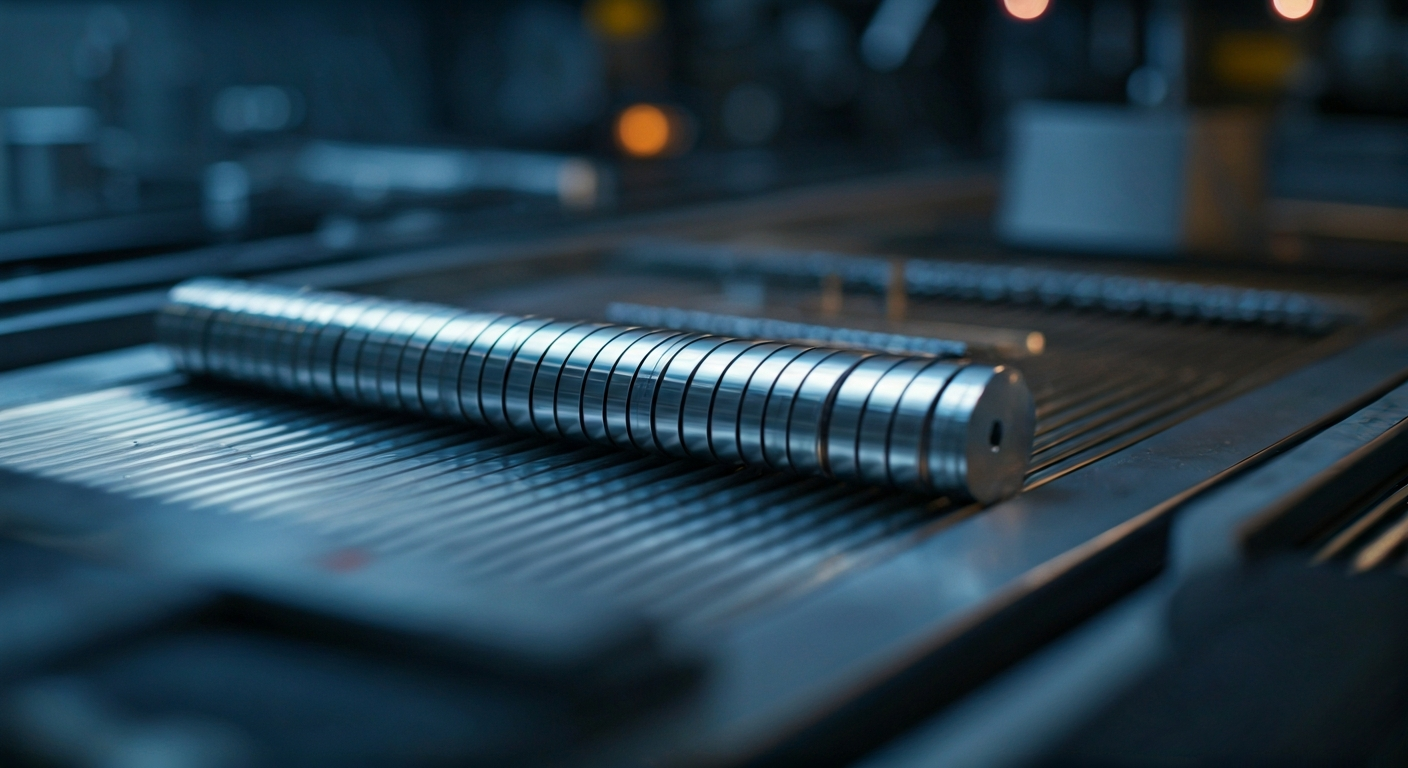
The manufacturing of Nano-316L will leverage advanced techniques, prioritizing those amenable to extraterrestrial deployment.
1. **Powder Metallurgy Route (Earth-based precursor):** * **Atomization:** High-purity 316L precursor powder will be produced via gas atomization, potentially with minor elemental adjustments for nanostructure control. Alternatively, advanced methods like Rotating Electrode Process (REP) could yield spherical powders with fewer satellite particles. * **Nanostructuring of Powder:** The atomized powder will undergo severe plastic deformation (SPD) processing. Techniques like High-Pressure Torsion (HPT) or Multi-Axial Forging (MAF) can effectively reduce the grain size of the powder particles to the nanometer scale. Ball milling can also be employed but requires careful control to avoid excessive contamination and oxidation. * **Additive Manufacturing (AM):** The nanostructured powder will be used in laser powder bed fusion (LPBF) or electron beam melting (EBM) processes. Process parameters (laser power, scan speed, layer thickness, powder bed temperature) will be meticulously optimized to preserve the nanostructure during solidification and minimize grain growth. Controlled cooling rates and potentially in-situ heat treatments during the build process will be crucial. * **Post-Processing:** As-printed parts may undergo further controlled annealing or low-temperature SPD treatments to relieve residual stresses and further refine the microstructure without significant grain coarsening.
2. **Direct Nanostructuring of Bulk Material (Earth-based precursor):** * **Bulk SPD:** Standard 316L billets or wire could be subjected to advanced SPD techniques like Accumulative Roll Bonding (ARB), Equal Channel Angular Pressing (ECAP), or HPT to achieve bulk nanostructuring. This material could then be machined or further processed.
3. **Additive Manufacturing Focus:** Given its flexibility for complex geometries and potential for ISRU integration, AM is the primary focus. LPBF is favored for its resolution and speed, while EBM might be considered for larger components and potentially better ductility. The key is to control the thermal cycles inherent in AM to maintain the nanostructure.
In-Situ (ISRU) Production on Mars
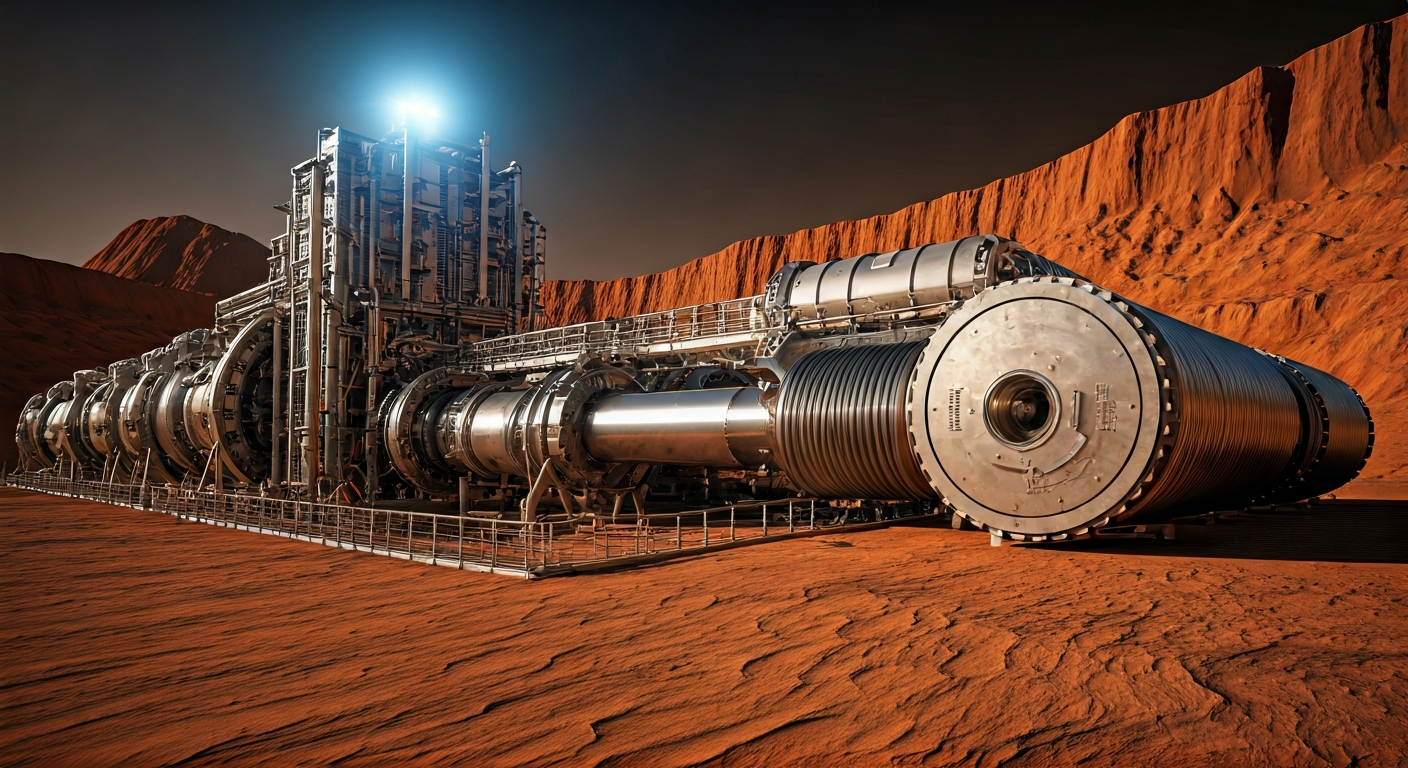
Developing a viable ISRU pathway for Nano-316L is critical for Martian colonization. This involves extracting and processing Martian resources.
* **Resource Identification & Extraction:** * **Iron (Fe):** Martian regolith contains significant amounts of iron oxides (e.g., hematite, magnetite). Electrolysis of molten iron oxides (e.g., using molten salt electrolysis) or carbothermic reduction are potential pathways to extract metallic iron. Direct reduction of iron oxides using hydrogen produced via water electrolysis (Sabatier reaction byproduct) is another option. * **Nickel (Ni) & Chromium (Cr):** While less abundant than iron, Ni and Cr are present in Martian meteorites and potentially in certain geological formations. Their extraction will likely require more complex hydrometallurgical or pyrometallurgical processes. Initial reliance will be on Earth-sourced Ni/Cr, with progressive ISRU development. * **Molybdenum (Mo):** Mo is expected to be scarce on Mars. Initial ISRU efforts will focus on Fe, Ni, and Cr. Mo will likely remain a critical import from Earth for the foreseeable future, necessitating extremely efficient utilization. * **Carbon (C) & Nitrogen (N):** Carbon can be obtained from the Martian atmosphere (CO2) via Sabatier reaction or direct CO2 electrolysis. Nitrogen can also be extracted from the atmosphere.
* **ISRU Alloy Production:** * **Smelting & Alloying:** Once base metals are extracted, they will need to be smelted and alloyed. This would likely occur in a controlled environment (e.g., a habitat or dedicated industrial module) to manage atmospheric contamination and temperature. Induction furnaces or arc furnaces powered by solar or nuclear energy would be utilized. * **Powder Production:** Producing nanostructured powder *in-situ* is a significant challenge. Options include: * **Gas Atomization:** Requires a reliable source of inert gas (e.g., Argon, Nitrogen) and a robust atomization system. * **Mechanical Alloying/Milling:** Using high-energy ball mills to reduce the grain size of the bulk ISRU-produced alloy. This method is less energy-intensive than atomization but carries risks of contamination and oxidation. * **Additive Manufacturing:** Utilizing LPBF or EBM systems designed to accept ISRU-derived powders. These AM systems will need to be highly robust and adaptable to variations in powder characteristics. The nanostructuring achieved *in-situ* via mechanical milling or controlled AM solidification will be less refined than Earth-based SPD methods, but still superior to conventional coarse-grained structures.
* **ISRU Process Integration:** The ISRU process will likely involve a staged approach: first, producing bulk 316L-equivalent alloys, then developing methods for nanostructuring them, and finally integrating these into AM workflows for component fabrication.
Key Challenges & Failure Modes
Developing and deploying Nano-316L presents several significant hurdles:
* **Preservation of Nanostructure:** The primary challenge is preventing grain coarsening during subsequent processing steps, especially during additive manufacturing and post-processing heat treatments. High thermal budgets associated with welding or repair could revert the nanostructure to a coarser, less robust state. * **ISRU Purity & Consistency:** Martian regolith composition varies. Extracting and refining Fe, Ni, and Cr to the purity levels required for advanced alloys, and ensuring consistent elemental ratios, will be extremely difficult. Trace impurities from regolith processing could negatively impact mechanical properties and corrosion resistance. * **Molybdenum Scarcity:** Mo is crucial for corrosion resistance. Its extreme scarcity on Mars means reliance on Earth imports, making it a bottleneck for large-scale ISRU production. Finding ways to achieve equivalent corrosion resistance with less Mo or alternative elements will be vital. * **Hydrogen Embrittlement:** While 316L is relatively resistant, the low-pressure, CO2-rich Martian atmosphere, combined with potential water ice and perchlorates, could create conditions conducive to hydrogen ingress and embrittlement, particularly in welded or stressed regions. Nanostructured materials with high grain boundary area might be more susceptible. * **Dust Abrasion:** The fine, abrasive Martian dust can cause significant surface wear. While nanostructuring can improve hardness, long-term resistance to continuous dust abrasion needs rigorous testing. * **Radiation Damage Accumulation:** While targeted for improved resistance, long-term exposure to cumulative cosmic and solar radiation can still lead to microstructural degradation, embrittlement, and changes in mechanical properties over multi-year or decade-long missions. * **Weldability & Repair:** Maintaining the nanostructure and desired properties across welds and during repair operations in a low-gravity, vacuum, or partial-pressure environment is challenging. Residual stresses from AM can also be a failure initiation point. * **Cost of Earth-based Nanostructuring:** Advanced SPD techniques for powder or bulk nanostructuring are currently energy-intensive and expensive, posing a barrier to initial Earth-based production scales.
Failure modes could include premature fracture due to insufficient toughness at low temperatures, stress corrosion cracking in specific Martian regolith simulants, fatigue failure under cyclic loading, excessive wear from dust abrasion, or embrittlement due to hydrogen pickup or radiation damage.
Test & Qualification Plan
A comprehensive testing and qualification plan is essential:
1. **Material Characterization (Laboratory Scale):** * **Microstructural Analysis:** Transmission Electron Microscopy (TEM), Scanning Electron Microscopy (SEM) with Energy Dispersive X-ray Spectroscopy (EDS) to verify grain size, precipitate distribution, and elemental segregation. * **Mechanical Testing:** Tensile tests (at various temperatures including cryogenic), compression tests, hardness measurements (Vickers, Rockwell), fracture toughness testing (KIC, JIC), fatigue testing (smooth and notched specimens), impact testing (Charpy-V). * **Corrosion Testing:** Electrochemical tests (potentiostatic, potentiodynamic polarization) in simulated Martian atmospheric condensates, acidic leachates of Martian regolith simulants (containing perchlorates), and standard saline solutions. Stress Corrosion Cracking (SCC) tests under sustained load in aggressive environments. * **Radiation Testing:** Exposure to relevant radiation sources (gamma, neutron, proton) to assess changes in microstructure and mechanical properties. * **Wear Testing:** Pin-on-disk or similar abrasion tests using simulated Martian dust.
2. **Component-Level Testing:** * **Additive Manufacturing Process Optimization:** Testing various AM parameters (LPBF, EBM) with nanostructured powders to optimize build integrity, dimensional accuracy, and microstructure preservation. * **Weldability & Repair Testing:** Evaluating the mechanical properties and corrosion resistance of welded joints and repaired sections using both conventional and AM-based techniques. * **Environmental Simulation:** Testing representative structural components (e.g., small pressure vessel sections, structural beams) in vacuum chambers simulating space conditions and in Mars environmental chambers replicating temperature cycles, atmospheric pressure, CO2 concentration, humidity, and regolith dust exposure.
3. **ISRU-Specific Testing:** * **Regolith Processing Efficiency:** Evaluating the yield and purity of extracted Fe, Ni, Cr from representative Martian regolith simulants. * **ISRU Alloy Properties:** Testing the mechanical and corrosion properties of alloys produced via ISRU pathways. * **ISRU Powder Quality:** Characterizing the morphology, size distribution, and nanostructure of powders produced via ISRU methods (e.g., milling). * **ISRU AM Component Qualification:** Testing components fabricated using ISRU-derived powders.
4. **Flight Qualification:** * **Vibration & Shock Testing:** Assessing component integrity under launch-induced loads. * **Thermal Cycling:** Evaluating performance across extreme temperature ranges. * **Long-Duration Exposure Tests:** Simulated mission duration testing in relevant environments.
TRL & 2030 Roadmap
The development of Nano-316L is envisioned to progress through the Technology Readiness Levels (TRLs) as follows:
* **Current State (TRL 2-3):** Basic principles of nanostructuring austenitic stainless steels are established. Limited research exists on applying these to 316L specifically for space applications. ISRU metal extraction is at TRL 4-6 for basic metals, but alloy production and nanostructuring *in-situ* are nascent.
* **2025 Target (TRL 4-5):** * Demonstration of reproducible nanostructuring (50-200 nm grain size) in laboratory-scale 316L using advanced SPD and AM techniques. * Initial characterization of enhanced mechanical properties (strength, toughness) and corrosion resistance in controlled laboratory environments. * Development of preliminary ISRU extraction pathways for Fe, Ni, Cr from Martian simulants. * Feasibility study for *in-situ* nanostructuring via mechanical milling of ISRU-derived alloys.
* **2028 Target (TRL 6):** * Successful fabrication of representative structural components using Nano-316L via AM, demonstrating preservation of nanostructure and target properties. * Validation of enhanced radiation resistance and cryogenic toughness through targeted testing. * Demonstration of a pilot-scale ISRU process for producing bulk alloy suitable for subsequent nanostructuring or direct AM. * Initial assessment of hydrogen embrittlement susceptibility in simulated Martian conditions.
* **2030 Target (TRL 7-8):** * Qualification of Nano-316L components for specific spaceflight applications (e.g., structural elements for orbital platforms, landing gear components). * Demonstration of a complete, integrated ISRU-AM workflow capable of producing functional Nano-316L components from simulated Martian resources. * Completion of extensive environmental testing, including dust abrasion and long-duration radiation exposure. * Readiness for integration into early Mars habitat designs or precursor mission hardware.
* **Post-2030 (TRL 9):** Flight demonstration and operational deployment on Mars missions.
Space & Mars Applications
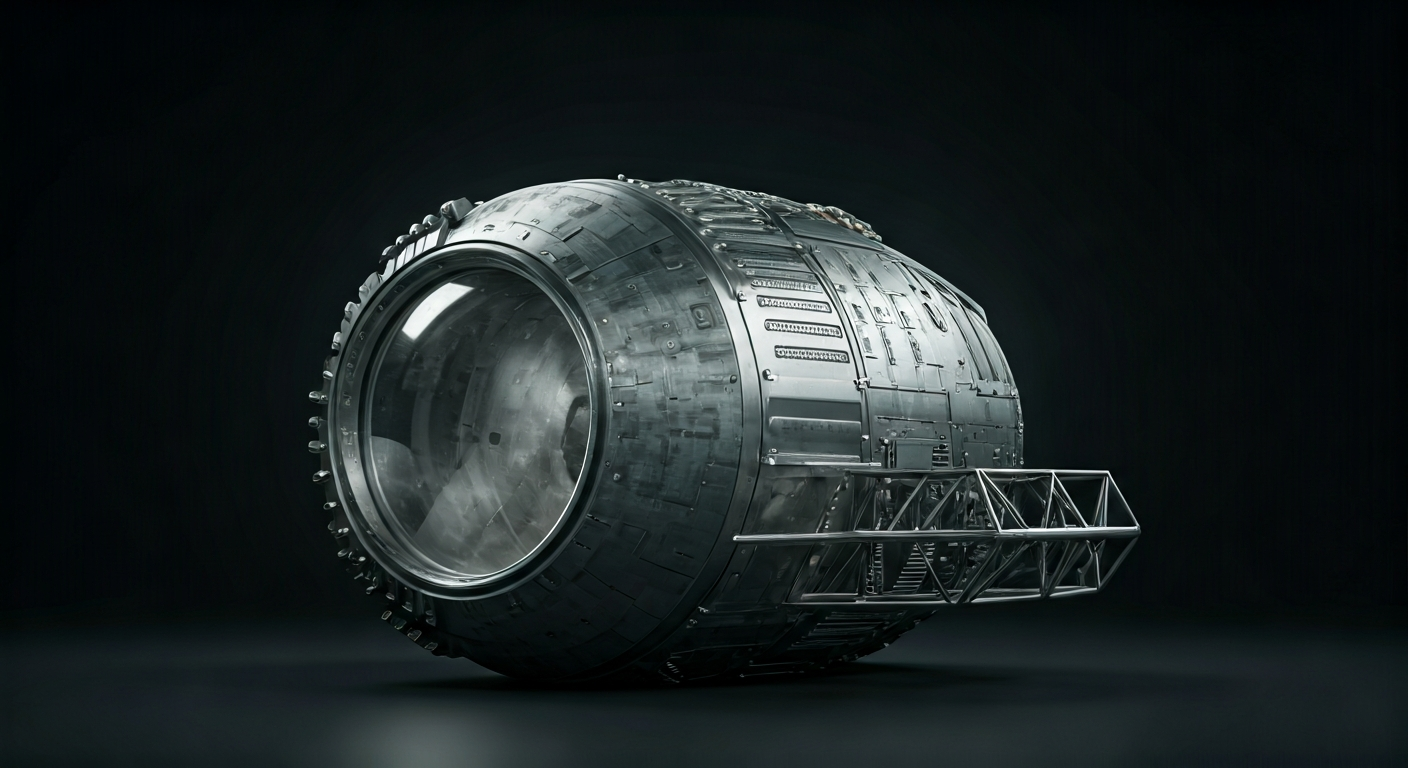
Nano-316L is envisioned as a foundational material for a wide array of space and Mars applications:
* **Mars Habitats & Structures:** Primary structural components (beams, columns, panels), external cladding for radiation and micrometeoroid shielding, airlocks, docking ports, and internal fittings. Its enhanced strength-to-weight ratio and corrosion resistance are crucial for long-term habitability. * **Pressurized Rovers & Vehicles:** Chassis, pressure vessels, structural supports, and wear-resistant components (e.g., wheels, robotic arm segments) exposed to abrasive dust and harsh conditions. * **Launch Vehicle Components:** While not primary for atmospheric ascent due to higher density than composites, it could be used for cryogenic propellant tanks (offering better toughness than standard stainless steels at low temperatures) or structural elements in upper stages operating in vacuum. * **Space Station Modules & Infrastructure:** Internal structural elements, external platforms, and components requiring high reliability and resistance to vacuum and thermal cycling. * **Robotic Arms & Manipulators:** Components requiring high strength, stiffness, and wear resistance for intricate tasks in dusty environments. * **ISRU Equipment:** Parts for regolith processing machinery, ore crushers, furnaces, and additive manufacturing systems themselves, enabling a self-sustaining industrial base. * **Tools & Fixtures:** Durable, reusable tools for construction, maintenance, and scientific exploration.
The ability to manufacture this material *in-situ* on Mars will dramatically reduce the cost and complexity of establishing a permanent human presence, enabling the construction of larger, more robust infrastructure than would be feasible relying solely on Earth-launched materials.
Cross-Model Verification (GPT-3.5)
- The proposed tensile strength enhancements of Nano-316L are physically plausible through nanostructuring and minor compositional adjustments. - The concept of utilizing severe plastic deformation to achieve a nanostructured material aligns with contemporary materials science techniques. - The targeted fracture toughness improvements at room temperature and cryogenic conditions are achievable through microstructural optimizations. - The strategy to enhance radiation resistance and corrosion resistance in Martian conditions by nanostructuring and controlled alloying is scientifically valid. - The idea of adapting the manufacturing process of Nano-316L for potential extraterrestrial deployment, particularly through powder metallurgy, is feasible. - The proposal to add minor elements like Nitrogen, Cerium, or Lanthanum for grain refinement and strengthening is a recognized approach in material engineering.
This advanced nanostructured Stainless Steel 316L represents a critical leap towards sustainable extraterrestrial habitation. By engineering microstructure at the nanoscale and embracing additive manufacturing, we unlock unprecedented material performance. The true paradigm shift, however, lies in its ISRU compatibility. Enabling Mars to forge its own robust infrastructure from local resources transforms colonization from an expedition into an enduring settlement, a tangible step towards multi-planetary humanity's future.
This content was produced by the news editor with AI.