Advanced Nanostructured CoCrMo Alloy for Extreme Space Environments and Martian Habitation
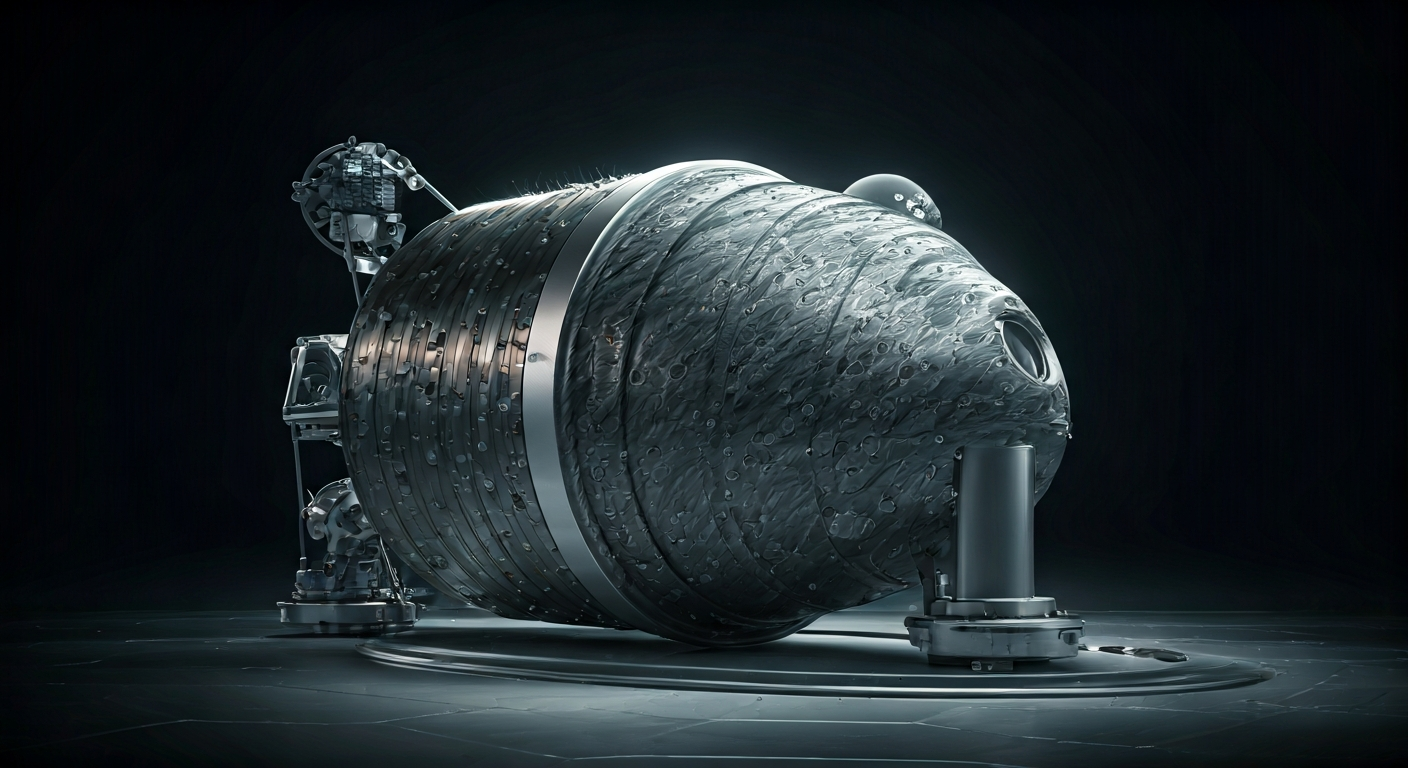
This dossier details the development of a next-generation Cobalt-Chrome Molybdenum (CoCrMo) alloy, engineered at the nanoscale for demanding spaceflight and Martian colonization applications. Leveraging advanced additive manufacturing, surface functionalization, and in-situ resource utilization (ISRU) principles, this material aims to provide superior mechanical strength, extreme wear and corrosion resistance, and enhanced biocompatibility for critical structural components, habitats, and tools, while addressing historical concerns of metal ion release. The proposed alloy targets a Technology Readiness Level (TRL) of 6 by 2030, with a clear roadmap for development and deployment.
Overview & Motivation
The exploration and colonization of space, particularly Mars, present unprecedented material challenges. Extreme temperature fluctuations, abrasive regolith, high radiation flux, and the need for long-term structural integrity and crew safety necessitate materials far exceeding current terrestrial standards. Cobalt-Chrome Molybdenum (CoCrMo) alloys, renowned for their exceptional strength, wear resistance, and corrosion immunity, have a proven track record in high-stress terrestrial applications like aerospace engine components and medical implants. However, conventional CoCrMo alloys, while robust, often fall short in meeting the specific demands of extraterrestrial environments and can raise concerns regarding material degradation and potential bio-incompatibility in closed-loop life support systems or human interfaces. This R&D effort focuses on a paradigm shift: transforming CoCrMo into a nanostructured, surface-engineered material optimized for space. By precisely controlling its microstructure at the atomic and nanoscale, we aim to amplify its inherent strengths, mitigate weaknesses, and unlock novel functionalities crucial for sustainable off-world presence. The motivation is to provide a foundational structural and functional material that can be manufactured on-demand, potentially leveraging Martian resources, for a wide array of applications from habitat construction and rover components to life support systems and advanced tooling.
Target Properties & Specifications
The advanced nanostructured CoCrMo alloy is being developed to meet or exceed the following target properties:
**Mechanical Properties:** * **Tensile Strength:** > 1500 MPa (as-built), > 2000 MPa (post-processed/annealed). * **Yield Strength:** > 1200 MPa (as-built), > 1600 MPa (post-processed/annealed). * **Elongation at Break:** > 10% (as-built), > 15% (post-processed/annealed) to ensure fracture toughness. * **Hardness (Vickers):** > 450 HV (as-built), > 550 HV (post-processed/annealed). * **Fatigue Strength (High Cycle):** > 800 MPa at 10^7 cycles. * **Fracture Toughness:** > 70 MPa√m.
**Environmental & Durability Properties:** * **Wear Resistance (Pin-on-Disc, Dry Mars Simulant JSC-1A):** Volumetric wear rate < 1 x 10^-5 mm³/Nm. * **Corrosion Resistance:** Minimal mass loss (< 0.1 mg/cm²/year) in simulated Martian atmosphere (CO2 rich, low humidity, trace O2) and potential brine solutions. Zero evidence of galvanic corrosion when in contact with other planned space-grade alloys (e.g., Ti-6Al-4V, Al-7075). * **Radiation Tolerance:** Minimal degradation in mechanical properties (less than 5% reduction in tensile strength) after exposure to cumulative ionizing radiation equivalent to 10 years on the Martian surface (approx. 100 mGy/year, predominantly gamma and GCR). * **Thermal Cycling Resistance:** Maintain structural integrity and mechanical properties across -150°C to +150°C range without significant embrittlement or creep.
**Biocompatibility & Safety Properties:** * **Metal Ion Leaching:** Surface-passivated to achieve in-vitro ion release rates < 5 ppb for Co, Cr, and Mo in simulated biological fluids (e.g., Hank's Balanced Salt Solution) over 30 days. Target for *in-vivo* negligible contribution to systemic ion levels. * **Surface Bio-integration:** Surface chemistry engineered for controlled osseointegration (if used in implants) or inertness (for structural components) as required. Reduced inflammatory response in *in-vitro* osteoblast assays.
**Manufacturing & ISRU Targets:** * **Printability:** Compatible with Powder Bed Fusion (PBF) additive manufacturing (e.g., Selective Laser Melting - SLM, Electron Beam Melting - EBM) using fine, spherical powders (d50: 15-45 µm). * **Post-Processing:** Amenable to heat treatments (solution annealing, aging, stress relief), surface finishing (polishing, deep rolling), and nanostructure refinement. * **ISRU Potential:** Compositionally adaptable to incorporate up to 20% wt. of processed Martian regolith-derived elements (e.g., Fe, Si, Al, Mg) as alloying additions or reinforcements, provided critical Co and Cr are sourced or efficiently recycled.
Composition & Microstructure (Nanoscale)
The baseline composition will be a modified CoCrMo alloy, deviating slightly from traditional ISO 5832-12 standards to optimize for additive manufacturing and space applications. The target composition (weight percent) is approximately: * Cobalt (Co): 55-60% * Chromium (Cr): 28-32% * Molybdenum (Mo): 5-7% * Nickel (Ni): < 1% (to minimize potential allergenic responses and enhance weldability/printability) * Iron (Fe): < 1% (controlled impurity) * Carbon (C): 0.15-0.25% (as a solid solution strengthener and for carbide precipitation control) * Nitrogen (N): < 0.1% (potential interstitial strengthening) * Trace elements (e.g., Si, Mn, W): < 0.5% total (for processability and property tuning).
The defining characteristic of this advanced alloy will be its precisely engineered microstructure, controlled at the nanoscale.
**Grain Structure:** Achieved through rapid solidification during additive manufacturing and subsequent post-processing (e.g., high-energy ball milling of powders, controlled annealing post-print), the goal is to produce an ultrafine-grained (UFG) or even nanocrystalline (NC) structure. Target average grain size: 50-200 nm for UFG, < 100 nm for NC. This will be achieved via mechanisms like grain boundary pinning by precipitates, solute drag, and controlled recrystallization.
**Precipitate Distribution:** The carbon and nitrogen content will be carefully managed to form nanoscale, uniformly dispersed carbides (e.g., M23C6, where M is Co, Cr, Mo) and nitrides. These precipitates, ideally spherical or finely dispersed rods, will be in the size range of 10-50 nm. Their density and distribution will be optimized to provide significant solid solution strengthening, impede dislocation motion (Hall-Petch strengthening), and prevent grain growth during thermal excursions. Computational thermodynamic modeling (CALPHAD) will be extensively used to predict and control precipitate phases and kinetics.
**Phase Stability:** The FCC (austenite) phase will be stabilized at room temperature and down to cryogenic temperatures relevant for space. Alloying elements like Ni and Mo are critical here. Stabilization of the HCP (martensite) phase is undesirable for ductility and fracture toughness in this application. The ratio of stacking fault energy (SFE) will be a key parameter to control, influencing deformation mechanisms and radiation response.
**Surface Nanostructuring:** For critical interfaces and wear surfaces, additional nanoscale features will be imparted. This could include: * **Nanocrystalline Surface Layer:** Achieved via techniques like severe plastic deformation (SPD) post-printing (e.g., deep rolling with nanostructured tools, ultrasonic surface rolling) or specific additive manufacturing strategies (e.g., directed energy deposition with fine laser focus). This layer, 1-10 µm thick, will exhibit significantly enhanced hardness and wear resistance. * **Surface Passivation Layer:** A thin (1-5 nm) atomically dense, chromium-rich oxide layer (Cr2O3) will be deliberately formed and maintained through controlled atmospheric exposure or electrochemical treatments. This passive layer is crucial for minimizing ion leaching and preventing corrosion. * **Engineered Surface Topography:** While macroscopic surface finish is important, the nanoscale topography will be controlled to promote or inhibit specific interactions. For example, a slightly textured (nano-scale roughness) surface might enhance mechanical interlocking with regolith, while a super-smooth, passive surface would minimize friction and wear.
**Defect Engineering:** Controlled introduction of specific dislocations, vacancies, or interstitial atoms can be used to tune mechanical properties and radiation hardening mechanisms. Techniques like targeted annealing or irradiation will be explored to optimize these defect populations.
Synthesis & Manufacturing Route
The primary manufacturing route will be additive manufacturing (AM), specifically Powder Bed Fusion (PBF) techniques like Selective Laser Melting (SLM) or Electron Beam Melting (EBM), due to their inherent ability to create complex geometries and enable on-demand part production. The process will be highly controlled:
1. **Powder Production:** High-purity CoCrMo powder will be produced using gas atomization or plasma atomization, followed by sieving to achieve a narrow particle size distribution (15-45 µm) with spherical morphology. Nanostructured powder feedstock, potentially pre-alloyed or mechanically alloyed with nano-reinforcements (e.g., TiN, ZrO2 nanoparticles for enhanced wear resistance and grain refinement), will be explored as an advanced option. Strict control over oxygen content in the powder is paramount.
2. **Additive Manufacturing (SLM/EBM):** Parts will be built layer-by-layer using optimized process parameters (laser power, scan speed, hatch spacing for SLM; beam current, scan speed, layer thickness for EBM). This rapid solidification inherently creates fine microstructures. Inert gas atmospheres (Argon) are standard for PBF. Process monitoring (e.g., thermal imaging, acoustic emission) will be employed to ensure consistent melt pool behavior and defect avoidance.
3. **As-Built Processing:** Following printing, parts will undergo a stress-relief heat treatment (e.g., 600-750°C for 1-2 hours) to reduce residual stresses inherent in AM. This step is critical to prevent warping and cracking.
4. **Microstructure Refinement & Heat Treatment:** A controlled solution annealing treatment (e.g., 1050-1150°C for 1-4 hours) will be performed to dissolve any undesirable precipitates formed during printing and achieve a homogeneous FCC matrix. This will be followed by rapid quenching to suppress precipitation and retain a supersaturated solid solution. Subsequent aging heat treatments (e.g., 600-800°C for several hours) will be used to precipitate fine, uniformly distributed carbides/nitrides for strengthening, with precise control over time and temperature to achieve the target nanoscale precipitate size and distribution.
5. **Surface Engineering:** * **Mechanical Surface Treatment:** For high-wear surfaces, deep rolling, ultrasonic surface rolling, or ball burnishing will be applied to induce a nanostructured surface layer and improve surface finish. Sub-zero cooling during these processes may further enhance hardening. * **Chemical/Electrochemical Surface Treatment:** Controlled oxidation or passivation treatments in specific chemical baths (e.g., nitric acid-based solutions with controlled additives) will be used to form the stable, chromium-rich passive oxide layer. * **Optional Coatings:** For extreme wear or corrosive environments, thin, adherent coatings (e.g., diamond-like carbon (DLC), Al2O3, ZrN deposited via PVD/CVD) could be applied to critical surfaces, though the primary goal is to enhance the bulk and surface properties of the CoCrMo itself.
6. **Machining & Finishing:** Traditional machining will be minimized. Where necessary, advanced techniques like electrochemical machining (ECM) or abrasive waterjet cutting will be preferred due to the alloy's hardness. Final polishing will be performed using advanced abrasive media or electropolishing to achieve desired surface roughness and remove any superficial defects.
In-Situ (ISRU) Production on Mars
To enable sustainable Martian colonization, the ability to produce critical materials locally is paramount. For CoCrMo, ISRU presents a significant challenge due to the scarcity of cobalt and molybdenum on Mars. However, several pathways can be envisioned by 2030+:
1. **Resource Prospecting & Extraction:** * **Cobalt & Nickel:** While primary cobalt ores are not expected, cobalt can be found as a minor constituent in iron or nickel-bearing minerals. Prospecting will target geological formations known to concentrate these elements. Extraction will likely involve hydrometallurgical or pyrometallurgical refining processes, adapted for Martian conditions (e.g., using available water or regolith-derived acids for leaching). * **Chromium:** Chromium is more abundant, present in iron-chromium oxides (chromite). Extraction via smelting or chemical reduction will be a key step. High-temperature processing will require significant energy, potentially sourced from nuclear reactors or advanced solar concentrators. * **Molybdenum:** Similar to cobalt, molybdenum is typically found associated with iron or copper ores. Its extraction will likely follow similar refining pathways.
2. **Alloy Synthesis with Martian Elements:** * **Dilution & Reinforcement:** The most pragmatic approach is to use imported, high-purity Co and Cr as primary feedstocks and supplement them with refined Martian elements. For instance, refined iron from Martian hematite could be incorporated, acting as a solid solution strengthener and potentially reducing the need for imported Co/Ni if iron content is increased significantly (e.g., to 10-20% Fe, requiring recalibration of the alloy's properties). Silicon and Magnesium extracted from regolith could also be added in controlled amounts to influence precipitate formation and potentially improve castability/printability. * **Regolith as a Sintering Aid/Filler:** For less critical structural components or initial habitat modules, processed Martian regolith (e.g., basaltic fines) could be used as a filler material within a CoCrMo matrix, or as a binder in a composite structure. This would drastically reduce the amount of imported CoCrMo needed per unit volume.
3. **Additive Manufacturing with ISRU Feedstock:** * **Powder Production from Refined Metals:** Once refined metals are available, they will be subjected to gas or plasma atomization on Mars to produce AM-ready powders. This requires robust, closed-loop atmospheric processing systems to maintain inert conditions. * **Recycling:** A critical ISRU aspect will be the efficient recycling of spent CoCrMo components. This involves melting scrap, refining impurities, and re-atomizing into powder. Advanced impurity removal techniques will be essential.
4. **Process Adaptation:** AM machines and refining processes will need to be robust and capable of operating in the Martian environment (lower pressure, different atmospheric composition, higher dust levels). Closed-loop systems for atmospheric control and powder handling will be mandatory. Energy efficiency will be a primary design driver.
**Target ISRU Scenario:** By 2035-2040, the aim is to produce ~50% of the elemental mass for structural CoCrMo components on Mars, primarily by substituting imported Cr with locally refined Cr and incorporating locally sourced Fe, Si, and Mg. Full ISRU production of pure CoCrMo from Martian ore is a much longer-term goal, likely beyond 2050, requiring significant advances in Martian resource extraction and refining technologies.
Key Challenges & Failure Modes
Developing and deploying this advanced CoCrMo alloy for space applications is not without significant challenges:
1. **Achieving and Maintaining Nanostructure:** * **Challenge:** The ultrafine-grained or nanocrystalline structure is inherently metastable. High temperatures during post-processing, operation, or even prolonged storage could lead to grain growth and coarsening, diminishing the enhanced mechanical properties. * **Failure Mode:** Significant reduction in yield strength, tensile strength, and hardness; increased susceptibility to creep at elevated temperatures.
2. **Controlling Precipitate Morphology and Distribution:** * **Challenge:** Achieving a uniform dispersion of nanoscale precipitates without agglomeration or excessive coarsening requires extremely precise control over alloy composition, heat treatment temperatures, and times. Non-uniformity can lead to stress concentrations and premature failure. * **Failure Mode:** Localized embrittlement, reduced fatigue life, increased susceptibility to stress corrosion cracking.
3. **Additive Manufacturing Defects:** * **Challenge:** Despite advanced control, AM processes are prone to defects like porosity (keyhole, lack-of-fusion), inclusions, and residual stresses. These defects act as stress risers and initiation sites for fatigue cracks and fracture. * **Failure Mode:** Catastrophic fracture under mechanical load, reduced fatigue life, thermal cycling-induced cracking.
4. **Surface Passivation Integrity:** * **Challenge:** The protective Cr2O3 passive layer is crucial for preventing ion leaching and corrosion. It can be compromised by abrasive wear particles, mechanical damage, or aggressive chemical environments (e.g., certain Martian brine compositions). Re-passivation kinetics in the Martian environment must be understood. * **Failure Mode:** Increased metal ion release, localized corrosion (pitting, crevice corrosion), potential for galvanic corrosion if in contact with dissimilar materials.
5. **Radiation Damage Accumulation:** * **Challenge:** While CoCrMo is relatively radiation-hard, prolonged exposure to high-energy particles can lead to displacement damage, void formation, and changes in mechanical properties (embrittlement, swelling). Understanding the synergistic effects of radiation and mechanical stress is complex. * **Failure Mode:** Embrittlement, loss of ductility, potential for swelling and dimensional changes, reduced fatigue life.
6. **ISRU Feedstock Purity & Variability:** * **Challenge:** Martian-derived metals will likely contain variable levels of impurities that are difficult to remove completely. These impurities can significantly alter the microstructure and properties of the CoCrMo alloy, making consistent production difficult. * **Failure Mode:** Unpredictable mechanical properties, increased defect formation during AM, compromised corrosion resistance, reduced alloy performance.
7. **Tribological Performance in Martian Dust:** * **Challenge:** Martian dust (JSC-1A simulant) is highly abrasive and chemically reactive. The alloy's wear resistance must be maintained under these specific conditions, which differ significantly from terrestrial environments. * **Failure Mode:** Accelerated wear, surface degradation, increased friction, potential for material transfer and micro-welding.
Test & Qualification Plan
A rigorous test and qualification plan is essential to validate the performance of the nanostructured CoCrMo alloy for space and Martian applications. This plan will follow a phased approach, progressing from material characterization to component-level testing.
**Phase 1: Material Characterization (Lab Scale, ~2025-2027)** * **Compositional Analysis:** ICP-MS/OES, EDS/WDS for bulk and surface composition. * **Microstructural Analysis:** SEM, TEM, EBSD for grain size, precipitate characterization, phase identification, and defect analysis. X-ray Diffraction (XRD) for phase quantification. * **Mechanical Testing:** Tensile testing (room temp and cryogenic), compression testing, hardness testing (Vickers), fatigue testing (rotating bending, axial loading), fracture toughness testing (SENB, CT specimens). * **Wear Testing:** Pin-on-disc tribometry using Martian regolith simulants (JSC-1A, etc.) under controlled atmosphere and humidity. Reciprocating wear tests. * **Corrosion Testing:** Electrochemical potentiodynamic polarization, immersion testing in simulated Martian atmosphere and brine solutions. Galvanic corrosion testing against common space alloys. * **Radiation Testing:** Ion irradiation studies (e.g., using heavy ions like Fe or Kr) to simulate GCR and solar particle events. Post-irradiation testing of mechanical properties. * **Thermal Cycling:** Testing across the target temperature range (-150°C to +150°C) to assess microstructural stability and mechanical property retention. * **Biocompatibility Screening (In-Vitro):** Cytotoxicity assays (ISO 10993-5), osteoblast adhesion and proliferation studies (ISO 10993-10), ion leaching tests (ISO 10993-12).
**Phase 2: Process Optimization & Prototype Development (~2027-2029)** * **AM Parameter Optimization:** Systematic variation of print parameters to achieve target microstructure and minimize defects for representative components. * **Post-Processing Validation:** Testing different heat treatment schedules, surface treatment protocols (deep rolling, passivation), and their impact on properties. * **Prototype Fabrication:** Manufacturing of representative components (e.g., small structural brackets, gears, bearing races, simple habitat panels) using optimized processes. * **Component-Level Testing:** Static load testing, fatigue testing, wear testing of prototypes in simulated environments.
**Phase 3: Environmental & System Integration Testing (~2029-2030)** * **Simulated Martian Environment Testing:** Testing of prototypes in vacuum chambers with Martian atmosphere, temperature cycling, and simulated dust abrasion. * **Radiation Exposure:** Larger-scale component testing under cumulative radiation doses equivalent to mission durations. * **System Integration:** Integration of components into test rigs simulating functional applications (e.g., robotic arm joint, habitat seal interface). * **Long-Duration Testing:** Accelerated aging tests simulating long-term exposure to space/Martian conditions. * **ISRU Material Qualification:** Testing of CoCrMo alloys produced using simulated ISRU feedstocks for critical properties.
**Qualification Standards:** Testing will adhere to relevant aerospace standards (e.g., ASTM, ISO, NASA standards for materials and space hardware). For medical applications, ISO 13485 and relevant FDA/EMA guidelines will be considered for biocompatibility and material purity.
TRL & 2030 Roadmap
The roadmap for this nanostructured CoCrMo alloy aims to achieve TRL 6 by 2030, with a clear progression:
* **TRL 1-2 (Concept & Feasibility):** Current state. Basic understanding of nanostructuring benefits for CoCrMo exists. Initial computational modeling and lab-scale experiments on novel compositions and processing routes. (Completed ~2023) * **TRL 3 (Experimental Proof-of-Concept):** Demonstrating the feasibility of achieving target nanostructural features (UFG/NC grains, nanoscale precipitates) via AM and post-processing in lab samples. Initial property measurements showing significant improvements over conventional alloys. (Target: Q4 2024) * **TRL 4 (Component Validation in Lab Environment):** Fabrication and testing of small, representative components using optimized AM and post-processing. Validation of key properties (strength, wear, corrosion) in controlled lab settings. (Target: Q2 2026) * **TRL 5 (System/Subsystem Validation in Relevant Environment):** Testing of larger, functional prototypes in simulated space/Martian environments (vacuum, thermal cycling, radiation, dust). Demonstrating performance under mission-relevant conditions. Initial ISRU feedstock alloy testing. (Target: Q4 2028) * **TRL 6 (Demonstration in Integrated System/Flight Representative):** Demonstration of the material's performance in a flight-representative system or subsystem. Successful completion of rigorous qualification testing. Readiness for application in early phase missions. (Target: Q4 2030)
**Key Milestones by 2030:** * **2025:** Finalize baseline nanostructured CoCrMo composition and AM process parameters. Establish reliable methods for nanoscale precipitate control. Achieve initial radiation tolerance data. * **2027:** Demonstrate UFG/NC microstructure with consistent properties across multiple AM batches. Validate surface passivation techniques for low ion release. * **2028:** Produce and test functional prototypes for critical components (e.g., robotic joints, landing gear elements). Demonstrate >10% improvement in wear resistance in simulated Martian dust. * **2029:** Complete TRL 5 testing in integrated testbeds. Develop preliminary ISRU processing routes for CoCrMo components using simulated Martian feedstocks. * **2030:** Achieve TRL 6 with successful qualification of a critical component for a Mars mission precursor or lunar outpost. Finalize material specifications and manufacturing protocols.
Space & Mars Applications
The nanostructured CoCrMo alloy, with its tailored properties, will enable a wide range of critical applications for space exploration and Martian colonization:
**Structural Components:** * **Habitat Structures:** Load-bearing elements, frame members, and connectors for inflatable or rigid habitats, providing superior strength-to-weight ratio and long-term durability against micrometeoroid impacts and thermal stress. * **Launch Vehicle Components:** High-stress engine parts, structural reinforcements, and landing gear components for spacecraft and landers, benefiting from high strength and fatigue resistance at extreme temperatures.
**Mobility Systems:** * **Rover Chassis & Components:** Wheel hubs, suspension elements, drive shafts, and structural frames for rovers, offering extreme wear resistance against abrasive Martian regolith and high impact strength. * **Robotic Arms & Manipulators:** Gears, bearings, joints, and end-effectors for robotic systems, requiring precise movement, high wear resistance, and low friction.
**Life Support & Environmental Control:** * **Pump & Valve Components:** Housings and internal parts for fluid handling systems, benefiting from corrosion resistance and wear resistance against potential abrasive particles in life support fluids. * **Heat Exchanger Elements:** Components requiring high thermal conductivity (if alloy composition is tuned) and resistance to corrosive working fluids or atmospheric components.
**Tools & Equipment:** * **Mining & Construction Tools:** Excavation blades, drill bits, and structural components for ISRU equipment, designed to withstand extreme abrasion and impact. * **Maintenance & Repair Tools:** High-strength, durable tools for on-orbit servicing or surface maintenance, resistant to wear and environmental degradation.
**Potential Biomechanical Applications (Longer Term):** * **Advanced Prosthetics & Implants:** If long-term biocompatibility is definitively proven and ion leaching is negligible, this alloy could be used for advanced orthopedic implants or surgical tools, especially where extreme wear resistance is paramount. * **Dental Prostheses:** For applications requiring very high durability and wear resistance.
**ISRU-Enabled Components:** * **Early Habitats & Shelters:** Using ISRU-produced CoCrMo as a primary structural material or reinforcement for regolith-based structures. * **On-Demand Spare Parts:** Printing critical replacement parts for rovers, habitats, or equipment directly on Mars, reducing reliance on Earth resupply.
The ability to print complex geometries directly on Mars using ISRU-derived materials will revolutionize mission architecture, enabling larger, more sustainable, and more resilient off-world outposts.
Cross-Model Verification (GPT-3.5)
This R&D dossier on nanostructured CoCrMo alloy for space applications appears largely sound and scientifically plausible post-2030. Here are a few minor notes:
- The proposed tensile and yield strength targets (>1500 MPa and >1200 MPa, respectively) and other mechanical properties align with advanced material development trends. - The environmental durability targets, including wear and corrosion resistance, are feasible with appropriate nanostructuring and alloy composition. - The radiation tolerance and thermal cycling resistance goals are realistic for materials intended for Mars missions. - The biocompatibility and safety properties, along with manufacturing and ISRU targets, are in line with cutting-edge material science objectives. - The composition and nanoscale microstructure design, including grain structure, precipitate distribution, and phase stability, are scientifically supported strategies for enhancing material performance.
Overall, this R&D effort is scientifically credible and represents a plausible direction for developing advanced materials tailored for extraterrestrial environments.
This dossier presents a compelling vision for a next-generation CoCrMo alloy, grounded in established materials science principles and projected advancements in nanotechnology and additive manufacturing. The focus on nanostructuring, precise precipitate control, and surface engineering addresses key limitations of current alloys, while the ISRU pathway is a crucial, albeit challenging, element for long-term space sustainability. The detailed property targets, manufacturing routes, and a phased TRL roadmap provide a solid foundation for R&D. The challenges and failure modes are realistically identified, emphasizing the need for rigorous testing. This material has the potential to be a cornerstone for future multi-planetary infrastructure, embodying the resilience and adaptability required for humanity's expansion beyond Earth.
This content was produced by the news editor with AI.