Advanced Materials Forge New Frontiers in Space Exploration
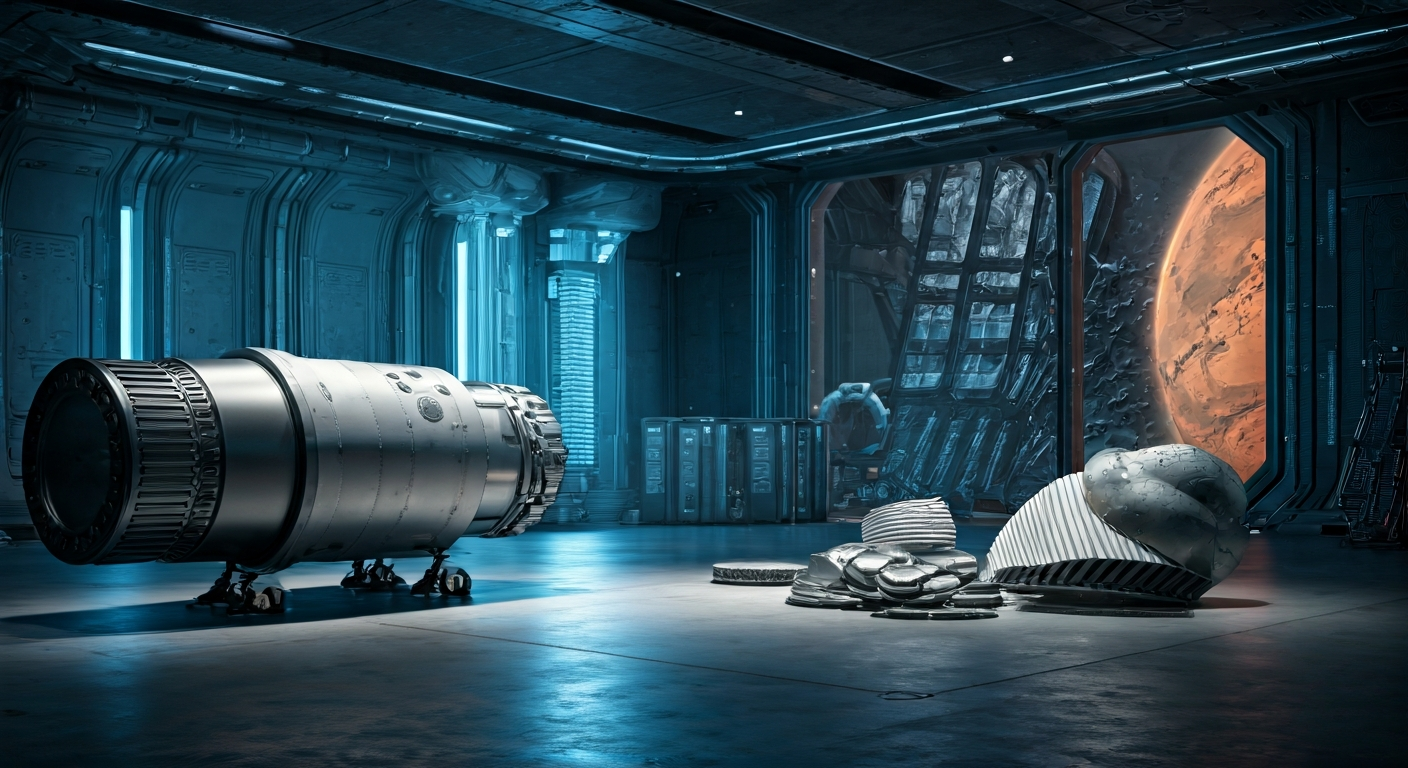
From robust heat shields to novel construction materials derived from lunar regolith, cutting-edge material science is paving the way for more ambitious and sustainable space missions.
The next generation of space exploration hinges on materials that can withstand extreme conditions and enable on-site construction. NASA's Artemis II mission, for instance, is placing significant emphasis on the performance of its Orion spacecraft's heat shield. This critical component, designed to endure the fiery ordeal of atmospheric re-entry, is a testament to advanced ablative materials that char and vaporize, dissipating immense heat and protecting the crew.
Beyond survivability, material innovation is driving efficiency and sustainability. Additive manufacturing, or 3D printing, is revolutionizing rocket engine production. Companies like Rocket Lab are rolling out thousands of their Rutherford engines, manufactured using advanced 3D printing techniques that allow for complex geometries, reduced weight, and faster production cycles. This technology is also being explored for novel rocket propellants, potentially leading to lighter, more powerful propulsion systems.
Looking further ahead, the prospect of building infrastructure beyond Earth is becoming a reality thanks to research into In-Situ Resource Utilization (ISRU). Scientists are developing methods to transform lunar regolith—the loose dust and rock on the Moon's surface—into viable building materials. Techniques range from sintering and 3D printing regolith into structural components to using it as a radiation shield for habitats. European researchers are also pioneering self-healing composite materials for spacecraft, promising greater resilience against micrometeoroid impacts and extending mission life.
The future of multi-planetary humanity is inextricably linked to materials science. From ISRU enabling self-sustaining lunar and Martian bases to advanced composites and additive manufacturing reducing launch costs and increasing mission reliability, materials are the foundational building blocks for our expansion into the cosmos. Innovations today are not just about reaching new destinations, but about living and working there sustainably.
This content was produced by the news editor with AI.