Advanced Maraging Steel 300 for Extreme Environments: A Dossier for Spaceflight and Mars Colonization
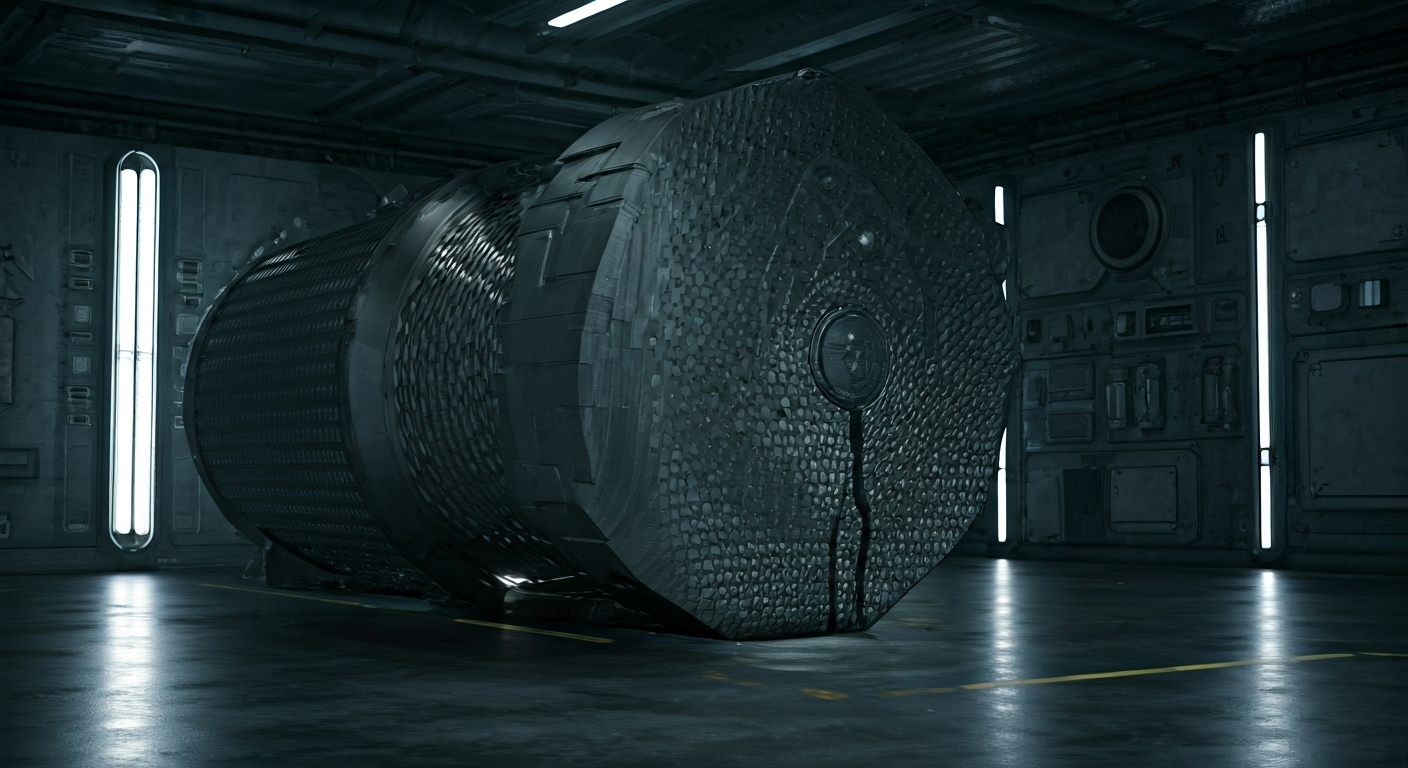
This dossier details the development of a next-generation Maraging Steel 300, engineered for enhanced performance in the extreme conditions of space and the Martian surface. Focusing on nanoscale microstructural control, advanced manufacturing, and in-situ resource utilization (ISRU) potential, this material targets critical applications from structural components to advanced tooling, addressing current limitations in strength, toughness, and environmental resistance.
Overview & Motivation
Maraging steels, a class of ultra-high-strength steels, have long been recognized for their unique combination of exceptional mechanical properties, including high tensile strength, fracture toughness, and good ductility. Maraging Steel 300 (MS300), with its nominal composition of approximately 18% nickel, 8-9% cobalt, 5% molybdenum, and 0.5% titanium, stands as a benchmark in this category. Its strength is derived not from carbon, but from the precipitation of intermetallic compounds (primarily Ni3(Mo,Fe) and Ni3Ti) within a low-carbon, iron-nickel martensitic matrix during an aging heat treatment. This process results in a microstructure that is relatively free of brittle carbides, contributing to its superior toughness and ductility compared to conventional high-strength steels.
However, current iterations of MS300, while robust, face limitations when considered for the most demanding extraterrestrial applications. These include potential susceptibility to certain forms of corrosion in the presence of specific atmospheric components or brines found on Mars, fatigue life under cyclic loading in vacuum or abrasive Martian dust environments, and the logistical and cost challenges associated with transporting such materials from Earth. The motivation for developing an advanced MS300 is to overcome these limitations, creating a material optimized for the unique environmental stressors of space and Mars. This includes enhancing its intrinsic resistance to corrosion, improving fatigue performance, and exploring pathways for its production using resources available on Mars, thereby reducing launch mass and enabling sustainable colonization.
This dossier outlines a program to develop an enhanced MS300 variant, herein referred to as 'Astro-MS300', leveraging advanced materials science and engineering principles. The focus will be on achieving a precisely controlled nanoscale microstructure, exploring novel synthesis and manufacturing routes, and evaluating its potential for in-situ resource utilization (ISRU) on Mars. The target is a material that not only matches but exceeds the performance of terrestrial MS300 in space and Martian environments, enabling a new generation of robust, reliable, and sustainable hardware for exploration and habitation.
Target Properties & Specifications
The development of Astro-MS300 aims to surpass the performance benchmarks of conventional Maraging Steel 300, with specific targets tailored for the rigors of spaceflight and Martian colonization. The following properties and specifications are established:
**Mechanical Properties:** * **Tensile Strength (Ultimate):** Target > 2200 MPa (Nominal MS300 is ~2100-2300 MPa). This higher target ensures a greater safety margin for structural components under extreme loads. * **Yield Strength:** Target > 2100 MPa (Nominal MS300 is ~2000-2200 MPa). Maintaining a high yield strength is critical for preventing permanent deformation. * **Fracture Toughness (KIC):** Target > 100 MPa√m (Nominal MS300 is ~80-120 MPa√m). Enhancing toughness is paramount for mitigating crack propagation in high-stress, low-temperature, or impact scenarios. * **Ductility (Elongation at Break):** Target > 8% (Nominal MS300 is ~5-10%). While high strength is key, maintaining sufficient ductility is crucial for preventing brittle fracture and allowing for some form of deformation before catastrophic failure. * **Fatigue Strength (at 10^7 cycles, R=-1):** Target > 1200 MPa. This is a critical improvement area, aiming to significantly extend the service life of components subjected to repeated stress cycles in vacuum and abrasive dust environments.
**Environmental Resistance:** * **Corrosion Resistance:** Target: < 0.05 mm/year uniform corrosion rate in simulated Martian atmosphere (0.6% CO2, 0.03% O2, 0.03% Ar, trace H2O, 100 Pa total pressure) at 250 K, and negligible pitting/crevice corrosion in simulated brines (e.g., Mg(ClO4)2, NaCl solutions) at 273 K. This is a significant enhancement over conventional MS300, which can be susceptible to stress corrosion cracking (SCC) under specific conditions. * **Oxidation Resistance:** Target: Low oxide scale formation at elevated temperatures (up to 400°C, relevant for some processing or operational scenarios), with scale adherence and minimal material loss. * **Low-Temperature Performance:** Maintain ductility and toughness down to 150 K (typical deep space temperatures), with no significant embrittlement.
**Other Properties:** * **Weldability:** Maintain excellent weldability, comparable to or better than conventional MS300, with minimal heat-affected zone (HAZ) degradation and no post-weld embrittlement. * **Machinability:** Retain good machinability for ease of component fabrication, though potentially with adjustments for higher strength. * **Density:** Target < 8.1 g/cm³. Consistent with standard MS300 composition.
**ISRU Considerations:** * **Feasibility of Production:** Target > 50% of key alloying elements (Ni, Co, Mo) to be potentially substitutable or extractable from Martian regolith or atmospheric CO2 (for C, O) where applicable, or achievable through processing of imported precursors. This is a long-term goal for full ISRU.
These specifications represent a significant leap in performance for Maraging Steel 300, addressing critical needs for robust, long-duration missions in extreme extraterrestrial environments.
Composition & Microstructure (nanoscale)

The enhanced performance of Astro-MS300 will be achieved through precise control over its composition and, critically, its nanoscale microstructure. The baseline composition will be maintained around 18% Ni, 8-9% Co, 5% Mo, and 0.5% Ti, but with strategic additions and refinements at the nanoscale.
**Compositional Refinements:**
1. **Trace Alloying Elements for Grain Boundary Strengthening and Corrosion Resistance:** Small additions (ppm to low percentage) of elements such as Hafnium (Hf), Zirconium (Zr), or Rare Earth Elements (REEs) like Cerium (Ce) will be incorporated. These elements are known to segregate to grain boundaries, acting as getters for impurities (like sulfur) that can embrittle these interfaces. They can also form protective oxide layers, enhancing corrosion resistance. The precise concentration will be optimized to avoid detrimental effects on precipitation hardening.
2. **Controlled Molybdenum and Titanium Ratios:** The ratio of Mo to Ti will be carefully tuned. While both contribute to the formation of Ni-rich intermetallics, subtle variations can influence the size, distribution, and composition of these precipitates. This tuning aims to optimize the balance between strength and toughness. For instance, a slightly higher Mo content might favor the formation of Ni3Mo-type precipitates, which can offer different properties than Ni3Ti.
3. **Potential for Nickel-Iron Gradient:** While challenging, exploring methods to create a slight compositional gradient within the martensitic matrix could be investigated. This might involve advanced powder metallurgy or additive manufacturing techniques that allow for localized elemental control during solidification or sintering.
**Nanoscale Microstructure Control:**
The key to Astro-MS300's superior properties lies in the nanoscale engineering of its aged microstructure.
1. **Precipitate Size, Distribution, and Coherency:** The primary hardening mechanism is the precipitation of Ni3(Mo,Fe) and Ni3Ti intermetallic phases. The target is to achieve a uniform distribution of nanometer-sized precipitates (5-20 nm diameter) that are coherent or semi-coherent with the martensitic matrix. Coherency minimizes lattice strain and interfacial energy, contributing to higher toughness. The aging process will be meticulously controlled (temperature and time) to achieve this.
2. **Intermetallic Phase Engineering:** Advanced computational thermodynamics (CALPHAD) and atomistic simulations (e.g., Density Functional Theory) will be used to predict and guide the optimal aging conditions for forming precipitates with desired crystallographic orientation and composition. The goal is to ensure these precipitates are uniformly dispersed and do not coarsen excessively during aging or subsequent thermal excursions.
3. **Grain Boundary Engineering:** The material will be processed to achieve a fine, equiaxed martensitic grain structure (sub-micron to few microns). The trace alloying elements mentioned above will be engineered to segregate to these grain boundaries, passivating them against corrosive attack and preventing intergranular fracture. This will also contribute to improved fatigue life by hindering crack initiation at grain boundaries.
4. **Surface Nanostructuring:** For applications requiring maximum surface integrity and corrosion resistance, surface treatments such as nanostructured surface layers (e.g., via severe plastic deformation techniques like High-Pressure Torsion or Electron Beam Surface Melting) or precisely controlled nanoscale oxide coatings (e.g., anodization or atomic layer deposition of protective oxides) will be considered. These can create a highly resistant barrier against the Martian atmosphere or potential brines.
In essence, Astro-MS300 will be a 'designer' alloy, where the macroscopic properties are dictated by the precise arrangement and nature of phases at the nanoscale, engineered through a combination of refined composition and advanced thermal processing.
Synthesis & Manufacturing Route
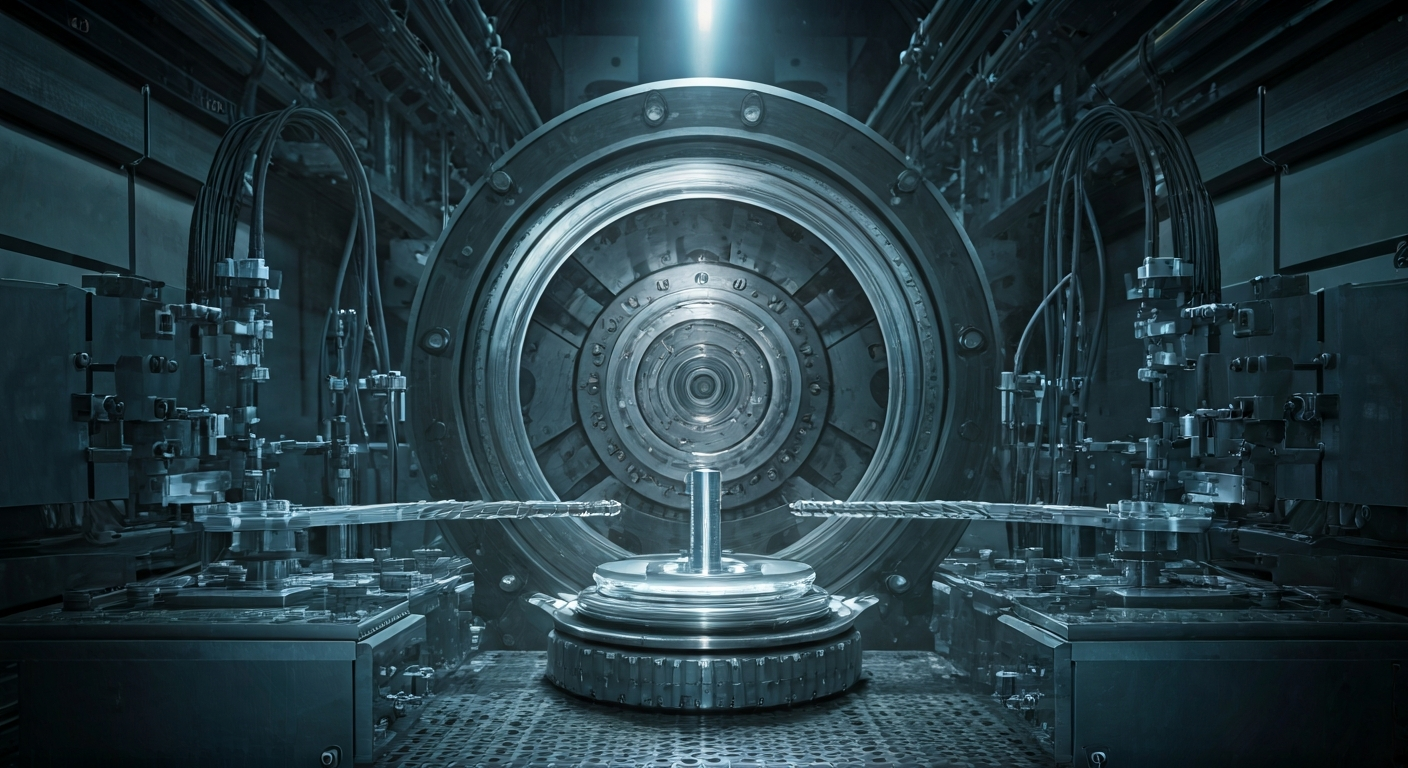
The synthesis and manufacturing of Astro-MS300 will leverage advanced techniques to achieve the targeted nanoscale microstructure and properties, with an eye towards future ISRU capabilities. The primary route will involve a combination of vacuum induction melting (VIM), vacuum arc remelting (VAR), and potentially additive manufacturing (AM) or advanced powder metallurgy.
**1. Melting and Solidification:** * **Vacuum Induction Melting (VIM):** High-purity raw materials will be melted in a vacuum induction furnace. This process allows for precise control over the melt chemistry and minimizes atmospheric contamination. Trace alloying elements for grain boundary engineering will be added during this stage. * **Vacuum Arc Remelting (VAR):** The VIM-cast ingot will undergo VAR. This secondary melting process refines the microstructure, homogenizes the composition, and removes remaining impurities. The controlled solidification during VAR is crucial for establishing the initial fine grain structure before heat treatment.
**2. Thermomechanical Processing:** * **Hot Working:** The ingot will be subjected to controlled hot working (e.g., forging or rolling) at appropriate temperatures (typically 800-900°C) to break down the cast structure and achieve a refined, wrought microstructure. The deformation parameters will be optimized to promote a fine, equiaxed martensitic structure after subsequent annealing and solution treatment. * **Annealing and Solution Treatment:** A solution annealing treatment (around 820-850°C) followed by rapid cooling (quenching) will produce the soft, low-carbon martensitic matrix. The cooling rate is critical to avoid premature precipitation and ensure a fully martensitic structure. This step is where the initial low-alloyed structure is formed, ready for aging.
**3. Aging (Precipitation Hardening):** * **Controlled Isothermal Aging:** The quenched material will undergo a precisely controlled isothermal aging heat treatment, typically in the range of 480-500°C for 3-9 hours. The exact temperature and time will be optimized based on computational modeling and experimental validation to achieve the target nanoscale precipitate size, distribution, and coherency. This is the primary step for achieving ultra-high strength. * **Multi-Stage Aging (Potential):** For even finer control over precipitate morphology and distribution, a multi-stage aging process might be employed. This could involve an initial lower-temperature aging step to nucleate fine precipitates, followed by a higher-temperature step to allow for controlled growth, or vice-versa, depending on the desired precipitate characteristics.
**4. Advanced Manufacturing Integration (Additive Manufacturing):** * **Powder Metallurgy (PM) Route:** For complex geometries or components requiring tailored properties, Astro-MS300 powder can be produced via gas atomization or plasma atomization. This powder can then be consolidated using: * **Selective Laser Melting (SLM) / Electron Beam Melting (EBM):** AM techniques offer significant advantages in creating complex shapes with minimal waste and enabling rapid prototyping. The challenge lies in controlling the thermal cycles during AM to achieve the desired martensitic structure and then performing the subsequent aging treatment. Post-print heat treatments will be critical. * **Hot Isostatic Pressing (HIP):** For consolidated powder parts, HIP can be used to eliminate internal porosity and achieve full density.
**5. Surface Treatments:** * **Plasma-Electrolytic Oxidation (PEO) or Anodization:** For enhanced corrosion resistance, surfaces can be treated to form dense, adherent ceramic oxide layers. * **Nanostructured Surface Layers:** Techniques like ultrasonic nanocrystalline surface treatment (UNST) or severe plastic deformation (SPD) can be applied to create a highly work-hardened, nanostructured surface layer that improves wear and fatigue resistance.
The entire process will be supported by advanced process modeling and in-situ monitoring to ensure consistency and reproducibility. The goal is to develop a manufacturing blueprint that is scalable and adaptable for eventual ISRU applications, potentially simplifying some of the initial melting and consolidation steps if Martian resources can be leveraged.
In-Situ (ISRU) Production on Mars
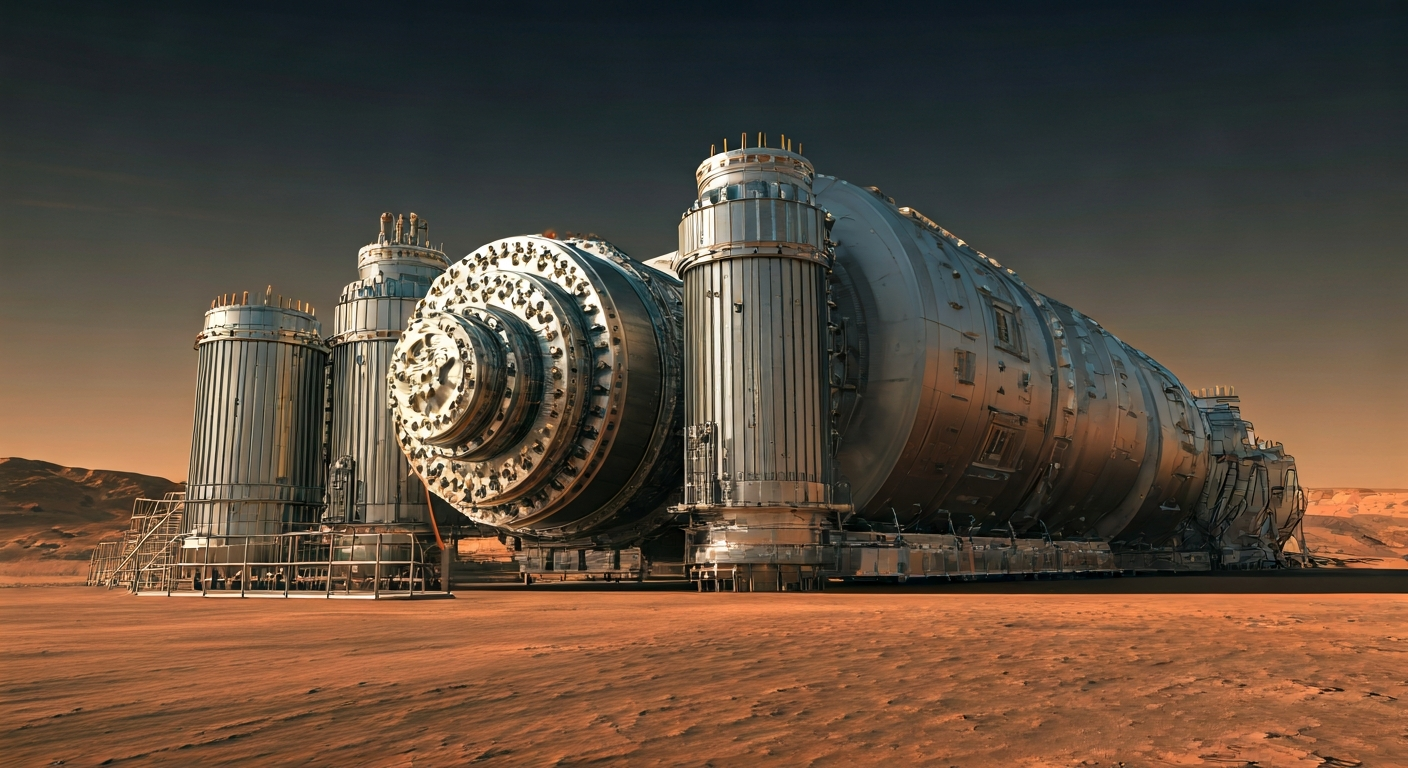
The potential for In-Situ Resource Utilization (ISRU) in producing Astro-MS300 on Mars is a critical long-term objective, aiming to drastically reduce reliance on Earth-based supply chains. While full production of complex alloys like MS300 from raw Martian materials is a highly ambitious goal, a phased approach focusing on key elements and processing steps is envisioned.
**Phase 1: ISRU-Enabled Processing of Imported Precursors:** * **Refining Imported Master Alloys:** Initially, Mars-based manufacturing would likely involve processing imported master alloys or high-purity elemental precursors. ISRU would focus on providing essential utilities: energy (solar, nuclear), atmospheric gases (CO2 for potential carbon sourcing, N2, Ar for inert atmospheres), and water (for cooling and process use). The VIM/VAR or powder production steps could be adapted to Martian conditions, requiring specialized enclosed facilities to maintain vacuum or inert atmospheres. * **Powder Production and Consolidation:** Producing Astro-MS300 powder from imported elemental powders or small ingots via atomization (potentially using Martian atmospheric gases as the atomizing medium, if feasible) and subsequent consolidation via AM or HIP are primary targets. This reduces the volume and mass of material that needs to be transported from Earth.
**Phase 2: Partial ISRU for Key Alloying Elements:** * **Iron Production:** Mars possesses abundant iron oxides in its regolith. Developing robust and efficient methods for iron extraction and purification (e.g., direct reduction using hydrogen derived from water electrolysis, or carbothermal reduction using imported or potentially synthesized reductants) is fundamental. This purified iron would serve as the primary base metal. * **Nickel and Cobalt Sourcing (Challenging):** Nickel and cobalt are less abundant in Martian regolith compared to iron. However, localized deposits or specific mineral fractions might contain these elements. Advanced prospecting and beneficiation techniques would be required. If direct extraction proves too difficult or energy-intensive for initial phases, these elements might remain as imported high-purity materials. * **Molybdenum and Titanium Sourcing:** Similar to Ni and Co, Mo and Ti are not ubiquitously abundant. Their extraction would require dedicated prospecting and specialized metallurgical processes. If direct sourcing is not feasible, these could be imported as concentrated compounds or elemental forms.
**Phase 3: Advanced ISRU for Full Alloy Production:** * **Integrated Metallurgical Processing:** This ambitious phase envisions a fully integrated Martian metallurgical plant capable of extracting and refining all necessary alloying elements from Martian regolith and atmosphere. This would require advanced hydrometallurgical and pyrometallurgical processes tailored to Martian resource compositions and environmental constraints (low pressure, extreme temperatures). * **Atmospheric Gas Utilization:** Carbon for potential carbide formation (though to be minimized in MS300) or as a reductant, and nitrogen for nitriding (if applicable to alternative alloys) could be sourced from the Martian atmosphere (primarily CO2). * **Water Electrolysis:** Production of hydrogen (for reduction) and oxygen (for various processes or propellants) from Martian water ice is a cornerstone of ISRU and would be essential for many chemical and metallurgical processes.
**Manufacturing Considerations on Mars:** * **Energy Requirements:** High-temperature melting, refining, and aging processes are energy-intensive. Reliable and high-capacity power generation (e.g., advanced solar arrays, small modular nuclear reactors) is a prerequisite. * **Atmospheric Control:** Maintaining vacuum or inert atmospheres for melting, powder production, and heat treatment is critical. This requires robust sealing technologies and efficient gas handling systems. * **Additive Manufacturing Focus:** AM technologies (SLM, EBM) are likely to be the primary manufacturing methods for complex components on Mars due to their lower infrastructure requirements compared to traditional subtractive manufacturing and casting, and their ability to work with powders. * **Process Optimization:** All processes will need to be re-optimized for the Martian environment (lower gravity, different atmospheric pressure, dust contamination). For example, powder atomization and AM build processes might behave differently.
The path to ISRU production of Astro-MS300 is long and complex, requiring significant advancements in Martian resource prospecting, extraction metallurgy, and integrated manufacturing systems. However, achieving even partial ISRU for key elements or processing steps will be a major enabler for sustainable Martian colonization.
Key Challenges & Failure Modes
Developing Astro-MS300 for extreme extraterrestrial environments presents several significant challenges and potential failure modes that must be addressed proactively.
**1. Achieving and Maintaining Nanoscale Microstructural Stability:** * **Challenge:** The ultra-fine, dispersed intermetallic precipitates responsible for high strength are thermodynamically unstable and prone to coarsening at elevated temperatures or over extended periods. Maintaining this nanoscale structure during manufacturing, storage, and operational temperature fluctuations (especially relevant for Mars' diurnal cycles or space thermal cycling) is crucial. * **Failure Mode:** Precipitate coarsening leads to a reduction in strength and toughness, potentially rendering components unable to meet design specifications. This can manifest as premature yielding or fracture.
**2. Long-Term Fatigue Performance in Vacuum and Abrasive Environments:** * **Challenge:** While fatigue resistance is a target for improvement, predicting and validating performance over decades in vacuum (which can promote cold welding and different crack propagation mechanisms) and in the presence of fine, abrasive Martian dust (which can ingress into microcracks or cause surface wear and stress risers) is complex. * **Failure Mode:** Premature fatigue failure due to crack initiation at surface defects, grain boundaries, or internal flaws, exacerbated by vacuum effects or abrasive wear accelerating crack growth.
**3. Enhanced Corrosion and Oxidation Resistance:** * **Challenge:** Conventional MS300 can be susceptible to stress corrosion cracking (SCC) in specific environments. While enhancements are planned, ensuring robust resistance against novel corrosive agents on Mars (e.g., perchlorates, hydrated salts, specific atmospheric trace gases) and preventing oxidation during any elevated-temperature operations or processing is difficult. * **Failure Mode:** Localized corrosion (pitting, crevice corrosion) or SCC leading to crack initiation and propagation, or excessive oxidation leading to material loss and compromised component integrity.
**4. Additive Manufacturing Process Control:** * **Challenge:** Achieving the desired fine martensitic structure and controlling precipitation during the rapid thermal cycling inherent in AM processes (SLM, EBM) is difficult. Residual stresses can also be significant. * **Failure Mode:** Inconsistent microstructure, formation of brittle phases, cracking during or after printing due to residual stresses, and inability to achieve target mechanical properties without extensive post-processing.
**5. ISRU Scalability and Purity:** * **Challenge:** Extracting and purifying elements like Ni, Co, Mo, and Ti from Martian regolith to the high purity required for maraging steels is technologically demanding and energy-intensive. Achieving consistent purity levels suitable for alloying is a major hurdle. * **Failure Mode:** Contamination of the alloy with impurities (e.g., sulfur, phosphorus, tramp metals) that can severely degrade mechanical properties, especially toughness and fatigue life. Inconsistent elemental ratios leading to unpredictable performance.
**6. Thermal Management During Heat Treatment:** * **Challenge:** Precise temperature control and uniformity are critical for the aging process. Achieving this in a large-scale Martian facility, potentially with different ambient pressures and thermal conductivity of the environment, requires robust furnace design and control systems. * **Failure Mode:** Non-uniform aging leading to variations in strength and toughness across a component, or premature precipitate coarsening if temperatures exceed target ranges.
**7. Radiation Effects:** * **Challenge:** While steels generally exhibit good radiation resistance, the long-term effects of galactic cosmic rays (GCRs) and solar particle events (SPEs) on the nanoscale microstructure and mechanical properties of Astro-MS300 in space and on the Martian surface (which has limited magnetic field protection) need thorough investigation. * **Failure Mode:** Radiation-induced embrittlement, defect accumulation, or microstructural changes that degrade toughness and strength over extended mission durations.
Addressing these challenges requires a multi-disciplinary approach involving materials science, mechanical engineering, process engineering, and robust testing protocols.
Test & Qualification Plan
A comprehensive test and qualification plan is essential to validate Astro-MS300 for its intended space and Mars applications. This plan will cover material characterization, component-level testing, and environmental exposure.
**Phase 1: Material Characterization and Benchmarking (Laboratory Scale):**
1. **Microstructural Analysis:** * **Optical Microscopy:** Grain size, phase distribution. * **Scanning Electron Microscopy (SEM):** Fracture surface analysis, secondary electron imaging for morphology, backscattered electron imaging for elemental contrast. * **Transmission Electron Microscopy (TEM):** High-resolution imaging of precipitates (size, shape, coherency), crystallographic analysis, lattice strain mapping. * **Atom Probe Tomography (APT):** 3D elemental mapping at the atomic scale to quantify precipitate composition and distribution, especially at grain boundaries. * **X-ray Diffraction (XRD):** Phase identification, lattice parameter determination, residual stress analysis.
2. **Mechanical Property Testing:** * **Tensile Testing:** Standard and high-strain-rate tests (using Split-Hopkinson Pressure Bar - SHPB) across a range of temperatures (e.g., 150 K to 400°C). * **Fracture Toughness Testing:** KIC measurements using notched specimens (e.g., compact tension, three-point bend) at relevant temperatures. * **Fatigue Testing:** Rotating bending fatigue, axial fatigue (R=-1, R=0.1) at various stress levels to establish S-N curves, with testing conducted in vacuum and potentially with simulated Martian dust exposure. * **Impact Toughness Testing:** Charpy V-notch impact tests at cryogenic and ambient temperatures. * **Hardness Testing:** Vickers or Rockwell hardness measurements across different microstructural zones.
3. **Environmental Resistance Testing:** * **Corrosion Testing:** Immersion tests, electrochemical tests (e.g., potentiodynamic polarization, electrochemical impedance spectroscopy - EIS) in simulated Martian atmosphere (low pressure, specific gas mix, low temperature) and simulated Martian brines. Stress Corrosion Cracking (SCC) tests under sustained load. * **Oxidation Testing:** Thermogravimetric Analysis (TGA) in controlled atmospheres at elevated temperatures. * **Radiation Testing:** Exposure to relevant radiation environments (e.g., proton beams, gamma rays) followed by post-irradiation mechanical testing to assess embrittlement or property degradation.
**Phase 2: Process Validation and Component-Level Testing:**
1. **Additive Manufacturing Qualification:** * Testing of AM-produced coupons and simple geometries to verify mechanical properties and microstructural integrity. Analysis of residual stresses and post-print heat treatment effectiveness.
2. **Weldability Testing:** * Welding coupons using various techniques (e.g., TIG, laser, electron beam) and evaluating weld joint strength, toughness, and microstructure in the weld and HAZ.
3. **Component Prototyping and Testing:** * Fabrication of representative components (e.g., structural brackets, fasteners, tool heads, pressure vessel parts) using the optimized manufacturing route. * Functional testing of these components under simulated operational loads, thermal cycles, and vacuum conditions. * Accelerated life testing to validate fatigue performance.
**Phase 3: Environmental Exposure and ISRU Feasibility Testing:**
1. **Martian Environmental Simulation Chambers:** * Exposure of material samples and prototype components to long-term simulated Martian atmospheric conditions (pressure, temperature, composition, dust loading) and potential brine simulants. * Monitoring for corrosion, wear, and microstructural degradation.
2. **ISRU Process Development and Testing:** * Laboratory-scale testing of proposed ISRU extraction and refining processes for key elements from Martian regolith simulants. * Production of small-scale alloy samples using ISRU-derived elements (where feasible) and comprehensive characterization. * Testing of AM processes using powders produced via simulated ISRU routes.
**Qualification Standards:**
All testing will be conducted in accordance with relevant aerospace standards (e.g., ASTM, AMS, ISO) and specific mission requirements. Traceability of materials, processes, and test results will be meticulously maintained. A Materials Review Board (MRB) will oversee the qualification process.
TRL & 2030 Roadmap
The development of Astro-MS300, targeting enhanced properties for space and Mars applications, will follow a structured Technology Readiness Level (TRL) roadmap. By the year 2030, the aim is to achieve a TRL of 6-7 for the core material and key manufacturing processes.
**Current Status (Estimated TRL 2-3):** * Fundamental understanding of Maraging Steel 300 properties and limitations exists (TRL 9). However, the specific enhancements for extraterrestrial applications (nanoscale control, corrosion resistance, fatigue in vacuum/dust) are largely in the conceptual or early laboratory investigation phase. * Advanced characterization techniques (TEM, APT) are available but need to be applied systematically to optimized compositions. * Computational modeling tools (CALPHAD, DFT, FEA) are mature but require specific validation for Astro-MS300. * ISRU extraction and refining technologies for relevant elements from Martian simulants are in early R&D stages (TRL 2-4).
**2025 Roadmap (Target TRL 4-5):** * **Materials Development & Optimization (TRL 4):** * Systematic investigation of trace alloying element effects (Hf, Zr, REEs) on microstructure and properties through small-scale melts. * Refinement of aging parameters using computational models and experimental validation to achieve target nanoscale precipitate characteristics. * Initial characterization of corrosion and fatigue resistance in simulated extreme environments. * **Process Development (TRL 4-5):** * Optimization of VIM/VAR parameters for Astro-MS300 composition. * Development of initial heat treatment protocols for achieving desired martensitic structure and aged precipitates. * Feasibility studies for AM of Astro-MS300 precursors. * **ISRU Feasibility (TRL 3-4):** * Demonstration of basic iron extraction from Martian regolith simulants. * Laboratory-scale testing of Ni, Co, Mo, Ti extraction/refining pathways from targeted Martian mineral simulants.
**2028 Roadmap (Target TRL 6):** * **Material Validation (TRL 6):** * Production of larger heats (kilogram scale) of Astro-MS300 with validated composition and microstructure. * Comprehensive mechanical and environmental testing, including fatigue and SCC in relevant simulated environments. * Establishment of baseline property data that meets or exceeds target specifications. * **Manufacturing Process Demonstration (TRL 6):** * Demonstration of controlled heat treatment cycles for achieving target properties on larger samples. * Successful AM of representative component prototypes with properties comparable to wrought material. * Initial weldability assessments. * **ISRU Process Maturation (TRL 5-6):** * Demonstration of integrated processes for producing key alloying elements (e.g., iron) with improved purity and yield. * Development of preliminary designs for Martian-based metallurgical processing units.
**2030 Target (TRL 7):** * **System-Level Demonstration (TRL 7):** * Fabrication of critical hardware prototypes (e.g., structural elements, tool components) using Astro-MS300 produced via optimized terrestrial manufacturing processes. * Testing of these prototypes in integrated system testbeds simulating space or Martian operational conditions (vacuum, thermal cycling, dust exposure, radiation). This demonstrates the material's readiness for flight qualification. * **ISRU Manufacturing Pathway Definition (TRL 6-7):** * Definition of a scalable manufacturing process for Astro-MS300 leveraging significant ISRU contributions (e.g., Martian-produced iron, imported critical elements, Martian-sourced utilities). * Identification of critical technology gaps for full ISRU production.
This roadmap emphasizes iterative development, with continuous feedback loops between material design, process engineering, testing, and ISRU feasibility studies. By 2030, Astro-MS300 should be a well-characterized, high-TRL material ready for flight qualification and integration into early Mars missions.
Cross-Model Verification (GPT-3.5)
- The overall description and goals for developing an enhanced variant of Maraging Steel 300 (Astro-MS300) for extraterrestrial applications are scientifically plausible and align with ongoing research in advanced materials for space exploration. - The specified target mechanical properties, environmental resistance, and ISRU considerations are realistic and represent logical advancements over conventional MS300 for space and Martian environments. - The concept of enhancing the composition of Astro-MS300 with trace alloying elements for grain boundary strengthening and corrosion resistance is scientifically supported and in line with strategies to improve material performance. - The inclusion of nanoscale microstructure control for optimizing material properties is a valid approach in advanced materials engineering for achieving superior mechanical performance and environmental resistance.
Astro-MS300 represents a critical evolution in materials science for our interplanetary future. By engineering steel at the nanoscale and unlocking ISRU potential, we move beyond the limitations of Earth-bound logistics. This material isn't just about stronger tools or lighter spacecraft; it's about enabling self-sufficiency on a new world. The meticulous focus on composition, microstructure, and manufacturing pathways, coupled with a pragmatic roadmap, positions Astro-MS300 as a cornerstone for robust, sustainable Martian colonization, transforming abstract possibilities into tangible engineering realities.
This content was produced by the news editor with AI.