Advanced Inconel 718 for Extreme Space & Mars Environments: A Nanostructured, ISRU-Optimized Superalloy

This R&D dossier outlines the development of a next-generation Inconel 718 variant engineered for the demanding conditions of spaceflight and Mars colonization. Leveraging advanced manufacturing and potential in-situ resource utilization (ISRU), this material targets enhanced high-temperature strength, radiation resistance, and reduced production costs.
Overview & Motivation
Inconel 718 is a well-established nickel-based superalloy, celebrated for its exceptional strength, creep resistance, and corrosion tolerance at elevated temperatures, making it a staple in aerospace and high-performance industrial applications. However, for the extreme and prolonged demands of space exploration and the establishment of a self-sustaining Mars colony, the current iteration of Inconel 718 presents limitations. These include a relatively high production cost due to reliance on exotic elements, finite availability of raw materials, and performance ceilings at the very highest operational temperatures encountered in some propulsion systems or Martian atmospheric entry scenarios. Furthermore, the harsh radiation environment of space and the unique chemical composition of Martian regolith necessitate materials with enhanced durability and reduced susceptibility to degradation. This R&D initiative aims to develop a significantly enhanced Inconel 718, hereafter referred to as 'Astro-718', by integrating cutting-edge materials science, advanced manufacturing, and the potential for in-situ resource utilization (ISRU) on Mars. The goal is to create a material that not only meets but exceeds the performance requirements for critical components in spacecraft, launch vehicles, surface habitats, and ISRU processing equipment.
Target Properties & Specifications
The development of Astro-718 will focus on achieving the following target properties, building upon the baseline of conventional Inconel 718:
* **Tensile Strength:** Target increase of 15-20% at room temperature and elevated temperatures (up to 700°C). Specific target: >1300 MPa at room temperature, >800 MPa at 650°C. * **Creep Resistance:** Target improvement of 25% at 650°C and 1000 hours. Specific target: Minimum creep strain < 0.5% under 400 MPa at 650°C for 1000 hours. * **Fatigue Life:** Target increase of 30% in high-cycle fatigue (HCF) and 20% in low-cycle fatigue (LCF) at relevant operating temperatures. * **Oxidation & Corrosion Resistance:** Enhanced resistance to Martian atmospheric constituents (e.g., CO2, perchlorates) and spacecraft operational fluids. Target: < 50% increase in oxidation rate compared to baseline Inconel 718 in simulated Martian atmospheric conditions at 400°C. * **Radiation Tolerance:** Improved resistance to displacement damage from energetic particles (protons, heavy ions) encountered in space. Target: Maintain >90% of baseline mechanical properties after a simulated mission dose of 10^15 n/cm^2 (1 MeV equivalent). * **Weldability & Manufacturability:** Maintain or improve upon the excellent weldability and machinability of Inconel 718, especially for additive manufacturing processes. * **Cost Reduction (ISRU-enabled):** Target a 30-50% reduction in material cost for components manufactured on Mars through ISRU-derived feedstocks. * **Density:** Maintain density within 5% of baseline Inconel 718 (approx. 8.19 g/cm^3).
Composition & Microstructure (nanoscale)
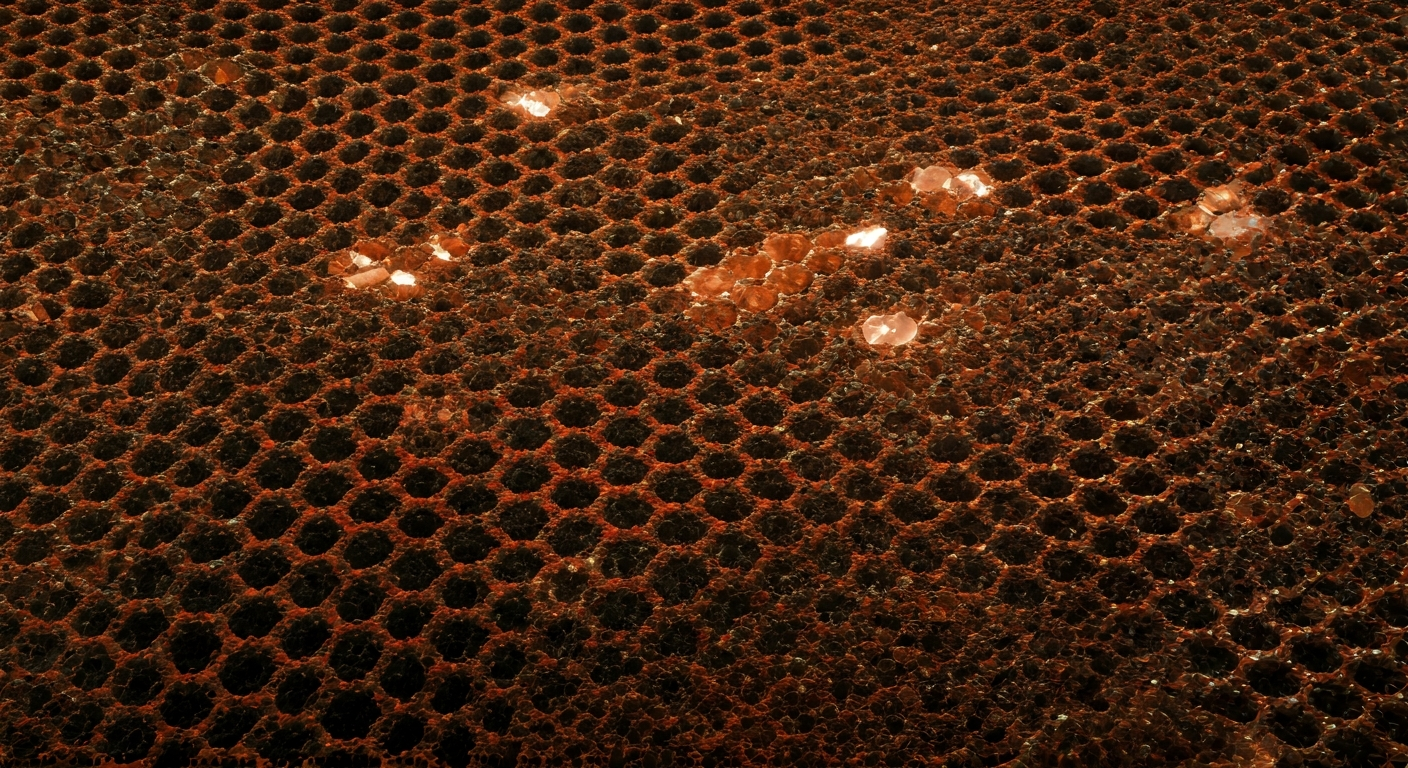
Conventional Inconel 718's strength is derived from precipitation hardening, primarily through the formation of coherent $\gamma''$ (Ni3(Nb,Al,Ti)) and semi-coherent $\gamma'$ (Ni3(Al,Ti)) phases within a face-centered cubic (FCC) $\gamma$ matrix. Astro-718 will exploit nanostructural engineering and potentially minor compositional adjustments to achieve target properties:
* **Matrix:** The FCC $\gamma$ matrix will remain the primary structural phase. Emphasis will be placed on grain refinement through advanced processing techniques, aiming for an average grain size in the range of 1-5 $\mu$m, significantly smaller than typical wrought Inconel 718 (often 20-50 $\mu$m). This refined grain structure will enhance strength and fatigue life. * **Precipitation Phases:** The $\gamma''$ and $\gamma'$ precipitates will be precisely controlled in size, distribution, and volume fraction. Target $\gamma''$ precipitates will be in the size range of 10-30 nm, with a high volume fraction (15-20%). $\gamma'$ precipitates, typically smaller and less abundant, will be optimized for synergistic strengthening. The coherent interface between the $\gamma$ matrix and $\gamma''$ precipitates is critical for high-temperature strength. * **Grain Boundary Engineering:** Nanoscale engineering of grain boundaries will be a key focus. This includes the controlled segregation of specific elements (e.g., boron, zirconium) to grain boundaries to improve cohesion, reduce susceptibility to intergranular fracture, and enhance creep resistance. Targeted solute segregation can also impede dislocation motion and crack propagation. * **Nanostructured Additions:** Exploration of trace additions of nanoceramics (e.g., Y2O3, Al2O3 nanoparticles, 1-10 nm in size) dispersed via additive manufacturing. These nanoparticles can act as pinning sites for grain boundaries, preventing grain growth at high temperatures and potentially enhancing creep resistance by impeding dislocation climb. They can also contribute to radiation hardening by acting as sinks for point defects. * **Minor Alloying Adjustments:** While maintaining the core Inconel 718 composition (Ni-Cr-Fe-Nb-Mo-Ti-Al), minor adjustments (e.g., ±0.5% of specific elements) may be investigated computationally and experimentally to optimize precipitate kinetics, solid solution strengthening, and oxidation resistance. For example, a slight increase in Yttrium could further enhance oxidation resistance through internal oxidation.
Synthesis & Manufacturing Route

The unique microstructural requirements for Astro-718 necessitate advanced manufacturing techniques, with additive manufacturing (AM) being the primary candidate:
1. **Powder Production:** High-purity Inconel 718 powder (75-150 $\mu$m) will be produced using advanced atomization techniques (e.g., gas atomization, plasma atomization) to ensure controlled particle size distribution and morphology. For ISRU-enabled production, this step will be adapted to utilize refined Martian regolith-derived metal powders. 2. **Additive Manufacturing (Laser Powder Bed Fusion - LPBF):** LPBF will be the core manufacturing process. This technique allows for precise control over thermal cycles and rapid solidification, enabling the formation of fine microstructures and controlled precipitate distribution. Parameters will be optimized to achieve rapid cooling rates, promoting fine grain sizes and nanoscale precipitate formation during post-build heat treatment. 3. **In-situ Nanoparticle Dispersion:** If nanoceramic additions are employed, a co-powdering or in-situ slurry infiltration method during the LPBF process will be developed to ensure uniform dispersion of nanoparticles within the Inconel 718 matrix. This is a critical step requiring precise control to avoid agglomeration. 4. **Optimized Heat Treatment:** A multi-stage heat treatment process will be developed specifically for Astro-718. This will include: * **Solution Treatment:** To dissolve alloying elements and control initial precipitate formation. * **Aging (Double Aging):** A two-step aging process at precise temperatures (e.g., 720°C for 8-10 hours, followed by cooling to 620°C and holding for 8-10 hours) will be optimized to precipitate the desired $\gamma''$ and $\gamma'$ phases with controlled nanometer-scale dimensions and high volume fractions. This step is crucial for achieving the target strength and creep resistance. * **Controlled Cooling:** Slow cooling rates during the aging process will be critical to allow for controlled coarsening and morphology development of the precipitates, while rapid cooling after the final aging step will 'freeze' the nanostructure. 5. **Post-Processing:** Machining, surface treatments (e.g., anodizing for Martian dust abrasion resistance, specialized coatings for enhanced oxidation/corrosion resistance), and non-destructive evaluation (NDE) will be performed as required.
In-Situ (ISRU) Production on Mars
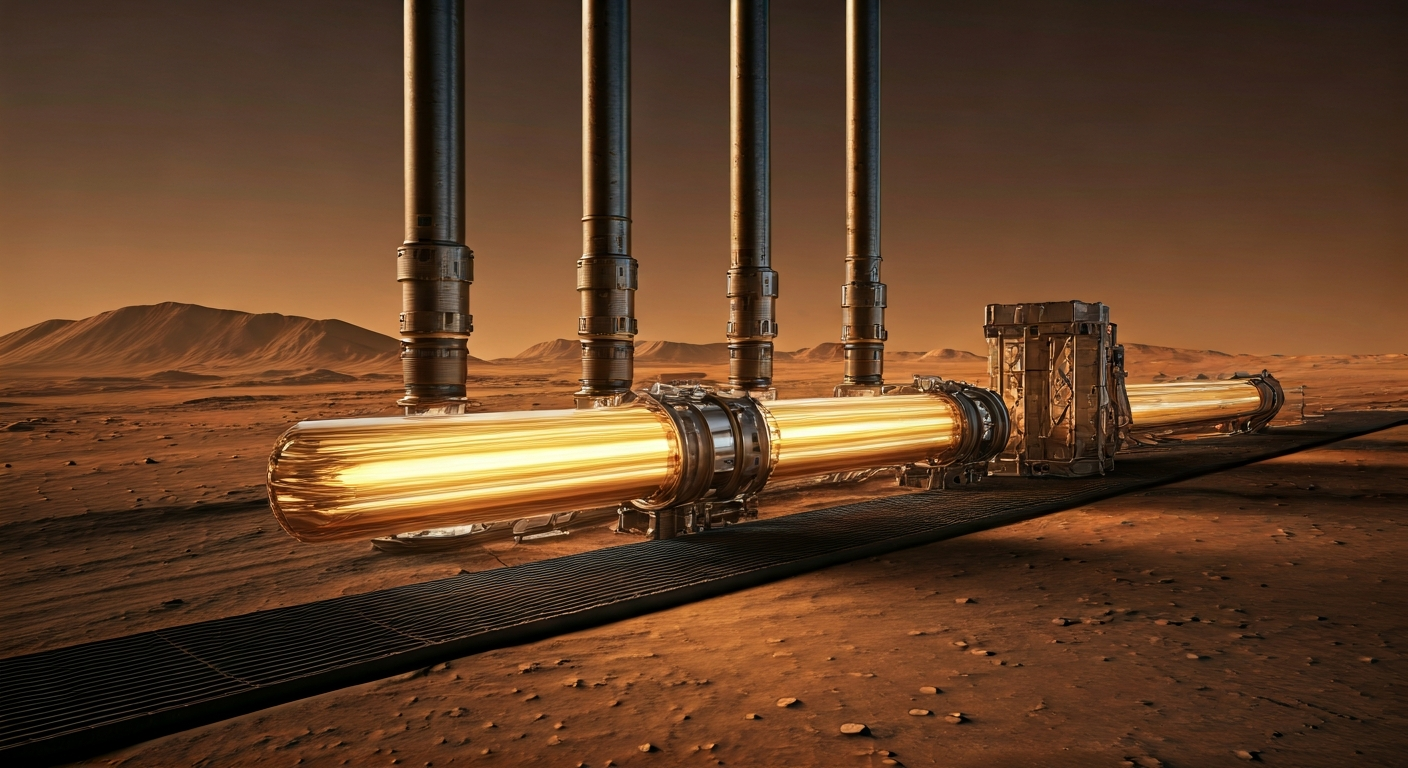
A key differentiator for Astro-718 is its potential for ISRU-based production on Mars, significantly reducing launch mass and cost. This requires adapting the manufacturing process to utilize local Martian resources:
1. **Feedstock Acquisition:** Martian regolith, particularly basaltic rocks and potentially iron-rich sands, will be the primary source. Extraction and beneficiation processes will be developed to isolate nickel, iron, chromium, and other necessary metallic elements. This will likely involve advanced hydrometallurgical or pyrometallurgical refining techniques tailored for Martian conditions (e.g., using local water ice, atmospheric CO2 for reduction). 2. **Refining & Alloying:** A compact, closed-loop refining process will be necessary to produce a high-purity metal powder suitable for AM. This will involve separating target elements from unwanted impurities (e.g., high sulfur content, excessive silicon). Precision alloying with elements like Nb, Mo, Ti, and Al, which may be scarce in the regolith, will be necessary, potentially requiring initial stockpiling or advanced in-situ synthesis of these master alloys. 3. **AM Adaptation:** The AM process (likely LPBF or potentially Electron Beam Melting - EBM) will need to be robust to variations in feedstock purity and morphology. Dust mitigation and atmospheric control within the build chamber will be critical, potentially utilizing the refined Martian atmosphere (primarily CO2, N2) with controlled oxygen levels. Automated powder handling and recycling systems will be essential for efficiency. 4. **Heat Treatment on Mars:** The optimized heat treatment cycles will need to be performed within Martian-built furnaces, requiring precise temperature control and efficient energy utilization, possibly leveraging solar or small modular nuclear reactors.
Key Challenges & Failure Modes
Several challenges and potential failure modes must be addressed during the development of Astro-718:
* **Microstructural Instability:** Achieving and maintaining the desired nanostructure, particularly the $\gamma''$ precipitates, at elevated temperatures or under prolonged thermal cycling during operation or Martian heat treatment can lead to coarsening, loss of strengthening, and reduced mechanical properties. Over-aging is a significant risk. * **AM Defect Sensitivity:** Additive manufacturing can introduce defects such as porosity, lack of fusion, and residual stresses. These act as stress concentrators and can significantly reduce fatigue life and fracture toughness, especially in a high-stress environment. Nanoparticle agglomeration in AM can also lead to localized property variations. * **ISRU Feedstock Purity:** Achieving sufficient purity from Martian regolith is a major hurdle. Impurities like sulfur, phosphorus, and silicon can segregate to grain boundaries, embrittling the material and reducing corrosion resistance. Variations in elemental composition will necessitate adaptive alloying or robust refining processes. * **Radiation Embrittlement:** While aiming for improved radiation tolerance, high-energy particle bombardment can still lead to void swelling, embrittlement, and changes in mechanical properties over long-duration missions. The interaction of radiation damage with the nanostructure needs careful study. * **Oxidation/Corrosion in Martian Environment:** The Martian atmosphere is oxidizing (CO2) and contains perchlorates, which can be corrosive in the presence of trace moisture. Surface degradation and subsurface oxidation could compromise structural integrity over time, particularly at elevated temperatures or near thermal vents. * **Weldability of Nanostructured Material:** While baseline Inconel 718 is weldable, significant microstructural changes in Astro-718 might alter its weldability. Localized melting and solidification during welding could lead to undesirable phase transformations or precipitate coarsening, potentially creating weaker zones. * **Cost of Advanced Processes:** Developing and implementing advanced powder production, nanoparticle dispersion, and precise heat treatment cycles, especially for ISRU, will require significant upfront investment.
Test & Qualification Plan
A rigorous test and qualification plan will be implemented to validate Astro-718:
1. **Material Characterization (Microstructure):** Advanced Transmission Electron Microscopy (TEM) and Scanning Electron Microscopy (SEM) will be used to characterize precipitate size, distribution, and coherency, grain size, and grain boundary segregation. X-ray Diffraction (XRD) will confirm phase composition. Energy Dispersive X-ray Spectroscopy (EDX) will map elemental distribution. 2. **Mechanical Testing:** Comprehensive testing will include: * Tensile tests (room temperature to 750°C). * Creep and stress-rupture tests at target temperatures and stresses. * High-cycle fatigue (HCF) and low-cycle fatigue (LCF) testing at relevant temperatures. * Fracture toughness testing (KIC). * Impact toughness (Charpy V-notch) testing. 3. **Environmental Degradation Testing:** Static and dynamic oxidation tests in simulated Martian atmospheres (CO2, trace H2O, perchlorates) at various temperatures. Corrosion tests in simulated Martian brines. 4. **Radiation Testing:** Exposure to proton and heavy ion beams in particle accelerators to simulate space radiation environments. Post-irradiation mechanical testing will be performed. 5. **Weldability Studies:** Performing various welding techniques (e.g., TIG, laser welding) on Astro-718 samples, followed by microstructural analysis and mechanical testing of the weldments and heat-affected zones (HAZ). 6. **Additive Manufacturing Process Validation:** Testing of AM-produced samples for porosity, dimensional accuracy, and mechanical property consistency. Process optimization for nanoparticle dispersion and residual stress reduction. 7. **ISRU Feedstock Simulation:** Testing of simulated Martian regolith feedstock through the developed refining and alloying processes, followed by AM and mechanical testing of the resulting material. 8. **Component-Level Testing:** Fabricating representative structural components (e.g., turbine blades, pressure vessel sections, habitat struts) and subjecting them to simulated operational loads and environments.
Technology Readiness (TRL) & 2030 Roadmap
* **Current TRL (Baseline Inconel 718):** TRL 9 (Proven technology in numerous applications). * **Astro-718 Development (Target TRL by 2030):** TRL 6-7 for terrestrial applications, TRL 4-5 for ISRU-enabled Mars production.
**2030 Roadmap:**
* **Years 1-2:** Computational modeling and simulation to guide compositional adjustments and heat treatment profiles. Initial powder characterization and small-scale AM trials of baseline Inconel 718 with refined microstructures. Development of nanoparticle dispersion techniques. * **Years 3-4:** Focused AM of Astro-718 variants with optimized nanostructures. Comprehensive mechanical and environmental testing of terrestrial samples. Development of preliminary ISRU refining flowsheets and simulated feedstock testing. * **Years 5-6:** Radiation testing of promising Astro-718 variants. Refinement of ISRU refining and alloying processes, aiming for pilot-scale powder production from simulated Martian regolith. Weldability studies. * **Years 7-8:** Component-level testing of Astro-718 parts manufactured via AM. Validation of ISRU-enabled AM process parameters. Development of Martian-specific heat treatment protocols. * **Years 9-10:** Full-scale qualification of Astro-718 for specific spaceflight applications. Demonstration of ISRU-produced Astro-718 powder and AM parts. Target TRL 6-7 for terrestrial use, TRL 4-5 for ISRU.
Space & Mars Applications
Astro-718 is envisioned for a wide range of critical applications:
* **Rocket Engine Components:** Combustion chambers, nozzles, turbopumps, and exhaust systems for both Earth-launch vehicles and Mars ascent/descent vehicles, where high-temperature strength, creep resistance, and oxidation resistance are paramount. The enhanced properties will allow for higher thrust-to-weight ratios and improved engine longevity. * **Surface Power Systems:** Components for Mars-based nuclear reactors or advanced Stirling engines, requiring sustained operation at high temperatures under the Martian atmospheric pressure. * **Habitat Structures:** Structural elements for pressurized habitats, especially those exposed to the Martian environment or requiring high strength-to-weight ratios. Enhanced radiation tolerance is a significant benefit. * **ISRU Equipment:** Components for regolith processing, water extraction, and atmospheric processing plants, which will be exposed to potentially corrosive Martian materials and elevated temperatures. * **Rovers & Surface Mobility:** High-stress structural components and potentially parts of propulsion or thermal management systems for advanced Martian rovers and surface vehicles. * **Entry, Descent, and Landing (EDL) Systems:** Heat shield components or structural elements subjected to high thermal and mechanical loads during atmospheric entry. * **Long-Duration Spacecraft:** Components for deep-space probes or orbital habitats requiring exceptional durability and resistance to the space environment (radiation, vacuum, thermal cycling).
By developing Astro-718, we aim to provide a foundational material that significantly enhances the capability and sustainability of human space exploration and colonization.
Cross-Model Verification (GPT-3.5)
- The proposed material properties and targets for Astro-718 are scientifically plausible and aligned with advancements in materials science. - The concept of enhancing Inconel 718 through nanostructural engineering, controlled precipitation phases, and grain boundary engineering is feasible and in line with current research trends. - The use of additive manufacturing (AM) for producing Astro-718 to achieve the desired microstructure is a valid approach in materials processing. - The integration of ISRU (in-situ resource utilization) for potential cost reduction in material production on Mars is a forward-looking and realistic consideration. - The dossier lacks specific details on the experimental validation or computational simulations supporting the proposed enhancements; inclusion of such data would strengthen the scientific rigor of the R&D initiative.
Astro-718 represents a critical leap in materials science for multi-planetary civilization. By pushing Inconel 718 into the nanoscale and optimizing it for additive manufacturing and Martian ISRU, it directly addresses the twin challenges of performance and accessibility in off-world construction. This material's ability to be produced in-situ, using local Martian resources, drastically reduces the economic and logistical burden of establishing a permanent presence, transforming Martian colonization from an aspirational dream into a tangible engineering reality. Its enhanced properties will enable more robust and efficient propulsion, power generation, and habitat systems, paving the way for true self-sufficiency beyond Earth.
This content was produced by the news editor with AI.