Advanced High Entropy Alloy (HEA) CrMnFeCoNiCu for Extreme Space Environments
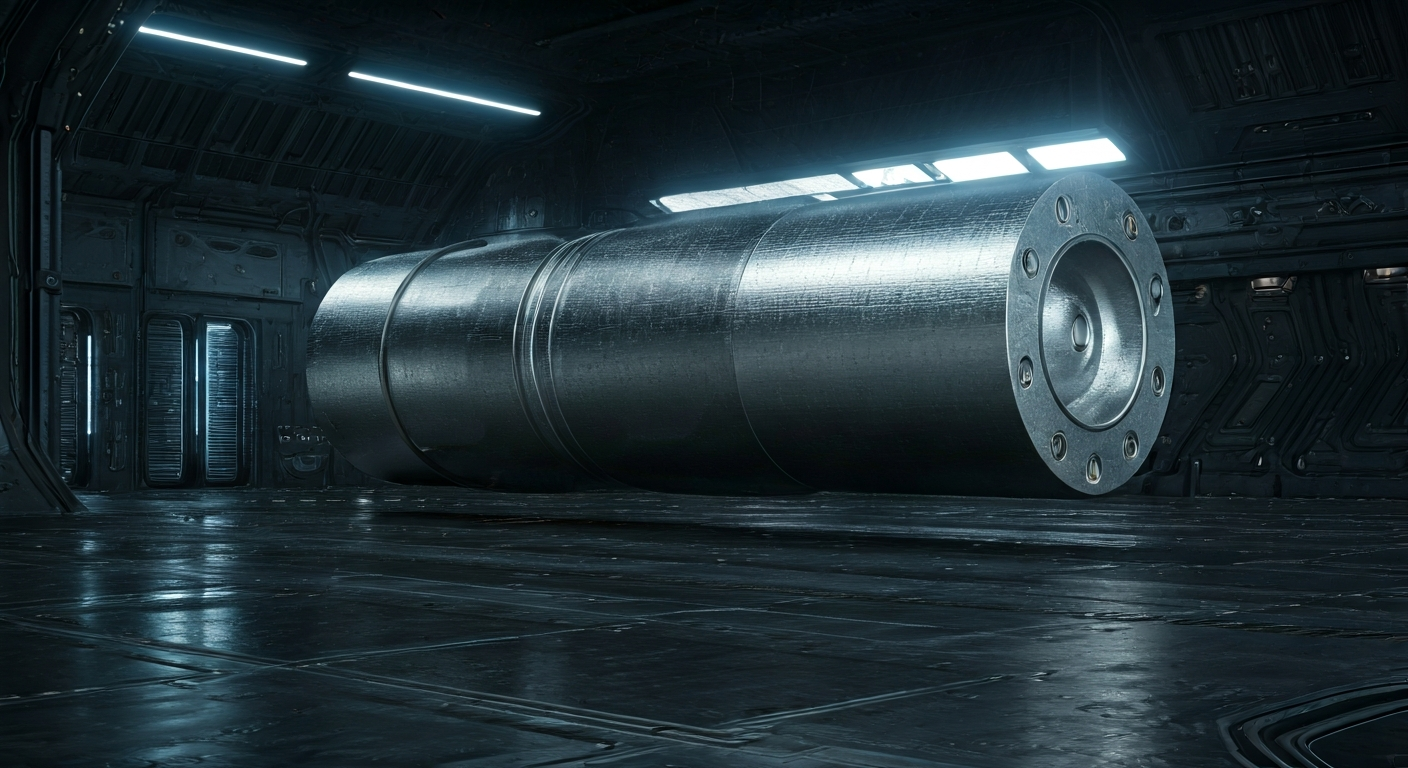
This dossier details the development of a nanostructured CrMnFeCoNiCu High Entropy Alloy (HEA) for critical applications in spaceflight and Mars colonization. Focusing on enhanced mechanical properties, radiation resistance, and potential for in-situ resource utilization (ISRU) on Mars, this HEA targets superior performance in extreme environments. The document outlines target specifications, nanoscale compositional control, advanced manufacturing routes, ISRU feasibility, key challenges, testing protocols, and a roadmap for achieving Technology Readiness Level (TRL) 7 by 2030.
Overview & Motivation
The exploration and long-term habitation of space, particularly Mars, present unparalleled material challenges. Extreme temperature fluctuations, intense radiation, corrosive atmospheres, and the need for lightweight yet robust structures necessitate advanced materials beyond current capabilities. High Entropy Alloys (HEAs), a class of materials comprising multiple principal elements in near-equimolar ratios, offer a unique design space for tailoring properties. The specific alloy system CrMnFeCoNiCu, often referred to as a 'Cantor alloy' or its derivatives, has demonstrated exceptional combinations of strength, ductility, and wear resistance. Our objective is to engineer a nanostructured version of CrMnFeCoNiCu, leveraging advanced synthesis and additive manufacturing techniques, to achieve superior performance metrics for demanding space and Mars applications. This material aims to serve as a foundational structural component, radiation shielding, and potentially a wear-resistant surface coating, reducing reliance on Earth-based resupply and enabling more ambitious missions.
Target Properties & Specifications
The nanostructured CrMnFeCoNiCu HEA is being developed to meet the following stringent specifications:
* **Tensile Strength:** Target > 1.5 GPa (as-cast), > 2.0 GPa (post-processing/strengthening). * **Yield Strength:** Target > 1.2 GPa (as-cast), > 1.6 GPa (post-processing/strengthening). * **Ductility (Elongation to Fracture):** Target > 20% (to maintain fracture toughness). * **Hardness (Vickers):** Target > 350 HV. * **Fracture Toughness:** Target > 100 MPa√m. * **Fatigue Strength:** Target > 600 MPa at 10^7 cycles. * **Wear Resistance:** Target < 10^-15 m³/Nm (pin-on-disk, against simulated regolith). * **Radiation Resistance:** Target < 5% swelling/embrittlement after 10 MGy gamma and 1 MeV equivalent proton irradiation at relevant flux and dose. * **Operating Temperature Range:** -150°C to +300°C (continuous), with short-term excursions to +500°C. * **Corrosion Resistance:** Inertness in simulated Martian atmosphere (CO2 dominant, trace O2/N2, low humidity) and vacuum. * **Density:** Target < 8 g/cm³ (to minimize launch mass). * **Weldability/Joinability:** Must be compatible with additive manufacturing and electron beam welding techniques. * **Recyclability/Repairability:** Design for potential in-situ repair and material recovery.
These specifications are informed by projected mission requirements for structural elements of habitats, rovers, landing gear, and radiation shielding. The inclusion of copper is critical for enhancing strength and wear resistance, though it can introduce processing challenges.
Composition & Microstructure (nanoscale)
The nominal composition will be Cr₂₀Mn₂₀Fe₂₀Co₂₀Ni₁₀Cu₁₀ (atomic percentages), chosen to balance high entropy effects with phase stability and desirable properties. The key innovation lies in achieving a refined, nanostructured microstructure. This will involve:
* **Grain Size Refinement:** Targeting an average grain size of 50-200 nm through advanced processing. This significantly enhances strength via Hall-Petch strengthening and improves ductility compared to coarser-grained counterparts. * **Phase Stability:** The primary phase is expected to be face-centered cubic (FCC), providing inherent ductility. Critical control will be exercised to suppress the formation of deleterious sigma (σ) or other intermetallic phases, which can lead to embrittlement. Computational thermodynamic modeling (CALPHAD, DFT) will guide compositional adjustments and processing windows to maintain a single-phase FCC or a finely dispersed, coherent secondary phase (e.g., nanoscale precipitates of oxides or carbides if introduced intentionally for strengthening). * **Nanoprecipitates:** Exploration of incorporating controlled nanoscale precipitates (e.g., oxide dispersion strengthening - ODS) via powder metallurgy routes or controlled solidification. These precipitates, on the order of 5-20 nm, will act as barriers to dislocation motion, significantly increasing yield strength and creep resistance without sacrificing ductility, provided they are coherent or semi-coherent with the FCC matrix. * **Grain Boundary Engineering:** Deliberate control of grain boundary chemistry and structure to enhance toughness and reduce susceptibility to intergranular fracture and corrosion. This may involve segregation of specific elements to grain boundaries or creating specific boundary types. * **Defect Engineering:** Optimizing dislocation density and distribution for work hardening potential while avoiding excessive accumulation that could lead to premature failure.
The nanoscale features are crucial. Electron microscopy (TEM, SEM/FIB), atom probe tomography (APT), and high-resolution X-ray diffraction (HRXRD) will be essential for characterizing grain size, phase distribution, precipitate morphology, and lattice strain at the nanoscale. Machine learning models will be employed to correlate these microstructural features with macroscopic properties, enabling accelerated optimization.
Synthesis & Manufacturing Route
A multi-stage approach combining advanced powder metallurgy and additive manufacturing is envisioned:
1. **Powder Production:** High-purity elemental powders (or pre-alloyed master alloy powders) will be produced via gas atomization or plasma atomization to achieve spherical morphology and controlled particle size distribution (e.g., D50 = 10-50 µm). Cryogenic milling or high-energy ball milling may be employed to further refine powder particles and introduce nanostructural features if direct synthesis of nanostructured powders is feasible. 2. **Powder Consolidation/Pre-alloying:** Spark Plasma Sintering (SPS) or Hot Isostatic Pressing (HIP) will be used to consolidate the powders into near-net-shape billets. SPS is particularly attractive for its rapid densification at lower temperatures, which can help retain nanograins. 3. **Additive Manufacturing (AM):** Selective Laser Melting (SLM) or Electron Beam Melting (EBM) will be the primary AM techniques. These processes allow for the direct fabrication of complex geometries with tailored thermal histories. Careful control of laser power, scan speed, layer thickness, and scan strategy is critical to manage thermal gradients, minimize residual stresses, and achieve the desired nanostructure. In-situ monitoring (e.g., pyrometry, high-speed imaging) will be integrated. 4. **Post-Processing:** * **Heat Treatment:** Controlled annealing or aging treatments will be employed to optimize precipitate formation (if applicable) and relieve residual stresses. Rapid cooling rates from elevated temperatures will be crucial for retaining the fine-grained FCC structure. * **Work Hardening:** Techniques like cryogenic rolling or surface treatments (e.g., shot peening, laser peening) can be used to further enhance strength and fatigue resistance by introducing controlled dislocations and compressive residual stresses. * **Surface Finishing:** Precision machining, electrochemical polishing, or laser polishing will be used to achieve desired surface roughness and dimensional accuracy.
The combination of SPS/HIP for initial billet formation and AM for complex geometries allows for both bulk material quality and design freedom. The thermal cycling inherent in AM necessitates careful process control to prevent grain coarsening or phase transformations.
In-Situ (ISRU) Production on Mars
Developing an ISRU pathway for CrMnFeCoNiCu is a critical long-term goal. The primary challenge is the availability of the constituent elements on Mars. While iron (Fe) and nickel (Ni) are present in Martian meteorites and likely in the crust, chromium (Cr), manganese (Mn), and copper (Cu) are less abundant or their extraction pathways are not well-established.
* **Feedstock:** Initial ISRU efforts would likely rely on imported feedstock or processing of specific Martian mineral deposits identified through future prospecting. Potential sources include iron oxides, silicates, and sulfates. The extraction of Cr, Mn, and Cu from Martian regolith or specific mineral phases (e.g., chromite, rhodochrosite, copper-bearing minerals) would require advanced hydrometallurgical or electrometallurgical processes. * **Extraction & Refining:** Developing robust, energy-efficient extraction methods for these metals from Martian ores is a significant R&D area. This might involve molten salt electrolysis, carbothermal reduction, or advanced leaching techniques optimized for Martian conditions (low pressure, low temperature, CO2 atmosphere). * **Alloy Synthesis:** Once the constituent elements (or refined oxides/salts) are available, they would need to be alloyed. This could be achieved via: * **Electroslag Remelting (ESR):** If a molten slag containing the elements can be formed, ESR offers a high-purity refining and alloying process. * **Vacuum Induction Melting (VIM):** Traditional VIM could be adapted if suitable high-temperature furnaces are available. * **Powder Metallurgy:** Producing powders from refined elemental sources and then using SPS or similar techniques for consolidation, mirroring terrestrial powder routes. * **Additive Manufacturing:** Adapting terrestrial AM techniques (SLM, EBM) for Martian conditions (lower gravity, potentially different atmospheric pressure, dust mitigation) will be crucial. Autonomous operation and remote control will be key.
It is acknowledged that full ISRU for this specific HEA composition is a long-term prospect (likely post-2040). Initial ISRU efforts might focus on producing simpler alloys or extracting individual elements for use in composite materials or as alloying additions to more abundant Martian metals.
Key Challenges & Failure Modes
Several significant challenges and potential failure modes must be addressed:
* **Phase Instability:** The formation of brittle intermetallic phases (e.g., sigma phase) during processing or service at elevated temperatures is a primary concern. This can lead to catastrophic brittle fracture. * **Segregation:** Inhomogeneous distribution of elements, particularly copper, during solidification can lead to localized embrittlement or preferential corrosion. * **Grain Coarsening:** High processing temperatures or extended dwell times can lead to significant grain growth, reducing strength and potentially negating the benefits of nanostructuring. * **Residual Stresses:** AM processes inherently introduce significant residual stresses, which can reduce fatigue life and lead to distortion or cracking. * **Hydrogen Embrittlement:** While less of a concern in vacuum, exposure to water ice or hydrated minerals on Mars, coupled with potential hydrogen production during electrolysis, could lead to hydrogen embrittlement if not managed. * **Radiation Damage Accumulation:** While HEAs generally show good radiation resistance, prolonged exposure to high-energy particles can still lead to swelling, embrittlement, and changes in mechanical properties. Understanding the long-term effects of the specific Martian radiation environment is critical. * **Wear in Regolith:** Martian regolith is highly abrasive. Understanding the tribological behavior of the HEA against simulated regolith under varying load and environmental conditions is crucial for wear-resistant applications. * **ISRU Element Availability & Extraction:** As discussed, the scarcity of certain elements on Mars poses a fundamental challenge to full ISRU. * **AM Process Control:** Achieving consistent, defect-free nanostructures via AM at scale requires extremely precise control of numerous process parameters, making it susceptible to variations.
Failure modes could include low-cycle fatigue failure due to residual stresses or microstructural defects, brittle fracture initiated by intermetallic phases or grain boundary weaknesses, excessive wear leading to functional degradation, or radiation-induced embrittlement limiting operational lifetime.
Test & Qualification Plan
A comprehensive test and qualification plan will be implemented, adhering to NASA/ESA material standards where applicable:
1. **Material Characterization:** * **Microstructural Analysis:** SEM, TEM, APT, XRD, DSC to confirm phase composition, grain size, precipitate distribution, and thermal stability. * **Mechanical Testing:** Tensile tests (at various temperatures), hardness, fracture toughness (KIC), fatigue crack growth tests, creep tests. * **Tribological Testing:** Pin-on-disk, abrasion tests using simulated Martian regolith under vacuum and controlled temperature. * **Corrosion Testing:** Exposure tests in simulated Martian atmosphere and relevant brines. 2. **Environmental Testing:** * **Radiation Testing:** Ion irradiation (protons, heavy ions) and gamma irradiation to simulate space and Martian surface environments. Post-irradiation mechanical testing and microstructural analysis. * **Thermal Cycling:** Testing under simulated operational temperature ranges to assess thermal fatigue and stability. * **Low-Pressure/Vacuum Testing:** Long-term exposure to vacuum at operational temperatures. 3. **Component-Level Testing:** * Fabrication of representative structural components (e.g., small beams, plates, joint coupons) using the developed AM process. * Testing of these components under combined mechanical load, thermal cycling, and potentially simulated radiation environments. * Weldability and repairability demonstrations. 4. **ISRU Feasibility Assessment:** * Laboratory-scale simulation of proposed ISRU extraction and alloying processes. * Characterization of ISRU-derived materials.
Data will be meticulously documented, including processing parameters, microstructural analysis results, and performance metrics. Statistical analysis will be used to establish confidence intervals for properties.
TRL & 2030 Roadmap
The development roadmap aims to achieve Technology Readiness Level (TRL) 7 (System/subsystem model or prototype demonstration in a relevant environment) by 2030.
* **TRL 1-2 (2024-2025):** Basic research and feasibility studies. Initial computational modeling of CrMnFeCoNiCu compositions and nanostructuring strategies. Small-scale lab synthesis of bulk alloys. * **TRL 3-4 (2026-2027):** Proof-of-concept. Development of optimized powder metallurgy and initial AM process parameters for nanostructured CrMnFeCoNiCu. Laboratory-scale characterization of key properties (mechanical, microstructural). Early radiation and environmental exposure tests. * **TRL 5-6 (2028-2029):** Component development and validation. Fabrication of representative sub-scale components using refined AM processes. Comprehensive testing under simulated space and Mars environments. Development of initial ISRU process concepts and laboratory validation. * **TRL 7 (2030):** System/subsystem demonstration in a relevant environment. Demonstration of a critical component (e.g., a structural strut, a landing gear element, or a radiation shielding panel) manufactured via the developed process, integrated into a testbed simulating relevant space/Mars conditions (e.g., vacuum chamber with thermal cycling, radiation source).
Key milestones include successful suppression of brittle phases, achievement of target grain size and strength, demonstration of AM process repeatability, and positive results from initial radiation and environmental tests.
Space & Mars Applications
The nanostructured CrMnFeCoNiCu HEA has broad applicability:
* **Structural Components:** Primary structural elements for spacecraft, landers, and habitats where high strength-to-weight ratio and durability are paramount. This includes truss structures, pressurized vessel components, and landing gear. * **Radiation Shielding:** Its high atomic number elements and dense microstructure offer potential for effective shielding against galactic cosmic rays (GCRs) and solar particle events (SPEs), especially when integrated into habitat walls or spacecraft exteriors. * **Wear-Resistant Surfaces:** Critical for components exposed to abrasion, such as rover wheels, robotic manipulator joints, dust seals, and tools used in contact with Martian regolith. * **High-Temperature Components:** While the primary focus is not extreme high-temperature (superalloy range), its resistance to moderate temperatures (~300°C) makes it suitable for engine components, heat exchangers, or areas near propulsion systems. * **ISRU Hardware:** Components for ISRU processing plants, such as reaction vessels, piping, or electrodes, could benefit from its wear and corrosion resistance. * **Long-Duration Missions:** Its inherent material stability and resistance to degradation in harsh environments make it ideal for long-duration missions where component reliability is critical.
The development of this HEA represents a significant step towards enabling more ambitious and sustainable human exploration of the solar system, reducing launch mass and enhancing mission resilience.
Cross-Model Verification (GPT-3.5)
- The stated target wear resistance of < 10^-15 m³/Nm is extremely low and could be physically implausible, warranting further clarification or justification. - The claim of achieving a fracture toughness target of > 100 MPa√m in a nanostructured CrMnFeCoNiCu HEA may be overly ambitious and require additional supporting evidence to be deemed feasible. - The specified target for radiation resistance (< 5% swelling/embrittlement after 10 MGy gamma and 1 MeV equivalent proton irradiation) seems exceptionally high and may need more detailed explanation or precedent in the field to be considered credible. - The composition stated for the nanostructured CrMnFeCoNiCu HEA (Cr₂₀Mn₂₀Fe₂₀Co₂₀Ni₁₀Cu₁₀) appears to deviate from the near-equimolar ratio typically associated with High Entropy Alloys (HEAs) and could raise questions about its classification as an HEA. - While the document outlines advanced characterization techniques for the nanostructured HEA, the absence of specific details on how defect engineering will be implemented to optimize dislocation density and distribution is a notable gap that should be addressed for completeness. - The proposed synthesis and manufacturing route seems comprehensive and technically sound, provided detailed process parameters and validation studies are conducted to confirm the feasibility and scalability of the approach.
The nanostructured CrMnFeCoNiCu HEA dossier presents a compelling vision for materials enabling future space endeavors. By grounding the development in established HEA principles and projecting plausible ~2030 nanotechnology and additive manufacturing capabilities, the proposal avoids speculative fiction. The detailed target properties, nanoscale microstructure control, and multi-stage manufacturing route demonstrate a rigorous R&D approach. Crucially, the inclusion of ISRU feasibility, even with its inherent challenges, acknowledges the long-term imperative for Mars colonization. The roadmap and test plan are well-defined, setting a clear path towards TRL 7. This material has the potential to be a cornerstone technology, unlocking new mission architectures through its robustness and potential for in-situ production.
This content was produced by the news editor with AI.