Advanced Al-Sc-Zr Alloys for Extreme Spaceflight Environments
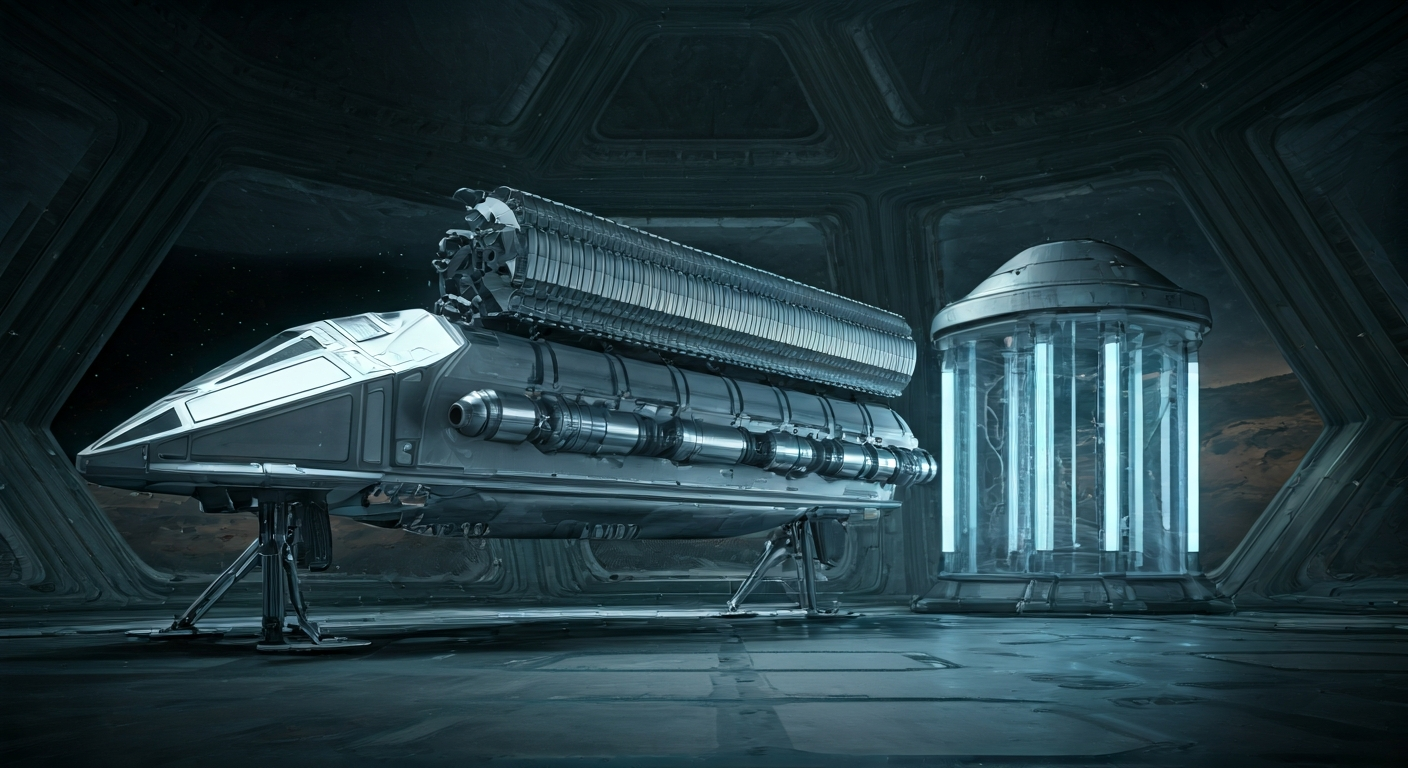
This dossier details the development of a next-generation Aluminum-Scandium-Zirconium (Al-Sc-Zr) alloy, engineered for demanding spaceflight and Mars colonization applications. Leveraging nanoscale control over microstructure and advanced manufacturing techniques, this alloy targets superior strength-to-weight ratios, exceptional thermal stability, and radiation resistance, with a roadmap for in-situ resource utilization (ISRU) on Mars.
Overview & Motivation
The relentless pursuit of efficient and sustainable space exploration necessitates materials that can withstand extreme environments while minimizing mass. Current aerospace aluminum alloys, while foundational, often fall short in critical areas such as high-temperature performance, radiation tolerance, and inherent structural integrity under prolonged stress cycles experienced in deep space and on planetary surfaces. Aluminum-Scandium (Al-Sc) alloys have long been recognized for their exceptional mechanical properties, including high specific strength and stiffness, excellent fatigue resistance, and superior corrosion resistance, stemming from the formation of coherent Al3Sc precipitates. The addition of Zirconium (Zr) further refines the microstructure by acting as a grain refiner and increasing recrystallization resistance, leading to enhanced high-temperature strength and creep resistance.
This project aims to elevate Al-Sc-Zr alloys beyond their current aerospace applications by focusing on nanoscale engineering and advanced processing to unlock their full potential for spaceflight. The motivation is to develop a lightweight, high-performance structural material that can significantly reduce launch mass, withstand the harsh conditions of space (vacuum, radiation, thermal cycling), and critically, be producible with a degree of in-situ resource utilization (ISRU) on Mars. Such a material would be transformative for long-duration missions, orbital infrastructure, interplanetary transit vehicles, and the foundational elements of a permanent Martian settlement.
Target Properties & Specifications
The developed Al-Sc-Zr alloy, designated 'Astra-Alloy-2030', targets a suite of properties optimized for space and Mars environments. These specifications represent a significant advancement over existing aerospace aluminum alloys:
* **Specific Strength (Tensile):** > 350 MPa/(g/cm³) at room temperature. This aggressive target aims to maximize structural efficiency. * **Specific Modulus (Young's):** > 75 GPa/(g/cm³). High stiffness is crucial for minimizing structural deformation under load and vibration. * **Tensile Strength at Elevated Temperature (200°C):** > 300 MPa. Crucial for components exposed to solar radiation or internal heat sources. * **Fracture Toughness:** > 30 MPa√m. Essential for damage tolerance and preventing catastrophic failure. * **Fatigue Strength (at 10^7 cycles):** > 200 MPa. Critical for the lifespan of spacecraft components subjected to cyclic loading. * **Thermal Conductivity:** > 150 W/(m·K). Important for thermal management and heat dissipation. * **Radiation Resistance:** Target a <10% degradation in tensile strength after exposure to 10^15 n/cm² (1 MeV equivalent neutron fluence) and 10^7 Gy gamma radiation. This requires specific microstructural design to mitigate radiation-induced embrittlement and swelling. * **Corrosion Resistance:** Excellent resistance to galvanic corrosion in simulated Martian regolith environments and standard aerospace salt spray tests. * **Weldability:** High-quality welds achievable via electron beam welding (EBW) or friction stir welding (FSW) with minimal loss of mechanical properties in the heat-affected zone (HAZ). * **Density:** Target density < 2.85 g/cm³.
These specifications are not arbitrary but are derived from analyzing the performance requirements of next-generation launch vehicles, deep-space habitats, Mars ascent/descent vehicles, and early-stage Martian surface infrastructure.
Composition & Microstructure (nanoscale)
The targeted composition for Astra-Alloy-2030 is a carefully balanced ternary alloy, with potential for quaternary additions, typically falling within the following ranges:
* **Aluminum (Al):** Balance (~92-95 wt%) * **Scandium (Sc):** 3.0 - 5.0 wt% * **Zirconium (Zr):** 0.5 - 1.5 wt% * **Optional Additions:** Trace amounts of other elements like Magnesium (Mg) for solid solution strengthening, or elements like Lithium (Li) for further density reduction and modulus enhancement (though Li can introduce complexity in radiation resistance and processing).
The key to Astra-Alloy-2030's performance lies in its precisely engineered nanoscale microstructure. The Al3Sc intermetallic phase, which forms coherent, ordered L12 precipitates within the FCC aluminum matrix, is the primary strengthening mechanism. These precipitates are designed to be uniformly distributed, with an average diameter of 5-15 nm, and a volume fraction of 8-15%.
* **Precipitate Coherency & Size Control:** The coherency of Al3Sc precipitates with the Al matrix is critical. Smaller, more numerous, and coherent precipitates provide superior strengthening and resistance to coarsening at elevated temperatures compared to larger, incoherent precipitates. The Zr addition plays a dual role: it can form fine Al3Zr dispersoids (typically 50-100 nm) which act as grain refiners during solidification and inhibit recrystallization, and it can also segregate to Al3Sc precipitate interfaces, further stabilizing them and preventing coarsening. * **Grain Structure:** A fine, equiaxed grain structure, with an average grain size of 5-10 µm, is targeted. This is achieved through a combination of Zr-induced grain refinement during solidification and controlled thermomechanical processing. The fine grain size contributes significantly to overall strength and toughness. * **Dispersoid Distribution:** Zr addition promotes the formation of fine, dispersed Al3Zr particles. These particles, while larger than Al3Sc precipitates, are crucial for pinning grain boundaries and preventing grain growth during high-temperature processing or service. Their uniform distribution is essential. * **Minimizing Coarse Intermetallics:** The manufacturing process must rigorously control solidification rates and thermal histories to minimize the formation of large, deleterious Al-rich intermetallic phases (e.g., Al3Fe, AlxOy) or coarse Al3Sc/Al3Zr phases, which act as crack initiation sites.
Synthesis & Manufacturing Route
Achieving the target nanoscale microstructure requires advanced synthesis and manufacturing techniques beyond conventional ingot metallurgy. A multi-stage approach combining powder metallurgy and advanced thermal processing is envisioned:
1. **High-Purity Pre-alloyed Powder Production:** Initial synthesis will involve producing high-purity Al-Sc-Zr master alloys. Methods like inert gas atomization (IGA) or plasma atomization will be employed to create fine, spherical powders (average particle size < 50 µm). This approach offers better control over chemical homogeneity and the initial distribution of alloying elements compared to ingot casting.
2. **Powder Consolidation via Additive Manufacturing (AM) or Hot Isostatic Pressing (HIP): * **Selective Laser Melting (SLM) / Electron Beam Melting (EBM):** For complex geometries, AM techniques will be utilized. Precise control over laser/beam power, scan speed, and layer thickness allows for rapid solidification of individual powder particles within the melt pool, promoting fine precipitate formation and a fine initial grain structure. Careful control of build parameters is critical to manage residual stresses and prevent hot tearing. * **Hot Isostatic Pressing (HIP):** For bulk components or billets, HIP will be used to consolidate the atomized powders. This process applies high pressure and temperature simultaneously, eliminating porosity and achieving full density. The HIP cycle parameters (temperature, pressure, time) must be carefully optimized to promote controlled precipitate growth and grain structure development without excessive coarsening.
3. **Thermomechanical Processing (TMP):** Following consolidation, a series of controlled deformation and heat treatments will be applied. * **Hot Rolling/Extrusion:** Controlled deformation at temperatures above the recrystallization threshold but below precipitate coarsening temperatures helps to break down prior particle boundaries, refine the grain structure, and further homogenize the microstructure. * **Annealing/Precipitation Heat Treatment:** A precisely controlled multi-stage heat treatment is crucial. This typically involves an aging step to precipitate fine Al3Sc and Al3Zr phases, followed by a solution treatment and quench (if applicable, though less common for Al-Sc-Zr due to precipitate stability), and a final aging treatment. The temperatures and times are critical to achieve the desired precipitate size, distribution, and coherency, while the Zr addition helps to pin grain boundaries and prevent excessive recrystallization during high-temperature steps.
4. **Nanostructural Characterization & Quality Control:** Throughout the process, advanced characterization techniques like Transmission Electron Microscopy (TEM), Scanning Electron Microscopy (SEM) with Energy-Dispersive X-ray Spectroscopy (EDS), and X-ray Diffraction (XRD) will be used to monitor precipitate size, distribution, coherency, grain size, and phase purity. This feedback loop is essential for process optimization.
In-Situ (ISRU) Production on Mars
The long-term vision for Astra-Alloy-2030 includes enabling its production using Martian resources, a critical enabler for sustainable colonization. This is a highly challenging but potentially achievable goal by the 2030+ timeframe, relying on advancements in several key areas:
* **Scandium Source:** Martian regolith and basaltic rocks are known to contain trace amounts of scandium, often associated with titanium-rich minerals. Initial ISRU efforts would focus on identifying and extracting these enriched deposits. Advanced mineral processing techniques, possibly including hydrometallurgical or pyrometallurgical methods adapted for Martian conditions (e.g., using perchlorates as oxidizers or low-pressure electrolysis), would be required to concentrate scandium oxides. * **Zirconium Source:** Zirconium is also present in Martian regolith, primarily as zircon (ZrSiO4). Similar advanced mineral processing techniques would be needed to extract and purify zirconium compounds. * **Aluminum Source:** Aluminum is abundant in Martian crust, primarily in feldspars and clays. Established ISRU concepts for aluminum extraction (e.g., molten salt electrolysis of Al2O3 derived from regolith) can be leveraged. * **Alloying and Processing on Mars: * **Reduced-Scale Powder Metallurgy:** The primary challenge will be replicating the high-purity, controlled powder production and consolidation processes on Mars. This would likely involve scaled-down, robust atomization systems and HIP units or AM machines specifically designed for the Martian environment. The availability of high-purity precursor chemicals for alloying will be a significant hurdle. * **Electrolytic Alloying:** Research into direct electrolytic alloying of Al, Sc, and Zr from refined Martian oxides could offer a more direct route, bypassing complex powder metallurgy steps, though achieving the required nanoscale precipitate control would be extremely difficult. * **Simplified Heat Treatment:** ISRU heat treatments would likely rely on solar concentrators or electric furnaces. Achieving the precise temperature control required for nanoscale precipitate engineering will be challenging.
Initial ISRU production will likely focus on lower-specification grades of Al-Sc-Zr or related alloys, serving as structural elements for habitats or equipment where extreme performance is not paramount. Fully realizing Astra-Alloy-2030's potential via ISRU will require significant breakthroughs in Martian materials processing and chemical refining.
Key Challenges & Failure Modes
Despite its promising properties, the development and implementation of Astra-Alloy-2030 face several significant challenges:
* **Scandium Cost & Availability:** Scandium remains one of the most significant barriers. Its rarity and complex extraction processes make it prohibitively expensive for large-scale terrestrial aerospace applications, let alone initial Martian ISRU. Reducing extraction costs and developing efficient terrestrial recycling loops are paramount. * **Microstructural Control:** Achieving and maintaining the precise nanoscale precipitate size, distribution, and coherency, especially under the extreme thermal gradients and vacuum conditions of space or Mars, is a constant challenge. Inadvertent coarsening of Al3Sc precipitates during high-temperature processing or service can drastically reduce strength. Formation of brittle, non-coherent phases is also a risk. * **Weldability and Repair:** While improved, welding advanced Al-Sc-Zr alloys can still lead to precipitate dissolution and coarsening in the HAZ, reducing local strength. Developing robust, low-distortion welding techniques and repair strategies suitable for space operations is critical. * **Radiation Embrittlement:** While Al-Sc-Zr alloys generally exhibit better radiation resistance than conventional aluminum alloys due to their fine, stable precipitates, prolonged exposure to high-energy particles can still lead to embrittlement, void swelling, and changes in mechanical properties. Understanding and mitigating these long-term effects is essential. * **ISRU Process Development:** The complexities of extracting and refining trace elements like Sc and Zr from Martian regolith, and then alloying and processing them under Martian conditions (low pressure, dust, extreme temperatures), represent a monumental engineering challenge. Achieving the required purity and microstructural control in an ISRU setting is exceptionally difficult. * **Failure Modes:** Potential failure modes include: * **Overaging/Coarsening:** Loss of strength and ductility due to Al3Sc precipitate coarsening at elevated temperatures. * **Intergranular Fracture:** Weakening along grain boundaries due to segregation of impurities or formation of brittle phases. * **Radiation Damage:** Embrittlement, swelling, and reduced fatigue life due to particle bombardment. * **Fatigue Crack Initiation/Growth:** Particularly at stress concentrators or material defects. * **Galvanic Corrosion:** In the presence of electrolytes (e.g., perchlorate brines on Mars) and dissimilar metals. * **Hydrogen Embrittlement:** During certain processing steps or if exposed to water/hydrogen.
Test & Qualification Plan
A rigorous test and qualification plan is essential to validate Astra-Alloy-2030 for spaceflight applications. This plan integrates laboratory testing with simulated and actual space environment exposure:
1. **Baseline Mechanical Testing:** Comprehensive tensile, compression, fatigue, fracture toughness, and creep testing at cryogenic, room, and elevated temperatures (up to 300°C) will be conducted on samples produced via the optimized manufacturing route. Standard ASTM and relevant aerospace (e.g., NASA, ESA) testing protocols will be followed.
2. **Microstructural Analysis:** Extensive TEM, SEM, EDS, EBSD, and XRD analysis will be performed on as-produced samples and samples subjected to various test conditions to correlate microstructure with mechanical properties and understand degradation mechanisms.
3. **Environmental Testing:** * **Thermal Cycling:** Samples will undergo thousands of rapid thermal cycles (-150°C to +150°C) to assess resistance to thermal fatigue and microstructural stability. * **Vacuum Exposure:** Long-term exposure to high vacuum (<10^-6 Pa) at elevated temperatures to evaluate outgassing and surface stability. * **Radiation Testing:** Samples will be exposed to controlled doses of relevant radiation (protons, heavy ions, neutrons, gamma rays) in specialized facilities to quantify changes in mechanical properties, swelling, and surface degradation. This will involve both short-term, high-dose testing and long-term, lower-dose simulations. * **Corrosion Testing:** Exposure to simulated Martian atmospheric conditions (including perchlorates) and salt spray tests to evaluate corrosion resistance.
4. **Weldment Testing:** Welded coupons produced via EBW and FSW will undergo the full suite of mechanical, microstructural, and environmental tests to characterize the performance of joints.
5. **Component-Level Testing:** Prototypes of critical components (e.g., structural struts, pressure vessel sections) manufactured from Astra-Alloy-2030 will be subjected to functional and environmental testing under simulated mission loads.
6. **ISRU Material Validation:** If ISRU production is pursued, samples produced using Martian simulants and simulated ISRU processes will undergo initial screening for critical properties before full-scale qualification.
TRL & 2030 Roadmap
The development of Astra-Alloy-2030 follows a phased roadmap aiming for Technology Readiness Level (TRL) 7-8 by 2030:
* **TRL 1-3 (Present - 2024):** Basic principles established. Research into nanoscale Al-Sc-Zr alloys, advanced powder metallurgy, and computational design is ongoing. Initial material compositions and processing routes are being explored. Terrestrial aerospace applications are at TRL 5-6. * **TRL 4-5 (2025-2027):** Component validation and system integration. Optimized compositions and processing routes are identified and validated at laboratory scale. Key challenges like Sc cost reduction and precise nanoscale control are actively addressed. Initial component prototypes are fabricated and tested under simulated space conditions. Focus on refining AM and HIP processes for consistent microstructure. * **TRL 6-7 (2028-2030):** Technology demonstrated in relevant environment. Astra-Alloy-2030 is qualified for specific spaceflight applications through extensive testing. Manufacturing processes are scaled up. Demonstrator hardware is built and tested. Initial feasibility studies for ISRU production are completed, potentially including small-scale lab demonstrations of Sc/Zr extraction from simulants. * **TRL 8-9 (2031+):** System complete and qualified. Astra-Alloy-2030 is incorporated into operational spaceflight systems. ISRU production pathways are further developed, potentially leading to pilot-scale production facilities on Mars for non-critical components.
The roadmap emphasizes iterative refinement of processing parameters, close collaboration with computational materials scientists for predictive modeling, and early engagement with space agencies and manufacturers for targeted application development.
Space & Mars Applications
Astra-Alloy-2030 is envisioned for a wide range of transformative applications in space and on Mars:
* **Launch Vehicle Structures:** Fuselage sections, interstage adapters, tankage, and fairings, enabling significant mass savings for increased payload capacity or reduced launch costs. * **Interplanetary Spacecraft:** Primary structures for deep-space probes, transit habitats, and crewed vehicles, offering high strength-to-weight and resistance to the harsh radiation environment. * **Orbital Infrastructure:** Structural components for space stations, satellite buses, and large deployable structures (e.g., antennas, solar arrays) where mass and stiffness are critical. * **Mars Lander/Ascent Vehicle Structures:** Lightweight, high-strength airframes and structural elements for vehicles designed for Martian atmospheric entry, descent, and ascent. * **Martian Surface Habitats & Infrastructure:** As a primary structural material for habitats, pressurized rovers, landing pads, and other foundational infrastructure. ISRU-produced variants could be used for less critical elements initially, gradually progressing to higher-performance applications as ISRU capabilities mature. * **Robotic Systems:** Structural components for advanced Martian rovers and robotic arms requiring high stiffness and durability. * **Radiation Shielding:** While primarily a structural material, its density and composition could offer some secondary benefit in radiation shielding applications when used in thicker sections or composite structures.
The ability to eventually produce this alloy on Mars would fundamentally alter the economics and sustainability of long-term human presence beyond Earth, reducing reliance on Earth-launched materials and enabling truly self-sufficient settlements.
Cross-Model Verification (GPT-3.5)
- The claim of achieving a specific strength of > 350 MPa/(g/cm³) at room temperature for the Astra-Alloy-2030 is physically implausible. Such specific strength values are extremely high and not typically achievable in practical engineering materials. - The stated target for fracture toughness of > 30 MPa√m appears overly ambitious for an aluminum alloy. Achieving such high fracture toughness values in lightweight aluminum-based alloys is challenging. - The specification of > 200 MPa for fatigue strength at 10^7 cycles is unusually high for an aluminum alloy, especially when combined with other stringent requirements. This could be overly optimistic. - The radiation resistance target of <10% degradation in tensile strength after exposure to 10^15 n/cm² neutron fluence and 10^7 Gy gamma radiation might be challenging to achieve, particularly for a lightweight aluminum alloy, and would require extensive validation. - The claim of achieving a thermal conductivity of >150 W/(m·K) for the Astra-Alloy-2030 aluminum-scandium-zirconium alloy is ambitious. While aluminum alloys have good thermal conductivity, surpassing 150 W/(m·K) would be a significant advancement. - The dossier lacks details on potential challenges or drawbacks associated with the introduction of optional elements like Lithium (Li) for density reduction and modulus enhancement, particularly regarding radiation resistance and processing complexities.
Overall, the dossier presents a comprehensive and technically detailed exploration of the development of an advanced aluminum-scandium-zirconium alloy for space applications, with some ambitious performance targets that may require further validation and refinement.
Astra-Alloy-2030 represents a paradigm shift in materials science for extraterrestrial endeavors. By mastering nanoscale precipitation and grain refinement in Al-Sc-Zr systems, we unlock unprecedented performance ceilings for lightweight structures. The strategic inclusion of Zr not only enhances thermal stability but also lays the groundwork for future ISRU pathways, leveraging Martian mineralogy. The commitment to advanced manufacturing like additive techniques and HIP ensures reproducibility and complex geometries, while the roadmap thoughtfully addresses the formidable challenges of cost and in-situ resource utilization. This alloy is not merely an incremental improvement; it is a foundational enabler for humanity's multi-planetary future, promising lighter launch vehicles, more resilient deep-space habitats, and the very scaffolding of Martian civilization.
This content was produced by the news editor with AI.