Adidas, Puma, and the Current State of 3D-Printed Footwear
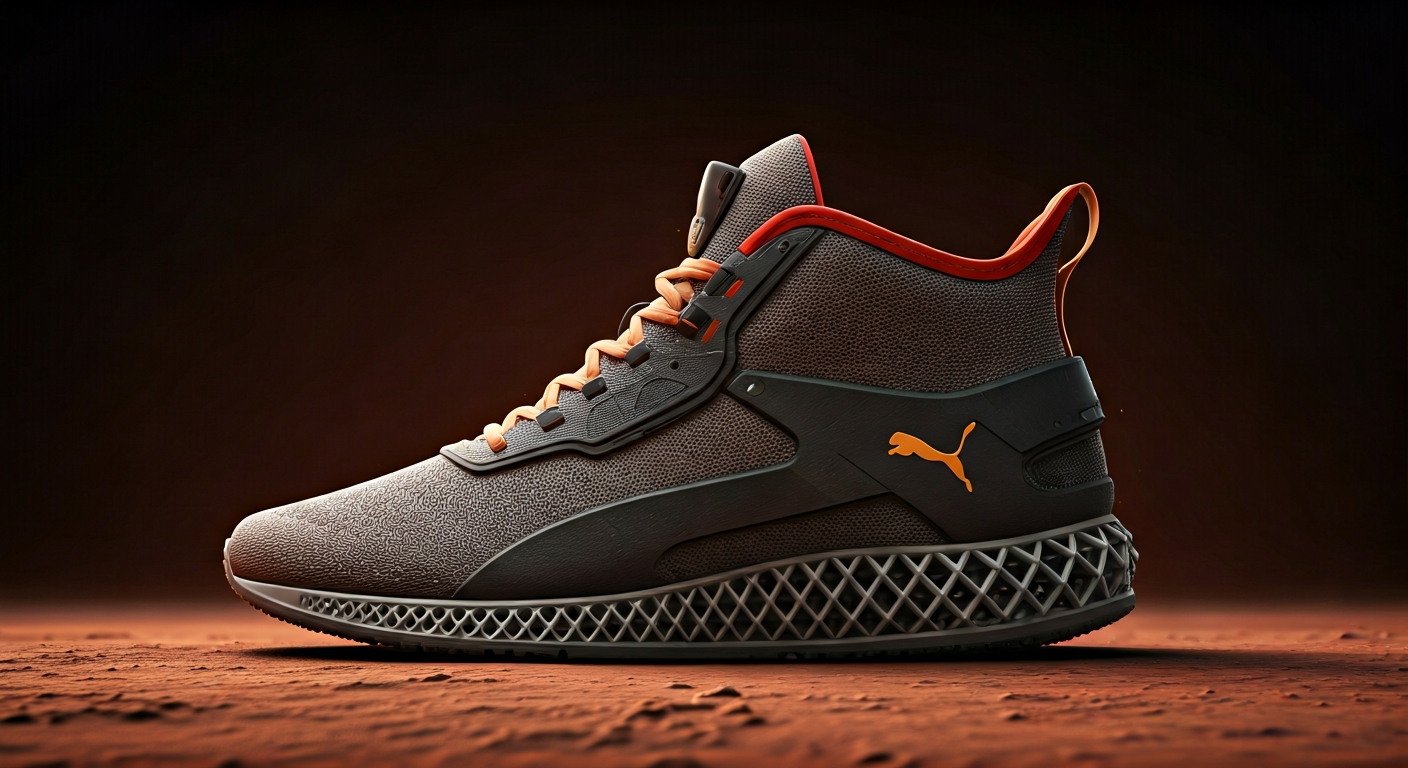
Major athletic brands like Adidas and Puma are increasingly integrating 3D printing technology into their footwear production, exploring both performance enhancements and personalized designs.
The athletic footwear industry is witnessing a significant integration of 3D printing technology, with prominent brands such as Adidas and Puma at the forefront of this development. These companies are leveraging additive manufacturing to create innovative shoe components, focusing on aspects like cushioning, support, and overall performance.
Adidas has been a pioneer in this space, notably with its Futurecraft 4D line, which features midsoles produced using Digital Light Synthesis (DLS) technology. This process allows for the creation of intricate lattice structures that are precisely engineered to provide customized energy return and shock absorption, tailored to specific athletic needs. The brand continues to explore new materials and designs to further optimize performance and wearer comfort.
Puma is also actively involved in 3D-printed footwear, experimenting with various applications. Their research and development efforts are aimed at utilizing 3D printing for rapid prototyping, enabling faster design iterations and the creation of unique aesthetic elements. Furthermore, Puma is investigating the potential of 3D printing for customized fit and personalized performance features, potentially leading to footwear that is uniquely adapted to individual athletes.
The broader trend indicates a shift towards more sustainable and efficient manufacturing processes within the sports apparel sector. 3D printing offers the potential for on-demand production, reducing waste associated with traditional mass manufacturing. As the technology matures and material science advances, the scope for 3D-printed footwear is expected to expand, offering consumers greater choice in terms of personalization, performance, and potentially, eco-friendly options.
The integration of 3D printing in footwear by brands like Adidas and Puma signifies a move towards mass customization and performance optimization. It allows for complex geometries and material properties previously unattainable, pushing the boundaries of athletic shoe design. This development aligns with the broader additive manufacturing trend of enabling on-demand production and reducing supply chain complexities.
Edited by the news editor with AI and translated into English from the original report — please refer to the original source.