A fully built, fully tested lunar rover named VIPER faced dismantlement for parts after its 2024 cancellation, and NASA is now considering sending a Mars engineering testbed that has spent its working life in a JPL rock yard to the Moon instead
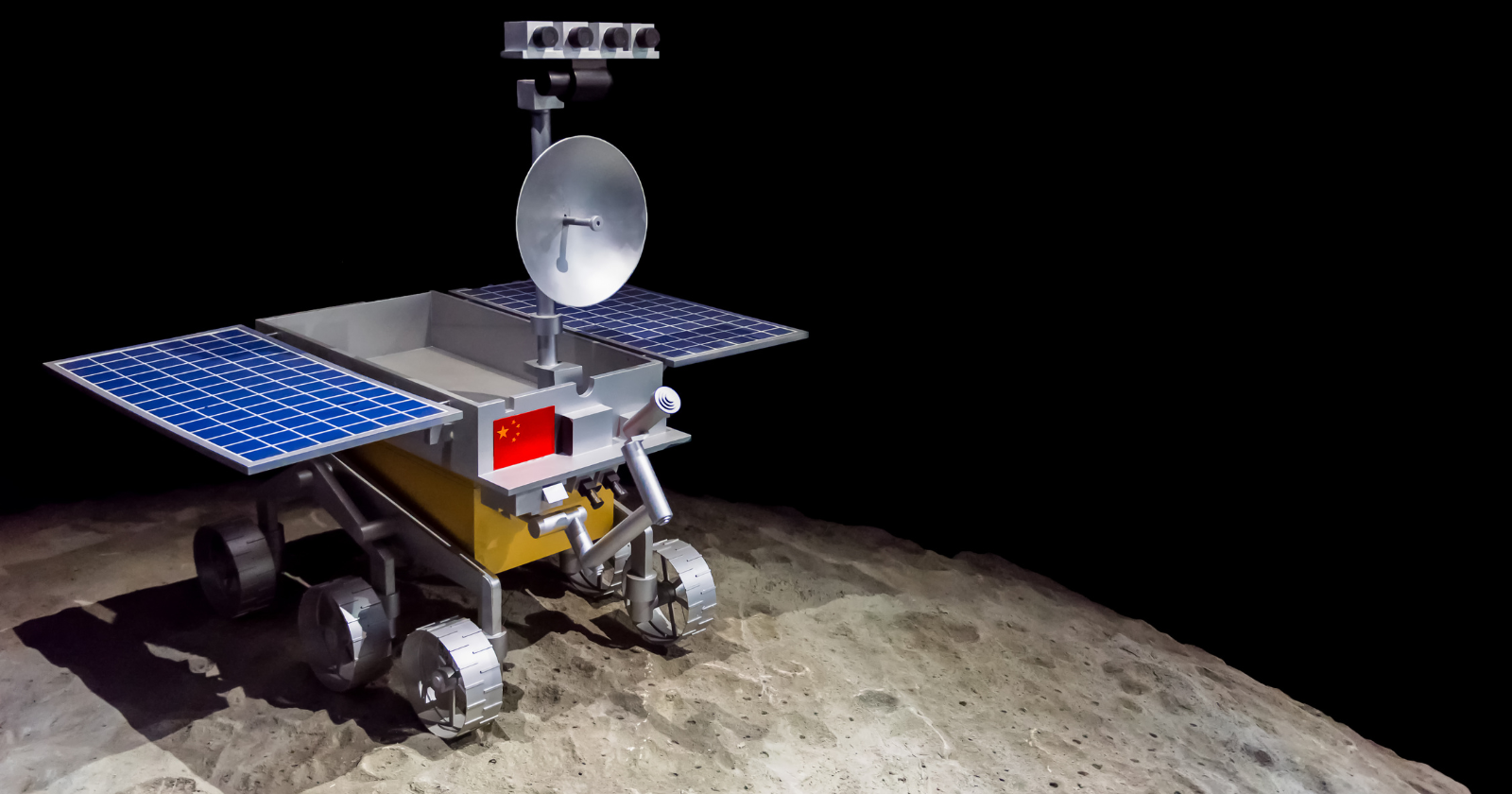
NASA announced on June 30, 2026, that it is considering sending PROMISE, an engineering test rover built at the Jet Propulsion Laboratory as a stand-in for the Curiosity and Perseverance Mars rovers, to the lunar surface. NASA Administrator Jared Isaacman, announcing the concept
NASA announced on June 30, 2026, that it is considering sending PROMISE, an engineering test rover built at the Jet Propulsion Laboratory as a stand-in for the Curiosity and Perseverance Mars rovers, to the lunar surface.
NASA announced on June 30, 2026, that it is considering sending PROMISE, an engineering test rover built at the Jet Propulsion Laboratory as a stand-in for the Curiosity and Perseverance Mars rovers, to the lunar surface. NASA Administrator Jared Isaacman, announcing the concept alongside a batch of new lunar lander contracts, framed the pitch as a matter of hardware already paid for. “We’ve had years now of experience operating the two rovers on the surface of Mars, and we’ve got this hardware that the taxpayers have invested a lot in,” Isaacman said, according to Space.com. “So the question was posed: what if we send it to the moon?” He introduced the idea with a line borrowed from Yoda: “There is another.”
PROMISE, which stands for Polar Rover for Observation, Mapping, and In-Situ Exploration and was previously known internally as Optimism, is not a spare rover sitting in storage. It has spent its working life at JPL as a ground testbed, the machine engineers use to try out commands before sending them to the real rovers on Mars. It was built to mirror Curiosity and Perseverance closely enough that its behaviour on Earth is a reliable guide to theirs on another planet. It has never been designed, tested, or budgeted to survive spaceflight or an alien surface on its own account. NASA has described the idea as still being defined, not as a committed mission.
The reason PROMISE’s candidacy reads strangely is VIPER, the Volatiles Investigating Polar Exploration Rover NASA built specifically to search for water ice at the lunar south pole. VIPER was, by NASA’s own account, fully assembled and had worked through acoustic, vibration, and thermal vacuum testing by mid-2024. It was not a concept or a prototype. It was a finished spacecraft waiting for a launch date.
NASA cancelled VIPER on July 17, 2024, citing cost growth and the risk of further delay. The rover’s budgeted cost had climbed from an initial $433.5 million to $609.6 million by the time of the review, a overrun of more than 30 percent that triggered an automatic continuation review, according to SpacePolicyOnline’s account of NASA’s later briefing to Congress. At cancellation, the agency said it had spent roughly $450 million on the rover itself. NASA’s stated plan at the time was to disassemble VIPER and reuse its instruments and components on other missions. The agency also owed Astrobotic, the company building the Griffin lander that was meant to carry VIPER to the Moon, a separate $323 million under its existing commercial lunar delivery contract, a sum NASA continued paying regardless of whether VIPER flew. NASA offered to pay for a mass simulator, inert weight standing in for the rover, so Griffin could still fly to the Moon without VIPER aboard.
The cancellation drew public pushback. A letter opposing the decision gathered more than 2,500 signatures within weeks, and the House Committee on Science, Space, and Technology formally asked NASA to explain the reasoning. NASA reversed course, releasing a call in August 2024 for industry partners willing to fly the already-built rover at no cost to the government. That approach collapsed, and in September 2025 NASA issued a paid task order worth up to $190 million, selecting Blue Origin to carry VIPER to the Moon aboard its Blue Moon Mark 1 lander, with a landing currently planned for 2027.
PROMISE’s appeal has nothing to do with VIPER’s mission and everything to do with power. VIPER, like most planned lunar surface hardware, depends heavily on solar arrays and battery storage, which struggle through the roughly two-week lunar night and the deep shadow inside permanently dark polar craters. PROMISE would carry a radioisotope thermoelectric generator, the same class of power source used on Curiosity and Perseverance, which produces steady electricity and heat from the decay of plutonium-238 regardless of sunlight. That is a genuine capability gap PROMISE could probe that VIPER, as designed, cannot.
It is also a hard constraint. Plutonium-238 supply is limited and closely managed, and NASA has flagged that flying PROMISE could compete for the same radioisotope stock earmarked for other future missions, including a planned Uranus orbiter and other New Frontiers program candidates. Deciding to fly a Mars testbed on the Moon is not simply a matter of relabelling existing hardware. It would mean allocating a scarce nuclear fuel supply to a robot that was never engineered as a flight vehicle, ahead of missions that were.
Both machines could plausibly end up working the same general territory, the lunar south pole, within a few years of each other: VIPER as a purpose-built prospecting rover riding Blue Origin’s lander toward a 2027 landing, PROMISE as an unbudgeted, undefined possi
Edited by the news editor with AI from the original report — please refer to the original source.