3D Printed Terracotta Modules Designed for Nature Colonization
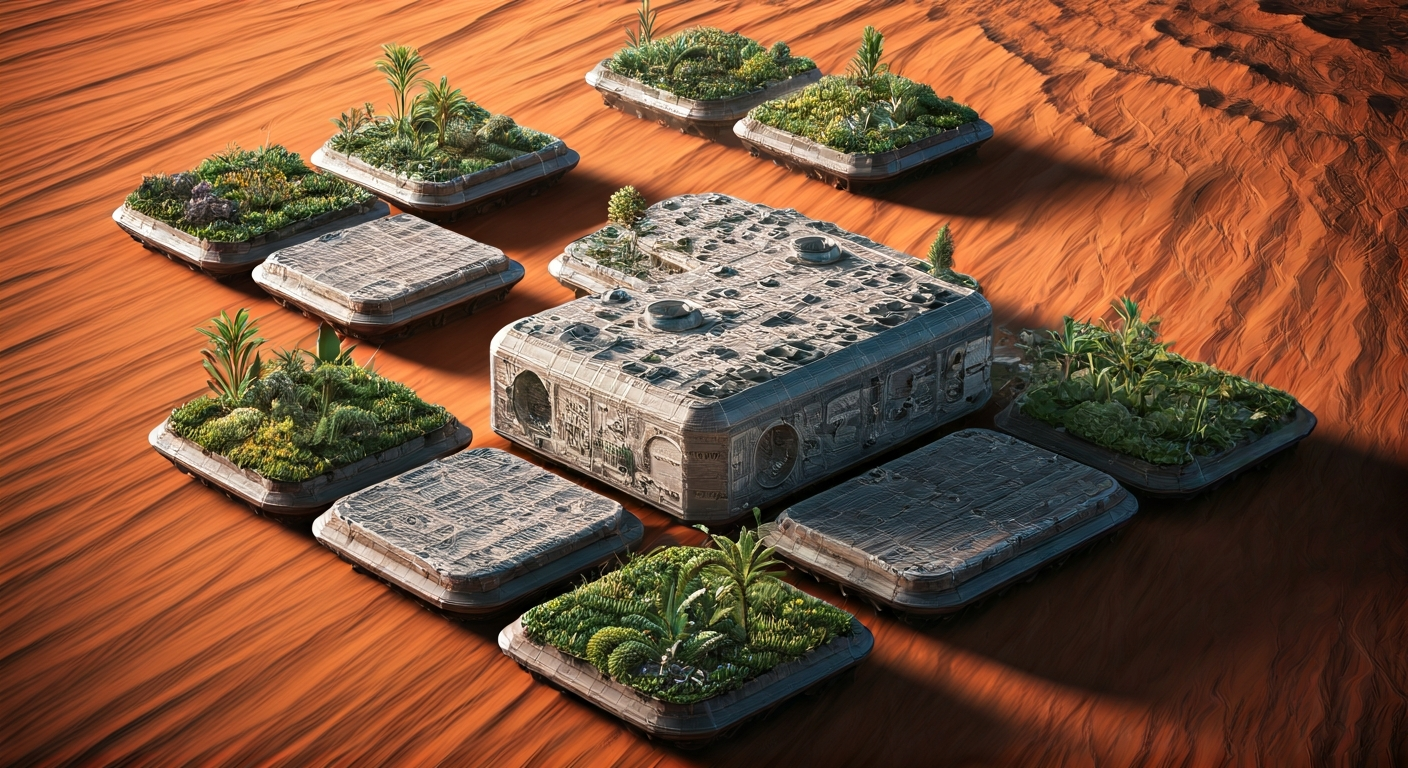
An artist has developed 3D printed terracotta modules intended to be colonized by plants and microorganisms, creating living architectural elements.
Artist Rameshwari Jonnalagedda has created a series of 3D printed terracotta modules with a specific design focus: enabling colonization by nature. These modules are not intended as standalone structures but rather as substrates for biological growth.
The design incorporates intricate patterns and porous surfaces within the terracotta material. These features are engineered to provide a suitable habitat for various forms of life, including plants and microorganisms. The goal is to integrate these printed elements into natural environments, allowing them to become living architectural components.
Jonnalagedda's work explores the intersection of additive manufacturing and ecological integration. The use of terracotta, a traditional building material, in conjunction with modern 3D printing technology, aims to bridge historical and contemporary approaches to construction and environmental interaction.
The project highlights the potential for 3D printing to create objects that actively engage with and support natural ecosystems. By designing for biological colonization, these modules offer a unique pathway for developing more sustainable and integrated built environments.
This development showcases the use of additive manufacturing for creating bio-integrated structures. By leveraging the design freedom of 3D printing with a natural material like terracotta, the project explores novel applications beyond traditional manufacturing. It points towards future possibilities in biomimicry and sustainable architecture, where printed components can actively support and become part of living ecosystems.
Edited by the news editor with AI from the original report — please refer to the original source.