3D Printed Reefs Deployed in Maldives to Combat Coral Decline
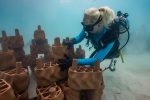
Anantara Dhigu Maldives Resort and rrreefs have installed 13 flower-shaped, 3D printed terracotta clay reef structures to aid coral restoration efforts.
In an initiative to address coral decline in the Maldives' South Malé Atoll, Anantara Dhigu Maldives Resort has partnered with Swiss company rrreefs to deploy 13 flower-shaped reef structures on its lagoon floor. This project, named Theyra Maa, utilizes 3D printed fired terracotta clay engineered to promote coral larval settlement, biodiversity recovery, and the growth of beneficial biofilms.
The structures incorporate steel reinforcement and a minimal concrete component for stability, but their biological efficacy stems from the clay's unique geometry and porosity. Mauro Bischoff, Head of Production at rrreefs, explained that the flower-inspired designs optimize water movement for larval settlement, while the 3D printed clay's microstructure provides sheltered micro-cavities for young coral larvae to attach and grow, protecting them from predators.
The multidisciplinary development team included Co-Founder Josephine Graf, Marine Ecologist Dr. Julia Spaet, and Dr. Gerrit Nanninga from Ludwig Maximilian University of Munich. This collaboration marks rrreefs' first partnership with a commercial resort, integrating restoration infrastructure within a hospitality context. The project received partial funding from Edelweiss Air and help alliance, both part of the Lufthansa Group.
Oriana Migliaccio, Resident Marine Biologist at Anantara Dhigu, highlighted the rarity of such collaborations within the tourism industry, expressing pride in the effort to support coral reef recovery and enhance coastal ecosystem resilience. Josephine Graf emphasized that rrreefs was founded out of a deep concern for the ocean and a commitment to action against the rapid decline of coral reefs, which are highly vulnerable to climate change.
This initiative demonstrates the growing application of additive manufacturing in marine conservation, utilizing 3D printed, bio-mimetic structures from specialized materials. By embedding these restoration efforts within a commercial resort, the project innovates a delivery model that could provide a sustainable funding and awareness channel, bridging the gap between conservation goals and practical implementation.
Edited by the news editor with AI from the original report — please refer to the original source.