3D-Printed Nitinol Structures Feature Woven Designs for Enhanced Flexibility
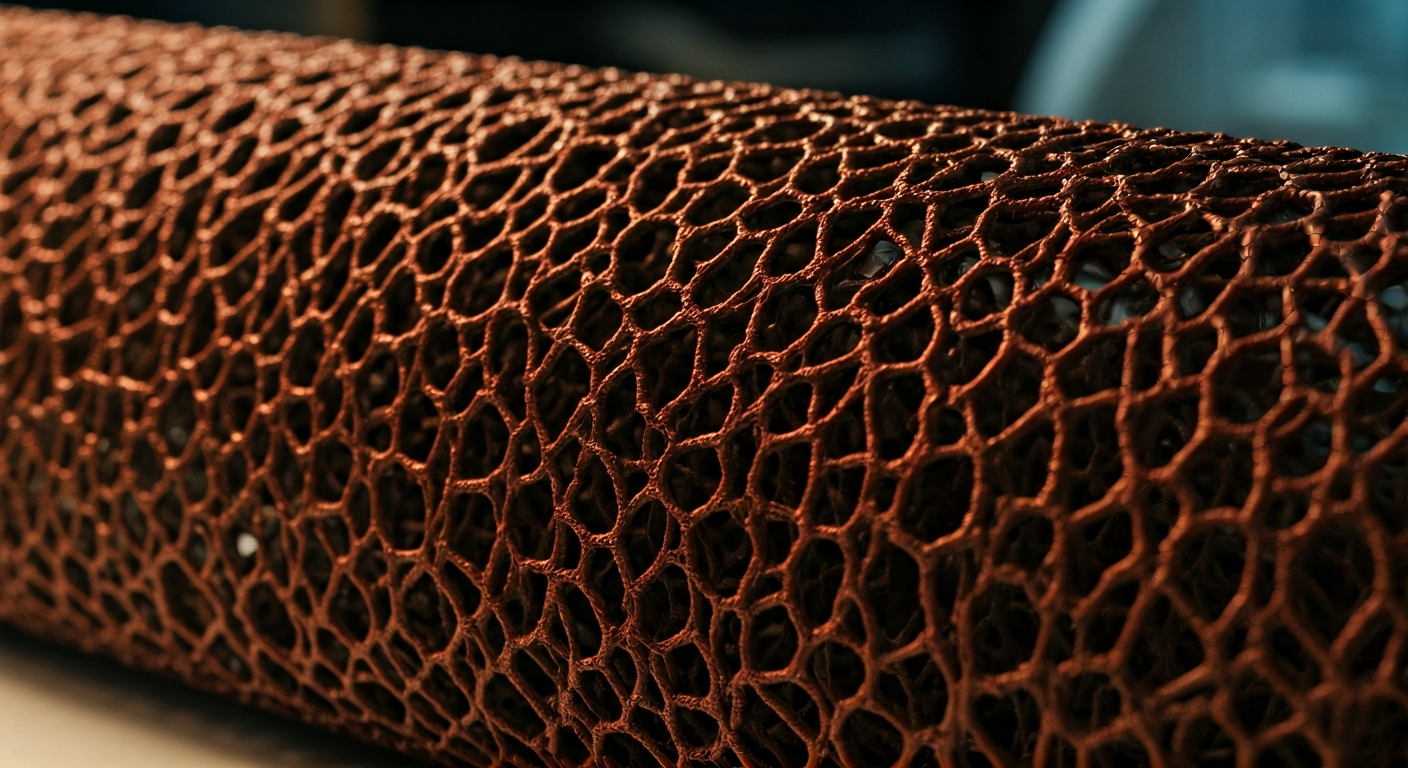
Researchers have developed a 3D printing method for Nitinol that utilizes woven lattice designs to significantly increase the material's deformability, opening new application possibilities.
A new approach to 3D printing Nitinol, a shape-memory alloy known for its unique properties, has been developed, focusing on enhancing its deformability through design. Traditional Nitinol components often have limitations in terms of how much they can be bent or deformed before permanent damage occurs. This new technique addresses this by incorporating intricate woven lattice structures within the printed parts.
These woven designs allow for a greater degree of flexibility and resilience compared to solid or conventionally structured Nitinol. The complex geometries enable the material to undergo more significant deformations while still retaining its ability to return to its original shape, a key characteristic of shape-memory alloys. This breakthrough was achieved through advanced additive manufacturing processes that can precisely create these delicate, interwoven patterns.
The implications of this development are significant, particularly for applications requiring components that must withstand repeated or substantial mechanical stress. By increasing the inherent deformability of 3D-printed Nitinol, manufacturers can explore its use in more dynamic and demanding environments. The precise control offered by 3D printing, combined with the novel woven design, allows for tailored mechanical responses.
This innovation could lead to more sophisticated medical devices, such as self-deploying stents or minimally invasive surgical tools that require high flexibility and reliable shape recovery. Beyond medical applications, the enhanced deformability of Nitinol could also find use in aerospace components, actuators, and other fields where lightweight, resilient, and shape-changing materials are crucial.
This development is significant as it enhances the functional properties of Nitinol through additive manufacturing, specifically its deformability. By using woven lattice designs, 3D printing allows for complex geometries that overcome the inherent rigidity limitations of the alloy. This could enable novel applications in medical devices, robotics, and potentially aerospace, where resilient, shape-changing components are highly sought after.
Edited by the news editor with AI and translated into English from the original report — please refer to the original source.