3D Print Gallery Exhibition Focuses on Ocean Sustainability
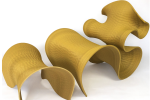
An upcoming exhibition at Haarlem's 3D Print Gallery will highlight the use of additive manufacturing for sustainable design, featuring works inspired by marine life and utilizing recycled ocean waste.
Haarlem’s 3D Print Gallery is set to launch its fourth exhibition, "An Ocean of Possibilities for Sustainability," on July 1st. Running for three months, the show will feature four designers who integrate digital fabrication with natural systems and circular economy principles.
The exhibition, an initiative by MTL | More Than Layers, positions digital fabrication as a method for more responsible production. The displayed materials include recycled PETG, reclaimed fishing nets, natural ceramics, and biomaterials designed to decompose. The commonality among the designers is their use of digital fabrication not merely as a production tool, but as a design language that promotes circularity.
Featured works include Danish designer Mikkel Huse's Nori Chair, a large-format 3D printed piece inspired by seaweed movements and printed using Large Format Additive Manufacturing. Dutch designer Lilian van Daal presents Heliodiscus, a modular light sculpture derived from the geometry of microscopic marine organisms and printed in transparent resin. Rotterdam-based designer Stijn van Aardenne contributes the Hive Wall Lamp, which utilizes a rotating printing system to orient layers along the object's geometry, making the fabrication process a visible design element.
Additionally, architecture and design practice IOUS Studio, in collaboration with LAMÁQUINA, will showcase a series of 3D printed ceramic tiles. This project translates computational design into a scalable cladding system suitable for applications ranging from interior surfaces to building façades. The exhibition aligns with a broader trend of artists and designers employing additive manufacturing to explore material lifecycles and the relationship between production and the environment.
This exhibition underscores the growing use of additive manufacturing as a tool for sustainable design and material innovation. By showcasing projects that utilize recycled ocean waste and biomaterials, it highlights the potential for 3D printing to address environmental concerns and develop circular economy solutions, mirroring industry-wide efforts to reduce waste and carbon footprints in manufacturing.
Edited by the news editor with AI from the original report — please refer to the original source.