2018 Mars Global Dust Storm Silenced Opportunity Rover
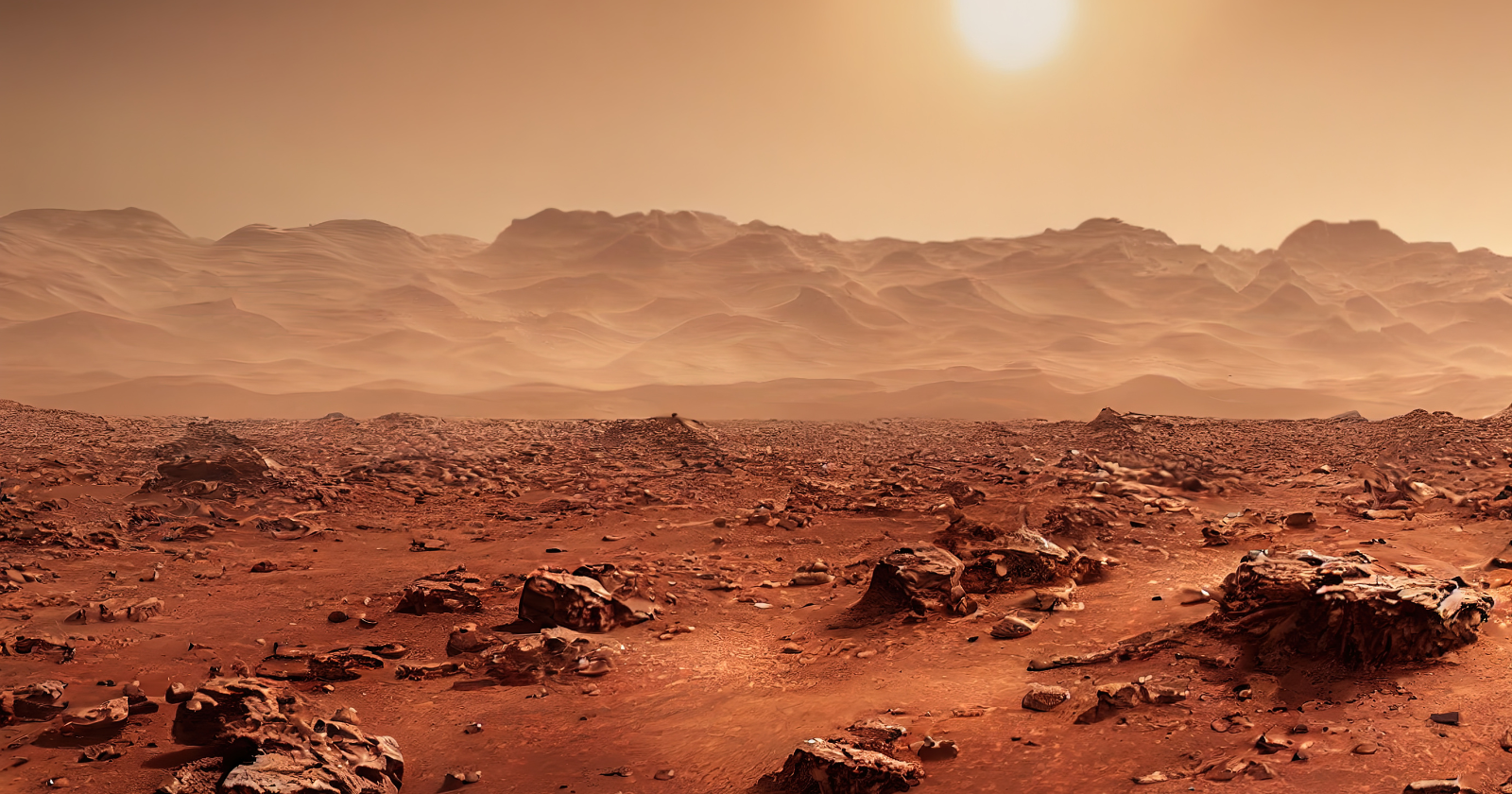
A colossal Martian dust storm in 2018, dense enough to shroud the entire planet, ultimately ended the 15-year mission of the Opportunity rover by depleting its solar power.
In 2018, a dust storm of unprecedented scale engulfed Mars, transforming the Martian atmosphere into a dense, light-blocking shroud. While Martian winds are not powerful enough to cause significant structural damage, the fine, electrostatically charged dust proved to be the ultimate adversary for surface exploration.
The Mars Reconnaissance Orbiter first detected the disturbance on May 30, 2018. Within a week, it had expanded to cover an area larger than North America. By June 19, the storm had become planet-encircling, a phenomenon meticulously tracked by multiple orbital assets and surface rovers.
This global dust event led to an extreme increase in atmospheric opacity, measured as tau. At Opportunity's location in Perseverance Valley, tau reached an estimated 10.8, far exceeding the typical value of 0.5. The sheer density of the dust blocked sunlight so effectively that even the caldera of Olympus Mons was obscured. The storm's self-perpetuating cycle, driven by rising warm, dust-laden air, continued until the atmosphere became too opaque for sunlight to fuel the process.
Opportunity, reliant on solar power, transmitted its last message on June 10, 2018, as its battery voltage dropped below a critical threshold, triggering a low-power fault that disabled all but the mission clock. The rover remained in a low-power state, periodically attempting to wake and check for sufficient charge, for months. The skies took approximately four months to clear sufficiently for any potential recovery.
Beyond the impact on Opportunity, the storm provided valuable scientific data. Observations from the orbital fleet and Curiosity rover indicated water vapor rising to altitudes of around 100 kilometers. Models suggest that warming of the middle atmosphere by lofted dust prevented the formation of ice clouds that normally trap moisture, allowing water vapor to ascend and be dissociated by sunlight, leading to hydrogen escape. This event was identified as one of three that accelerated water loss from Mars in that Martian year.
Despite its eventual demise, Opportunity far exceeded its design life, operating for over 14 years and covering 45.16 kilometers, a record for an off-Earth vehicle. Its longevity was attributed to its durable batteries, which retained 85% of their original capacity after thousands of charge cycles, and seasonal winds that periodically cleared its solar panels. The inability to reliably forecast these global dust storms has led engineers to shift focus towards missions less dependent on solar power, acknowledging the challenge of direct confrontation with Martian weather.
The 2018 global dust storm on Mars, while fatal to the Opportunity rover, underscores a critical lesson for our multi-planetary future: resilience is paramount. The storm's ability to blanket an entire world, yet be driven by seemingly gentle atmospheric processes, highlights the unpredictable and extreme nature of extraterrestrial environments. This event reinforces the imperative to develop robust, self-sustaining systems that are not solely reliant on solar energy, especially as we push towards establishing permanent Martian settlements. The technological advancements spurred by such challenges, from advanced battery technology to alternative power sources, are essential steps in accelerating humanity's expansion beyond Earth and ensuring the long-term survival of our species.
Edited by the news editor with AI from the original report — please refer to the original source.