Zhurong Rover Finds Evidence of Ancient Ocean on Mars
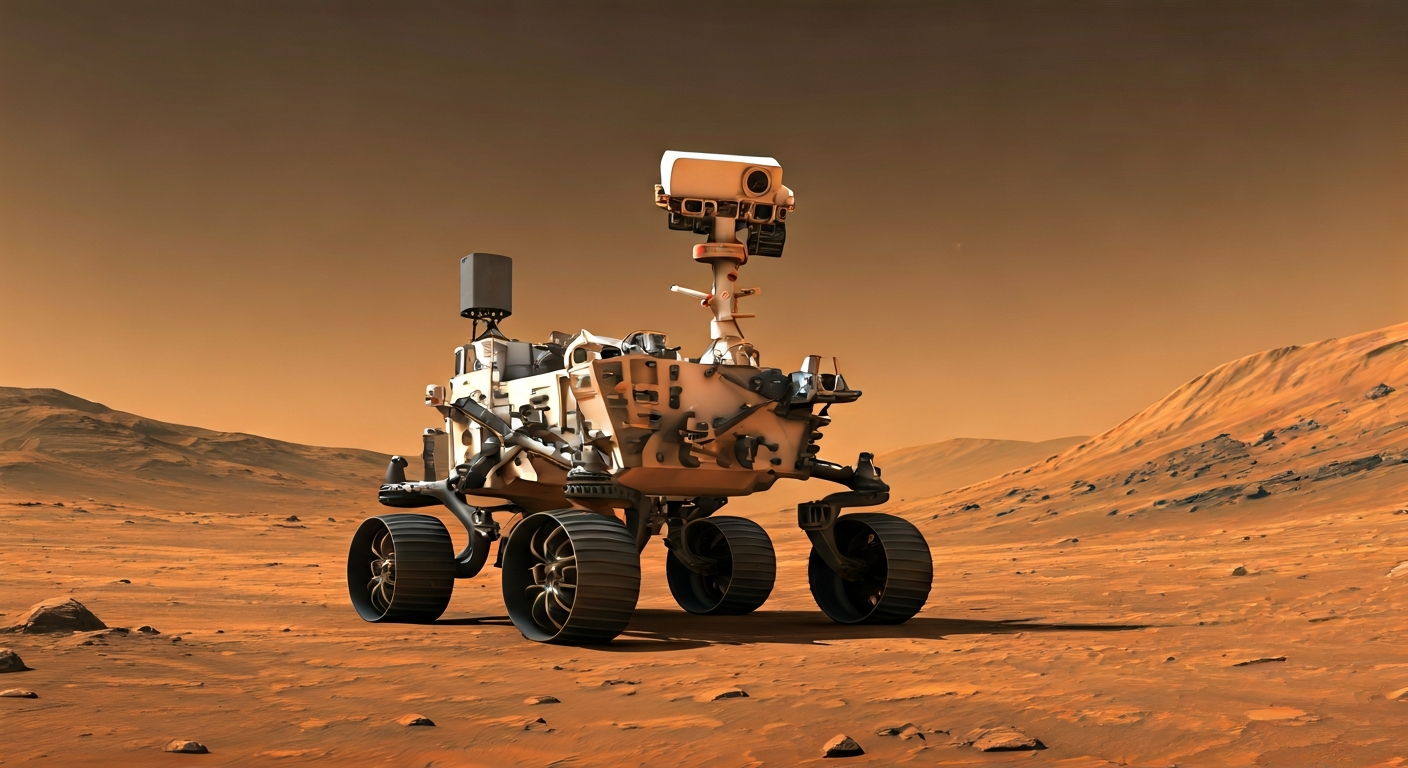
China's Zhurong rover has identified geological evidence suggesting the presence of an ancient ocean in Mars' mid-to-low latitude regions, significantly altering our understanding of the planet's past climate.
New findings from China's Zhurong rover, operating in the Utopia Planitia region of Mars, indicate that the planet's mid-to-low latitudes may have once harbored an ancient ocean. The rover's observations focused on sedimentary structures and geological formations that are indicative of long-term water activity.
Analysis of the data collected by Zhurong's instruments revealed layered rock formations and features consistent with the action of flowing water over extended periods. These features are often found in terrestrial environments where oceans or large bodies of water have existed, shaping shorelines and depositing sediments.
The discovery challenges previous models of Mars' ancient climate, which often suggested a more arid or limited water presence in these specific regions. The presence of an ocean would imply a significantly different atmospheric composition and thermal balance in Mars' distant past, capable of sustaining liquid water on a much larger scale than previously thought.
This finding is a crucial step in understanding Mars' hydrological history and its potential for past habitability. Further analysis of the data is ongoing, with scientists aiming to refine the timeline and extent of this ancient Martian ocean, contributing valuable insights to the ongoing search for life beyond Earth.
The Zhurong rover's identification of sedimentary evidence for an ancient ocean in Mars' mid-to-low latitudes is a profound validation of Mars' potential for a habitable past. This discovery, pointing to a once-vast body of water, reinforces the understanding that Mars' environment was once far more Earth-like. Such findings are critical stepping stones for our multi-planetary imperative. Each confirmed period of sustained liquid water on Mars increases the likelihood that life may have emerged, and provides crucial context for terraforming efforts. Zhurong's data directly fuels our long-term vision of establishing self-sustaining Martian civilizations, by detailing the very planetary conditions we aim to restore and expand upon.
Edited by the news editor with AI and translated into English from the original report — please refer to the original source.