Zhurong Rover Detects Unexpected Carbonate Deposits on Mars
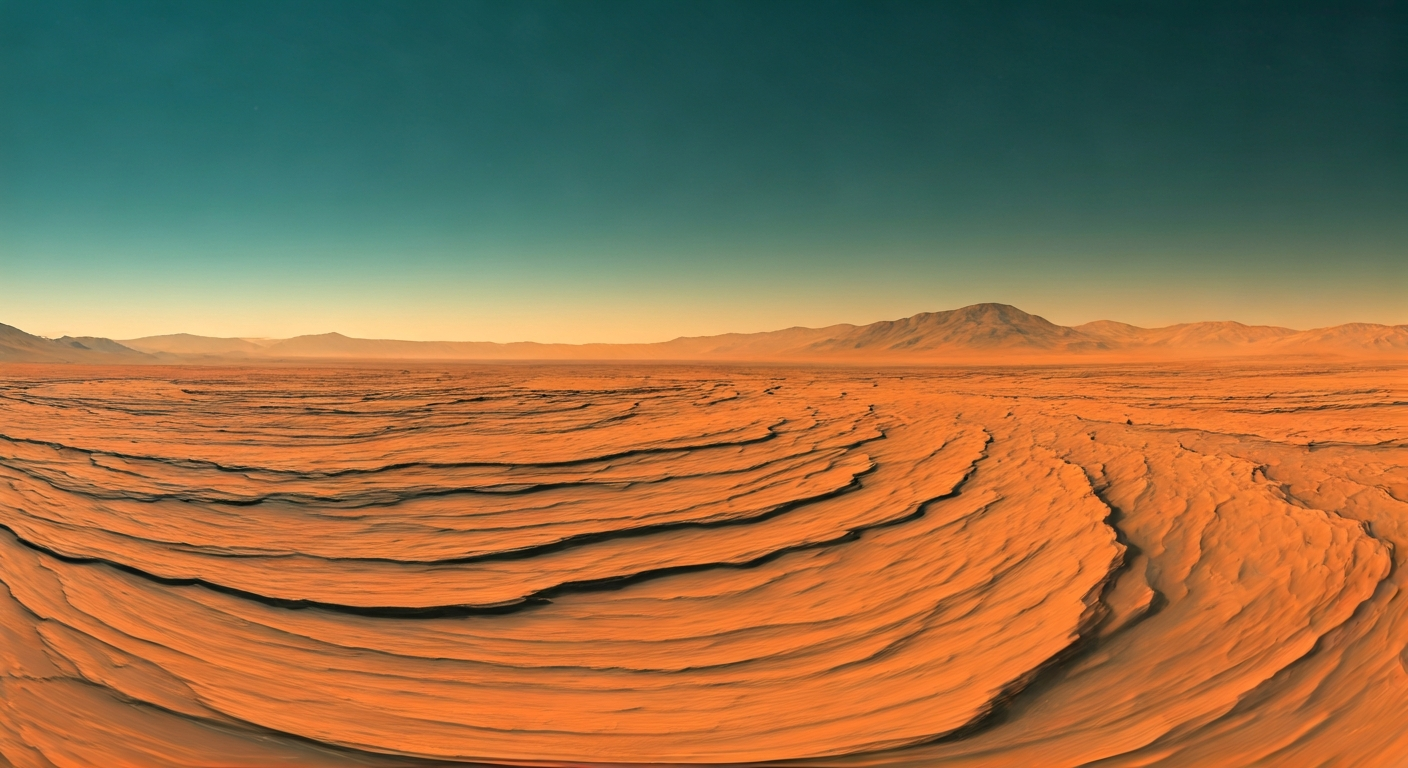
China's Zhurong rover has identified carbonate-rich rocks in an ancient riverbed on Mars, suggesting a more complex and potentially habitable past than previously understood.
The Zhurong rover, part of China's Tianwen-1 mission, has made a significant discovery regarding the composition of Mars' surface. Operating within the Utopia Planitia region, the rover's instruments have detected a substantial presence of carbonate-rich rocks. These findings originate from an area believed to be an ancient riverbed, offering clues about Mars' environmental history.
The detection was made possible by the rover's onboard scientific payload, which analyzed the elemental composition of the Martian soil and rocks. The presence of carbonates, which are minerals formed in the presence of water and carbon dioxide, is particularly noteworthy. Their identification in this specific geological context suggests that water played a crucial role in shaping this region of Mars.
While carbonates have been detected on Mars before, their abundance and the geological setting of this discovery are considered important. The data indicates that these carbonate-rich rocks are interbedded with other sedimentary layers, further reinforcing the theory of past fluvial activity and the interaction of water with the Martian atmosphere.
This discovery contributes to a growing body of evidence that points to Mars having experienced a wetter and potentially more habitable period in its distant past. The findings from Zhurong will aid scientists in refining models of Martian climate evolution and understanding the conditions under which life might have arisen, or could potentially be sustained, on the Red Planet.
Zhurong's detection of abundant carbonates in an ancient Martian riverbed is a crucial data point for understanding Mars' hydrological and atmospheric past. This mineral evidence, formed through water-rock-CO2 interaction, directly supports the hypothesis of a once warmer, wetter Mars with a thicker atmosphere capable of sustaining liquid water. For humanity's multi-planetary future, such findings are foundational. They inform our understanding of planetary habitability and provide targets for future exploration and resource utilization. Identifying regions with evidence of past water and potential carbon sequestration is key to planning self-sustaining Martian outposts, ensuring the expansion of life and consciousness beyond Earth.
Edited by the news editor with AI and translated into English from the original report — please refer to the original source.