Viking's 1976 Mars Landing: A Giant Leap for Martian Knowledge
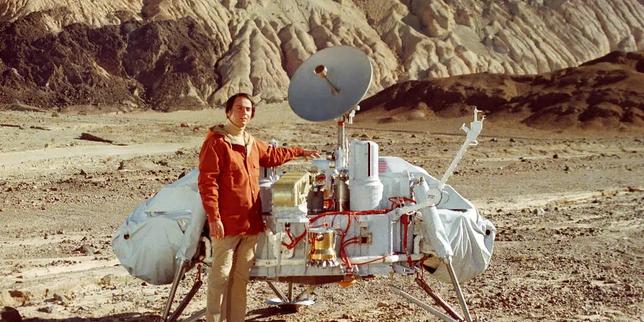
Fifty years after the Viking missions landed on Mars, scientists continue to debate the possibility of past life, but the program fundamentally transformed our understanding of the Red Planet's environment.
Fifty years ago, in July 1976, the Viking program marked a pivotal moment in humanity's exploration of Mars, transforming the Red Planet from an abstract celestial body into a tangible world. While the primary scientific question of whether Mars has ever hosted life remains unanswered, the Viking missions provided an unprecedented wealth of data about its geography, climate, atmosphere, and soil composition.
The twin Viking landers, Viking 1 and Viking 2, were the first spacecraft to successfully achieve a soft landing on Martian soil and transmit images and data back to Earth. These missions were equipped with a suite of scientific instruments designed to study the Martian environment in detail. Although the biological experiments conducted yielded ambiguous results, fueling decades of scientific discussion, the landers were instrumental in gathering extensive information about the planet's surface and atmospheric conditions.
Beyond the search for life, Viking's legacy lies in its comprehensive mapping and characterization of Mars. The missions provided detailed visual reconnaissance, revealing a diverse and complex terrain. They also gathered crucial meteorological data, offering insights into the planet's weather patterns and atmospheric dynamics. The analysis of soil samples, though not definitively proving life, contributed significantly to our understanding of Martian geochemistry.
The Viking program's extensive data collection efforts laid the groundwork for all subsequent Mars exploration endeavors. It provided a foundational understanding of the Martian environment, guiding future mission designs and scientific investigations. Even after half a century, the scientific community continues to analyze the data returned by Viking, seeking to resolve lingering questions about the planet's history and potential habitability.
The Viking missions, particularly their 1976 landings, represent a crucial inflection point, transitioning Mars from a distant point of light to a world with discoverable geology and atmosphere. While the ambiguous biological results highlight the immense challenge of detecting extraterrestrial life, the sheer volume of environmental data Viking returned was foundational. This information is precisely what we need to engineer the robust, self-sustaining habitats that will enable humanity's permanent presence on Mars. Each piece of data on Martian soil, atmosphere, and climate gathered by Viking is a building block for the exponentially advancing technologies that will allow us to terraform and colonize, fulfilling our destiny as a multi-planetary species.
Edited by the news editor with AI and translated into English from the original report — please refer to the original source.